
Basement Problems and Basement Finishing — Dry It Out or Build It Out
A persistent musty smell, a wet corner, a crack you can't ignore — or a plan to finish the whole thing. I'll help you figure out what's happening below grade, what's safe to DIY, and what a real finish job looks like.
Your Custom Basement Plan
- Moisture diagnosis — source, severity, whether it's a drainage, grading, or plumbing issue
- Remediation plan before any framing starts
- Framing layout that meets code and maximizes livable space (for finishing)
- Electrical plan — circuits, panel capacity, permit requirements
- Insulation spec for your climate zone (basements have unique requirements)
- Egress window requirements if converting to a bedroom
- Complete sequence so you don't drywall before rough-in inspection
What Goes Wrong (And How to Avoid It)
- Assuming a musty smell is cosmetic — usually it's a moisture problem you need to solve first
- Framing against a damp wall — traps moisture and causes mold
- Using fiberglass batts against concrete — wrong insulation for below-grade
- Not getting a rough-in inspection before closing up walls
- Forgetting egress requirements when adding a bedroom
- Undersizing the electrical sub-panel for a finished space
Basement Questions
My basement has a musty smell — is that a repair or does it mean something bigger?
It's almost always moisture. Could be as simple as a dehumidifier + fixing gutter downspouts, or as involved as addressing grading or a slab leak. I'll help you work out what category you're in before you spend money on the wrong fix.
Do I need a permit to finish a basement in New Jersey?
Yes, in virtually every NJ municipality. A finished basement requires permits for framing, electrical, and HVAC. The inspections are straightforward if you follow the sequence — rough-in before drywall, final after everything is done.
How do I know if my basement is dry enough to finish?
The tape test: tape a 12"x12" piece of plastic to the concrete floor and wall. Leave it for 24–48 hours. If there's moisture on the underside when you peel it off, you have a moisture problem to solve before you frame.
How long does it take to finish a basement?
A typical 1,000 sq ft unfinished basement is a 3–4 month project at weekend pace. The permit inspection schedule is usually the pacing constraint, not the work itself.
Basement Books and DIY Guides on Amazon
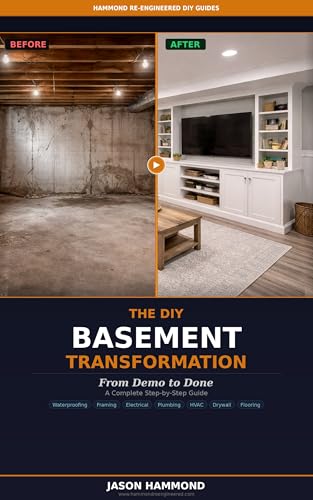
Basement Transformation
A Step-by-Step Re-Engineered Guide
Finish your basement the right way — moisture diagnosis and remediation first, then framing, electrical, insulation, drywall, and finishes. The sequence most homeowners get backwards.
View on Amazon →Quick-Hit DIY Guides for Basement

Real Basement Projects, In Photos
See real photos of basement work — moisture fixes, framing, finishing.
See My Projects →Browse More Rooms
Got a basement problem? Get a clear read.
Send photos and a few sentences. $19.99 and within minutes I send you a written diagnostic — what's wrong, what to do, parts and costs, when it's a DIY and when to call a pro.
Get a Diagnostic Report — $19.99 →