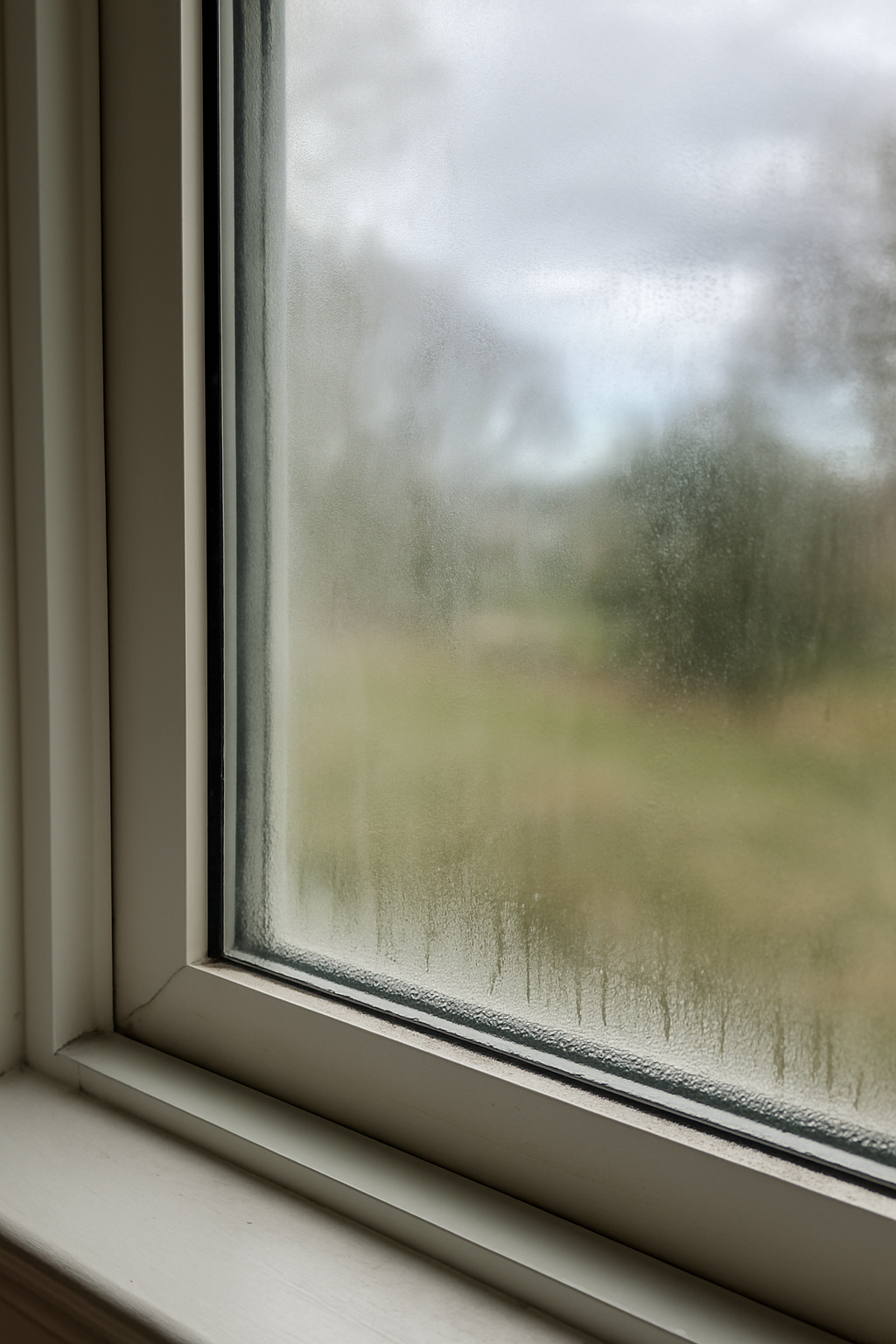
Water’s showing up near the fireplace or you’ve got a stain on the ceiling somewhere near the chimney, and the first thought is always the same: the chimney needs work, and that’s going to be expensive. Before you brace for a masonry rebuild quote, know this — the two most common causes of a chimney leak aren’t the chimney structure at all. They’re the cap on top and the flashing where it meets the roof, and both are a fraction of the cost of what you’re picturing.
Here’s how to tell which one you’re looking at.
Check the cap first
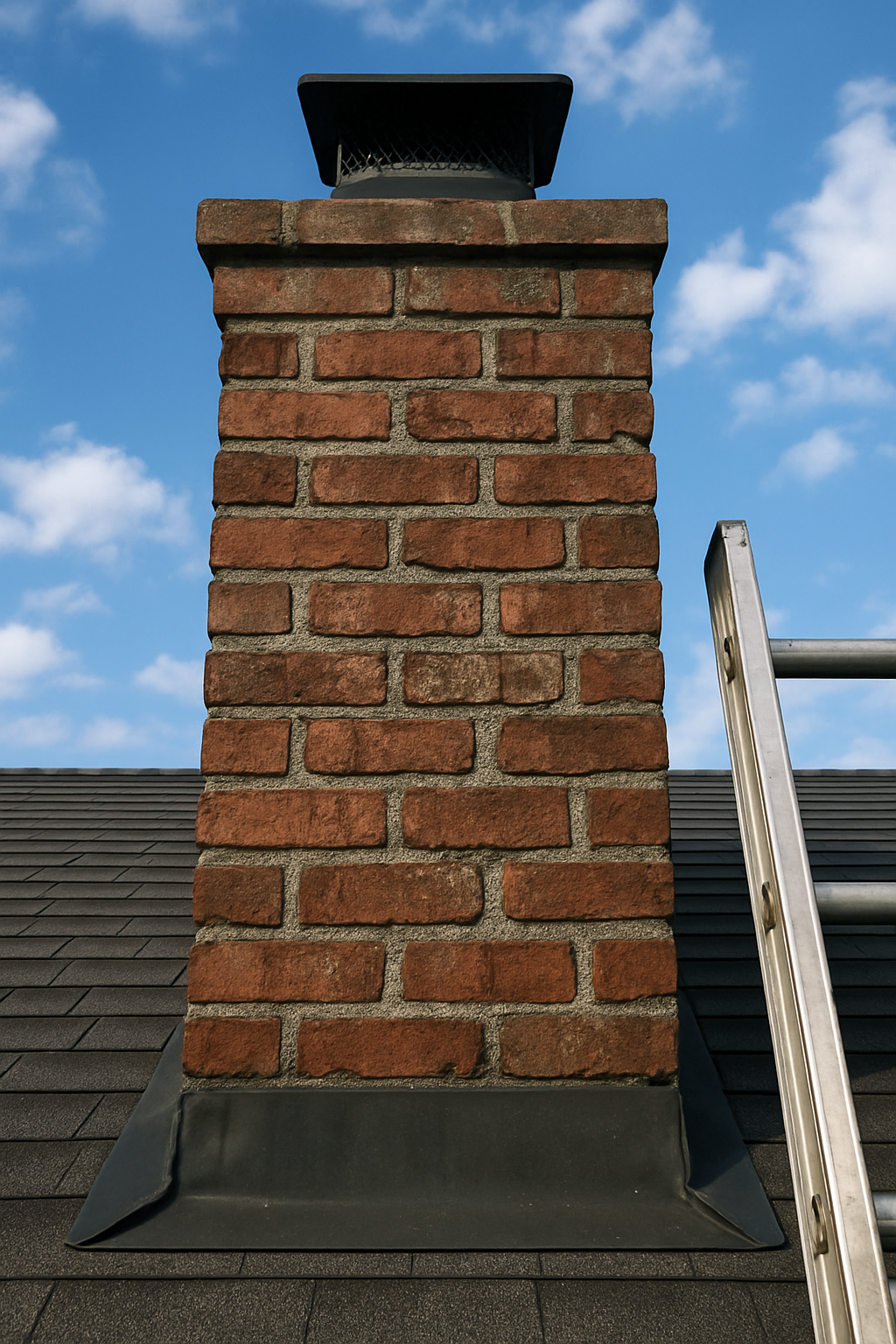
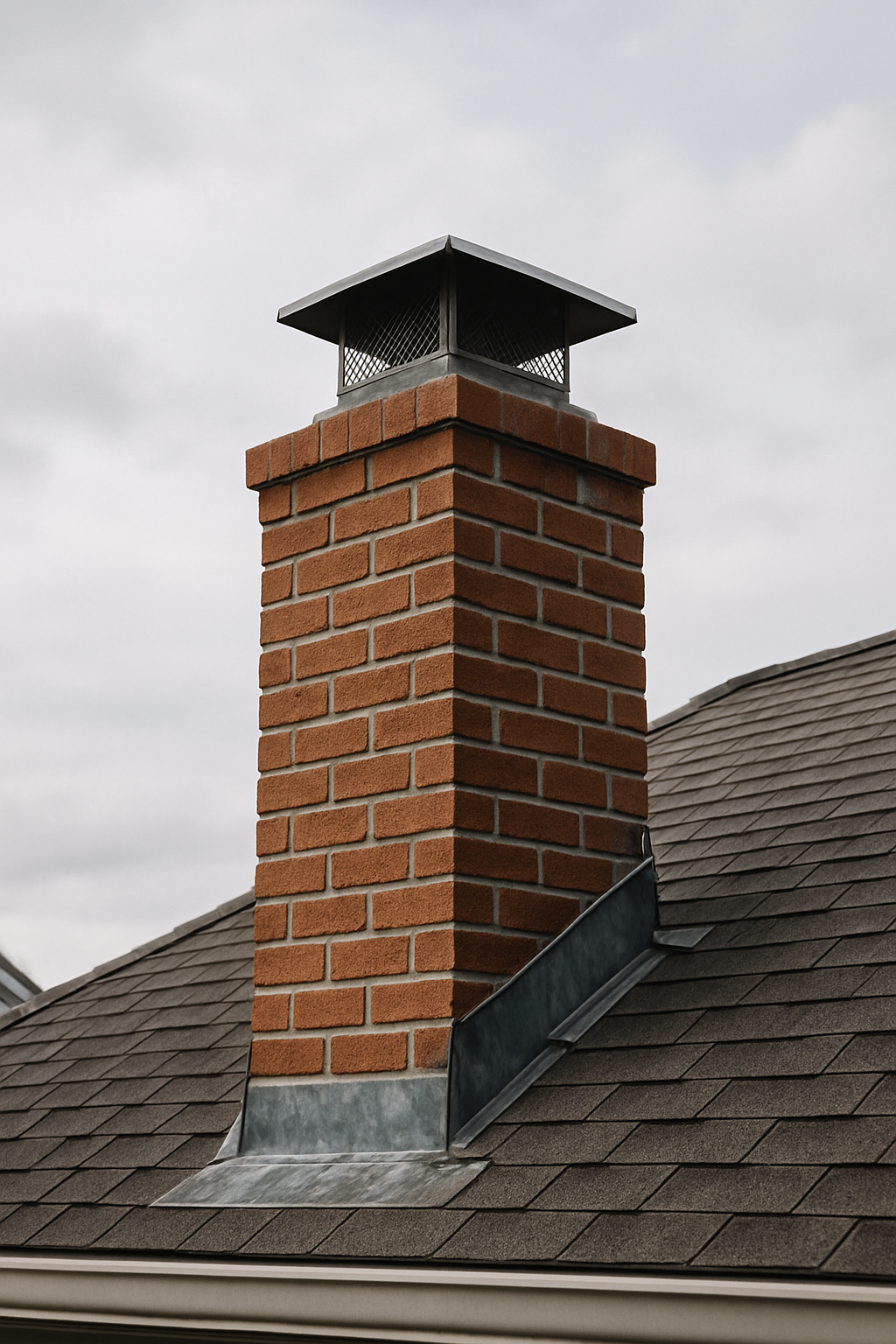
The chimney cap is the metal cover — usually with a mesh screen — that sits over the top of the flue. Its whole job is keeping rain, snow, and animals out of the flue opening. When it’s missing, rusted through, or was never installed to begin with, rain goes straight down the flue every time it storms.
Signs it’s the cap: water or dampness inside the firebox after rain, a musty or wet smell coming from the fireplace, visible rust streaks or water marks running down the inside of the flue, or — if you can see the top of the chimney — a cap that’s visibly crooked, torn, or just not there.
A missing or failed cap is one of the cheapest fixes on this list, and it’s also one of the most common things homeowners simply never think to check.
Or it’s the flashing
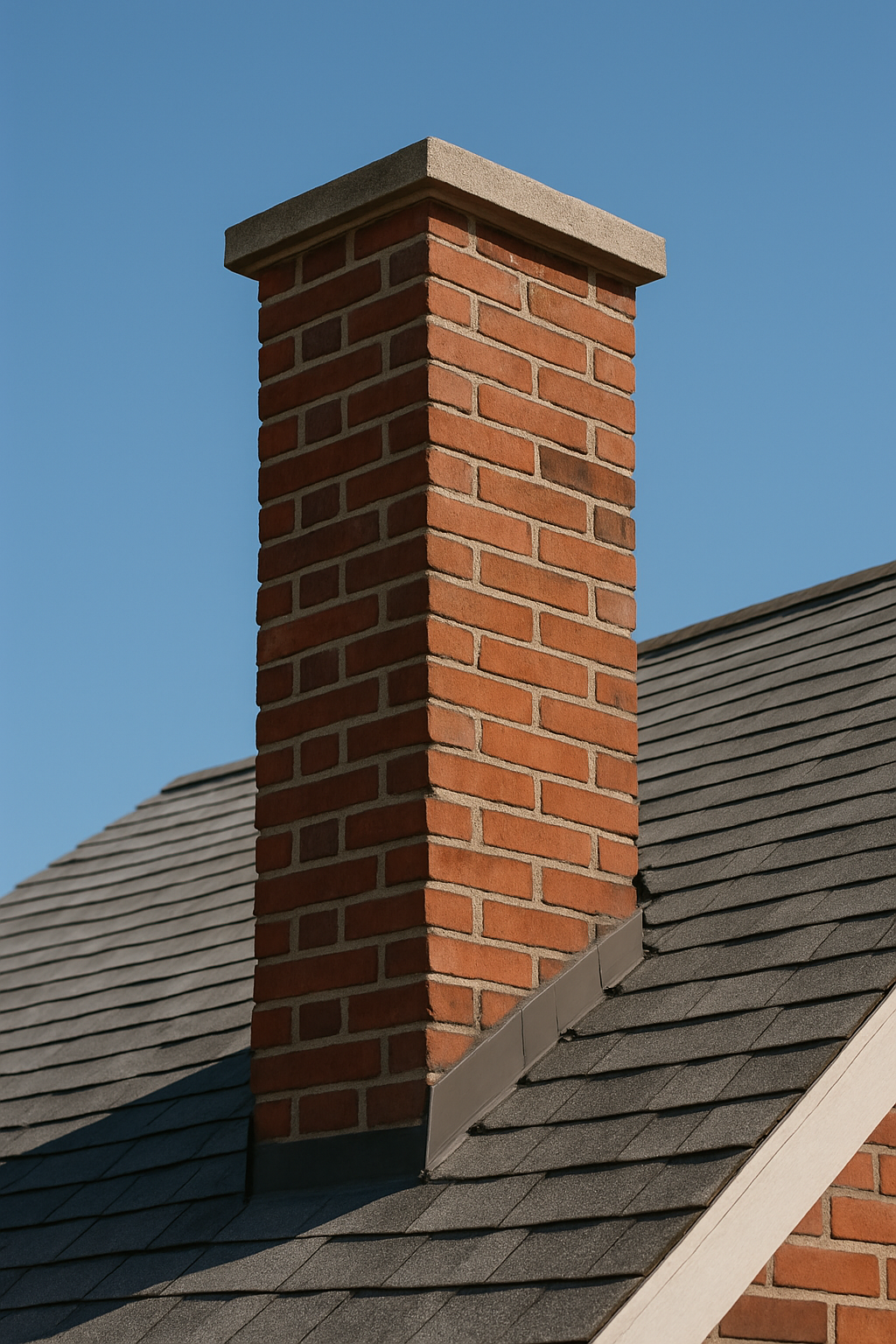
Chimney flashing is the metal seal at the joint where the chimney passes through the roof — and it’s the single most common leak source on the entire roof, more common than a shingle failure. Flashing fails when the sealant dries out and cracks, the metal itself rusts through, or it was installed wrong in the first place (a bead of caulk instead of proper step flashing tucked under the shingles and into the mortar joints).
Signs it’s the flashing: a ceiling or wall stain near where the chimney passes through the attic or roofline — sometimes several feet away from the chimney itself, since water travels along rafters before it shows up inside. It also tends to get worse specifically during wind-driven rain from one direction, since that’s when water gets pushed up under a lifted edge instead of running straight off.
Why they get confused
Both show up as “water near the chimney,” which is exactly why people jump to “the chimney needs work.” But a cap problem is contained to the flue itself — the water goes in the top and shows up inside the firebox. A flashing problem is a roof-deck issue — the water gets in at the roofline and can travel before it shows up as a stain, sometimes nowhere near directly under the chimney.
What each one costs
A cap replacement runs $150 to $400 installed, standard flue sizes, and it’s often a same-day fix. Flashing repair or replacement runs $300 to $1,000, depending on whether it’s a reseal of existing flashing or a full step-flashing and counter-flashing redo. Either one is dramatically cheaper than a chimney rebuild, which is usually what people are afraid they’re looking at.
When it actually is bigger than that
If you’ve confirmed the cap is intact and the flashing is properly sealed and still getting water, or if you’re seeing crumbling mortar, a leaning chimney, or cracks running through the brick itself, that’s a different problem — worth reading up on chimney repointing versus a full rebuild or, if a sweep flagged a cracked liner, flue relining versus replacement.
DIY or not
Replacing a standard chimney cap is a comfortable DIY project on a single-story house with safe roof access — the cap itself is inexpensive and installation is straightforward. Flashing work is a different story: getting the seal wrong means the leak comes right back, and it involves working at a roof penetration, often two stories up. For anything beyond a very simple cap swap, this is a job for a roofer or chimney pro.
Not sure which one you’re looking at?
Tell me where the water’s showing up — inside the firebox, or on a ceiling somewhere near the chimney — and when it happens (any rain, or specifically wind-driven rain). I’ll tell you whether this reads like a cap problem or a flashing problem, and what to ask a pro to check first. A written diagnostic with the specific read, $19.99, back to you in minutes.