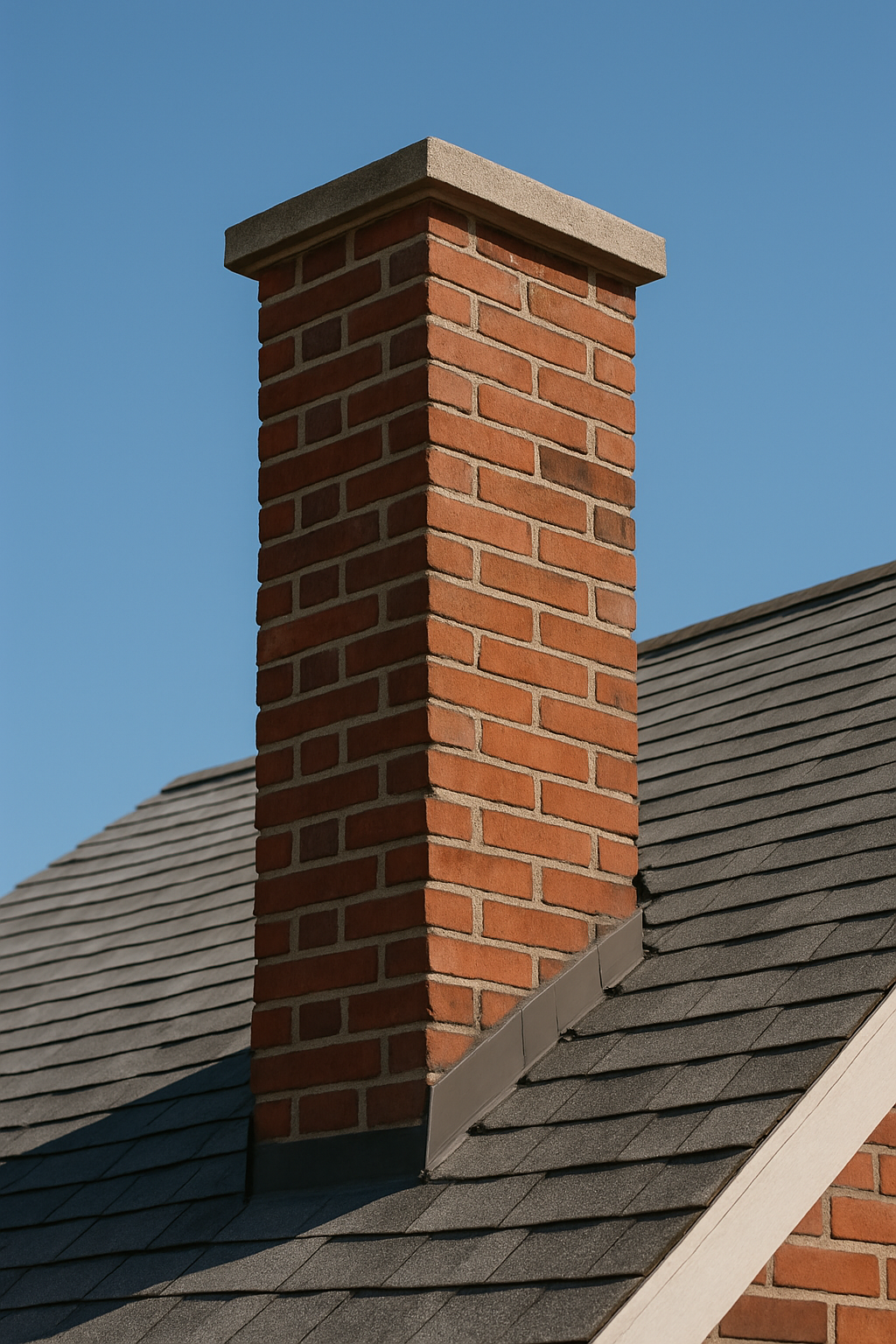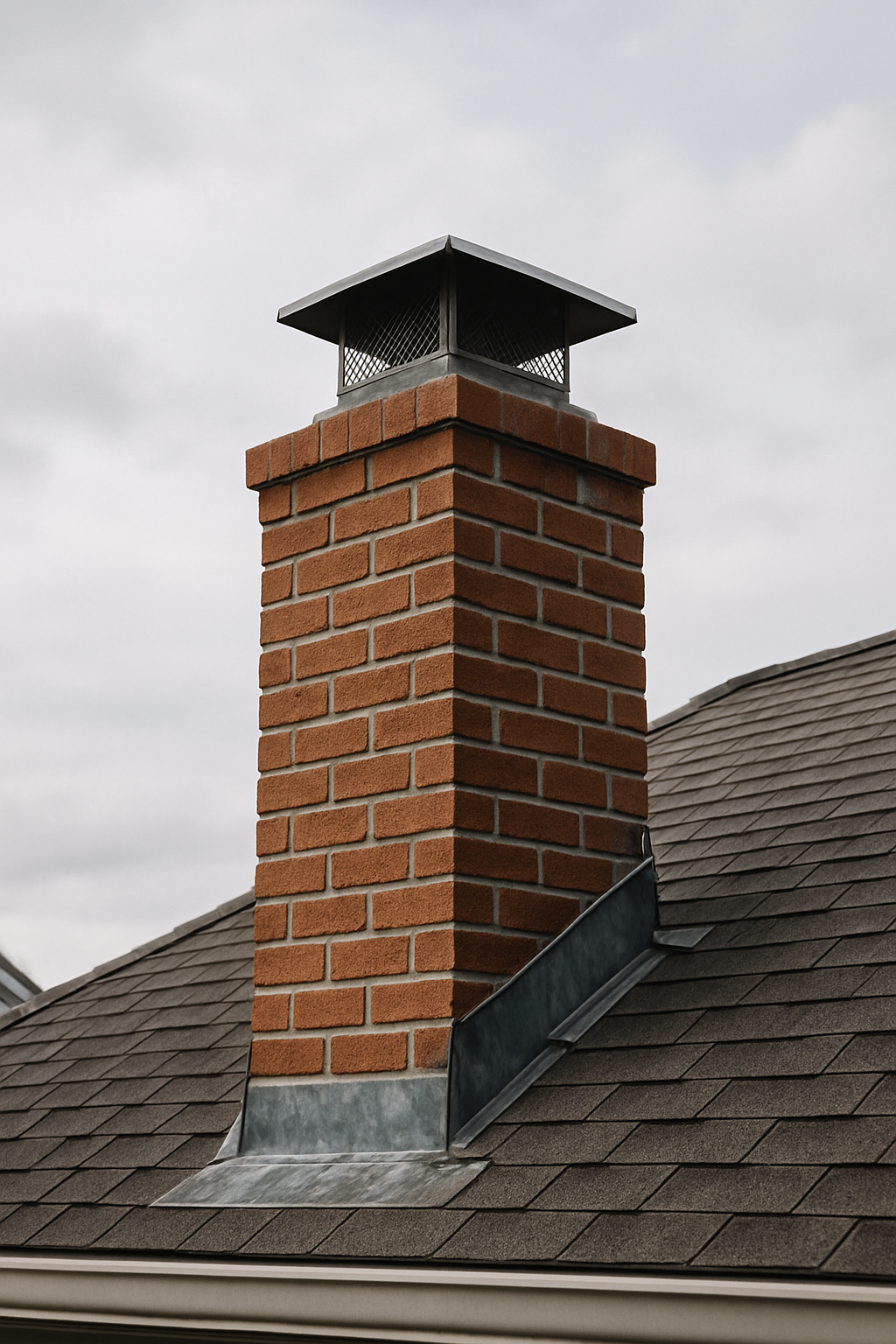
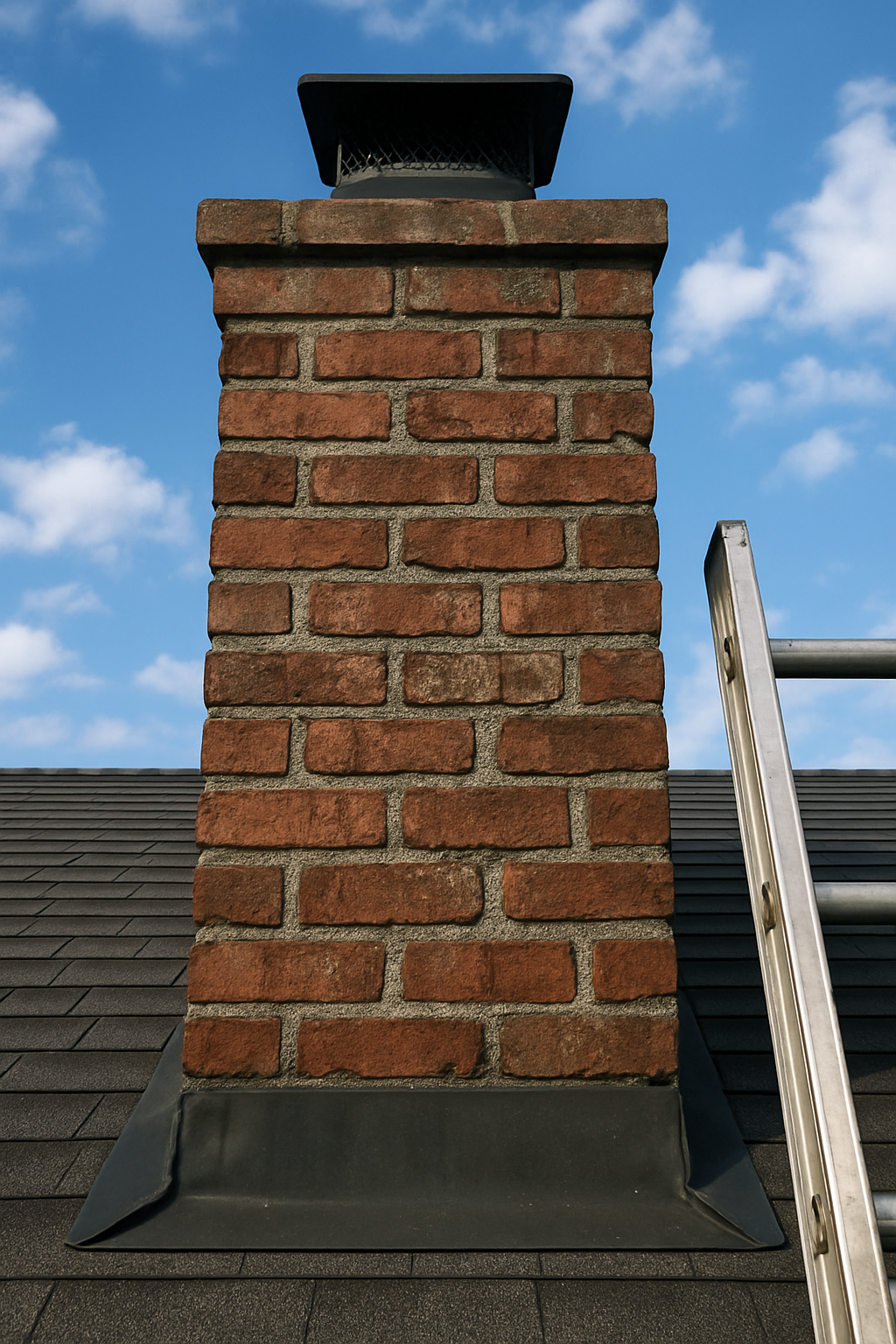
You look up at the chimney and the mortar between the bricks is crumbling — gaps you could slide a finger into, chunks missing altogether. It looks like the whole thing is falling apart, and the number that comes to mind is a full rebuild: a mason, scaffolding, thousands of dollars. Most of the time, that’s not what you’re looking at. Crumbling mortar is the chimney’s most common and most fixable problem. Two other signs are the ones that actually mean the structure itself is failing — and one of them you’d never think to check.
Here’s how to tell which one you’ve got before you call anyone.
First: mortar is not brick
A chimney is really two separate things that fail on two different timelines. The mortar — the material between the bricks — is meant to wear out. It’s the sacrificial part, typically good for 25 years or so before it needs attention, less in a harsh climate or a poorly built original. The brick itself, and the structure it forms, is supposed to last the life of the house. Almost everything homeowners panic about is the mortar. The rare thing to actually worry about is the brick and the structure underneath it.
The cheap fix: repointing
Repointing (also called tuckpointing) means grinding out the failed mortar to a consistent depth and packing new mortar into the joints. It doesn’t touch the bricks themselves. Signs you’re looking at a repointing job:
- Mortar joints that are crumbling, powdery, or missing in spots — you can scratch it out with a screwdriver
- White, chalky staining (efflorescence) on the brick face, which is mineral residue from water moving through the mortar
- The bricks themselves are intact — solid, square edges, no chunks missing
This is a bounded, well-understood job. A mason quotes it by the linear foot of joint, and it’s typically a fraction of what a rebuild costs. If this is all you’re seeing, the chimney isn’t failing — its mortar is just due.
Sign 1: the brick itself is cracked or spalling
This is different from crumbling mortar, and it’s the first real warning sign. Look for a crack running through the brick itself — not just the joint between two bricks, but a line that continues straight through the brick face, sometimes for several courses. Also look for spalling: chunks of the brick’s outer face popping off, usually from water getting into the brick and freezing. A brick with its face blown off, or a crack tracking through multiple bricks in a line, means water has been getting past the mortar and working on the structure itself. Repointing the joints around it won’t fix a cracked brick — those bricks need to come out and be replaced, and if it’s widespread, that’s most of the way to a rebuild anyway.
Sign 2: it’s leaning or separating from the house
Stand back and sight down the chimney against the roofline. A chimney that’s visibly leaning, or where you can see a gap opening up between the chimney and the house at the roofline, isn’t a masonry problem — it’s a foundation problem. Chimneys often sit on their own separate footing, and if that footing has settled or was undersized to begin with, the whole structure is moving. No amount of repointing fixes a chimney that’s tipping. This is the sign that most reliably means a full rebuild, sometimes down to a new footing.
The one you can’t see from the ground
If you use the fireplace or a wood stove, there’s a failure mode that never shows on the outside: a cracked or deteriorated flue liner inside the chimney. It doesn’t affect the exterior brick at all, but it’s a genuine safety issue — a compromised liner lets heat and combustion gases reach the surrounding structure and framing. This isn’t something to guess about from a photo. If the chimney is actively used and hasn’t been inspected in a few years, get a certified chimney sweep to run a camera up the flue before you use it again, regardless of how the outside looks.
The decision, simply
Repoint when: the mortar joints are crumbling or missing but the bricks are intact and the chimney stands straight. This is routine maintenance, not a red flag.
Rebuild (or at least a serious mason consult) when: you see cracks running through the brick itself, spalling brick faces, or any visible lean or separation from the house. These mean the structure — not just the weather-facing joint — is compromised.
Always, regardless of the outside: if you burn wood in it, get the flue inspected periodically. The exterior brick and the interior liner fail independently of each other.
DIY or not
Small repointing jobs — a few feet of joint near the top, a crack you can reach safely from a roof — are within reach for a comfortable DIYer with the right mortar mix and a steady footing. But chimney work means working at height, often above the roofline, and a full repoint or rebuild is not a one-person ladder job. Most homeowners are better off hiring a mason for anything beyond a small patch — the risk isn’t the skill, it’s the fall.
Not sure which one you’re looking at?
Send me a photo of the chimney from the ground and a close-up of the mortar or any cracking you can see. I’ll tell you whether you’re looking at routine repointing or something that needs a mason’s eyes on the structure — a written diagnostic with the specific read and honest next step, $19.99, back to you in minutes.