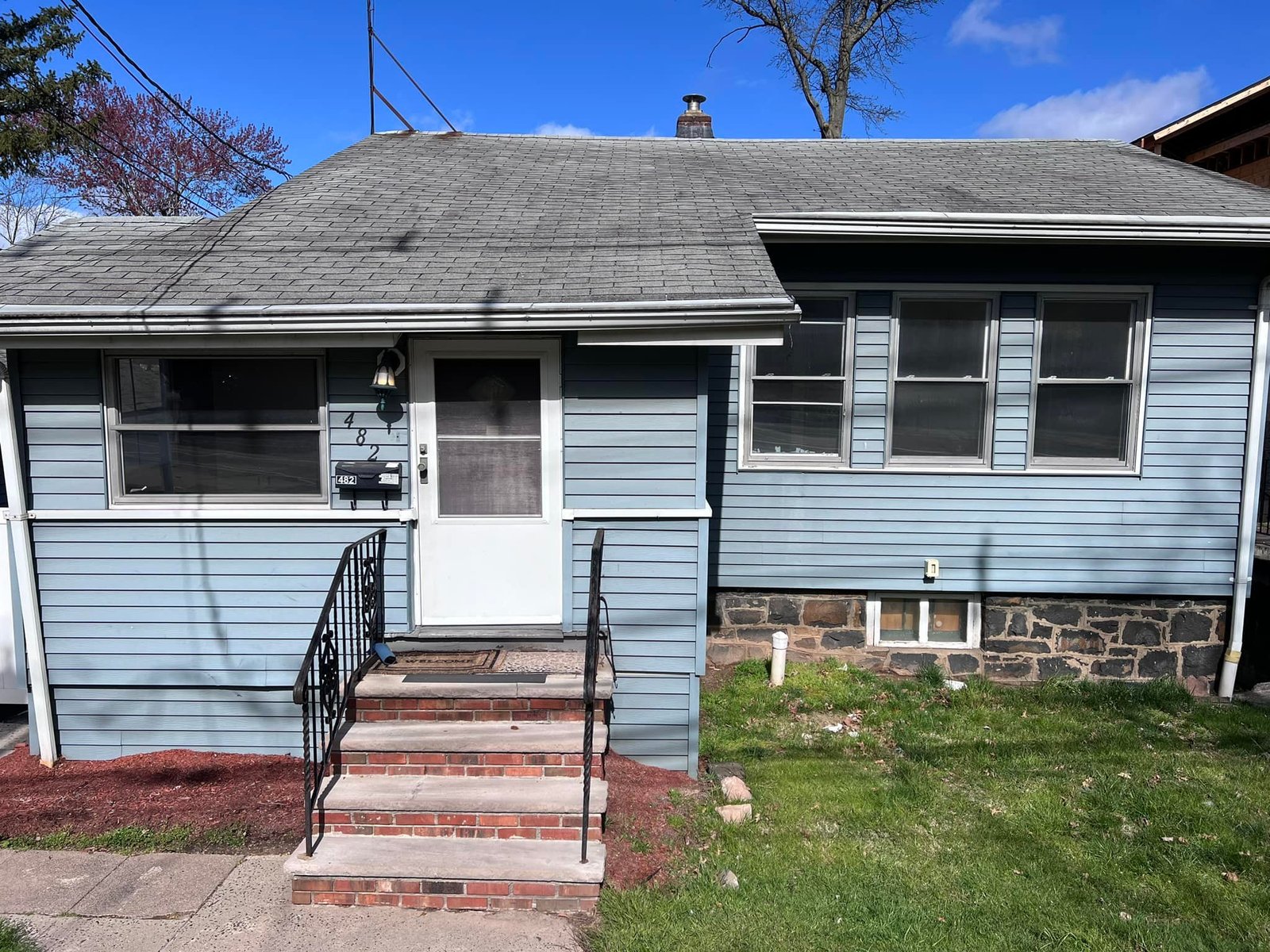
Re-siding a house is a $15,000 to $40,000 project depending on size and material. And a real share of the houses that “need” new siding actually need a few board replacements and a good paint job — for a tenth of the cost. The trick is telling genuine siding failure apart from siding that’s just tired.
I’ve re-sided houses and I’ve talked people out of re-siding houses. Here’s how I sort it, sign by sign.
Sign 1: Actual rot — and you find it by pressing, not looking
This is the one that genuinely justifies replacement, and it’s the one to check first. Walk the house and press on the siding — especially low to the ground, at corners, under windows, and anywhere downspouts dump or sprinklers hit.
Sound siding is firm. Rotted siding is soft, spongy, or crumbles under thumb pressure. Soft wood siding means moisture has gotten in and the material is breaking down — and more importantly, it means water has been getting behind the siding, which is where the expensive damage hides (more on that below).
A few soft boards = targeted replacement. Soft siding all over the house, on multiple sides = a systemic moisture problem and a real re-side candidate.
Sign 2: Paint that won’t hold — but figure out why first
Paint that peels, blisters, or won’t last more than a few years on wood siding feels like the siding failing. Sometimes it is. But often the paint is failing because of moisture pushing out from inside the wall — bad bathroom or kitchen ventilation, no vapor barrier, a leak — not because the siding is bad.
If you re-side without fixing the underlying moisture source, the new siding’s finish will fail the same way. So when paint won’t hold, ask why before you blame the siding:
- Peeling concentrated on exterior walls of bathrooms, kitchens, or laundry rooms points to interior moisture / ventilation, not siding.
- Peeling everywhere, evenly points to a surface-prep or paint-quality issue — fixable with proper prep and good paint, no re-side needed.
Sign 3: Warped, buckled, or cracked panels (especially vinyl)
Vinyl siding that’s warped, buckled, or rippling usually isn’t worn out — it’s an installation error. Vinyl expands and contracts with temperature, and if it was nailed too tight (it’s supposed to “float” on the nails), it buckles in the heat. Cracked or holed vinyl is usually impact damage — a ladder, a mower-thrown rock, hail.
The good news: vinyl is designed to be spot-replaced. Individual panels unzip and swap out. A few damaged panels is a repair, not a re-side — if you can still get a color match (older or discontinued colors are the catch).
Sign 4: Higher energy bills and drafts — it’s what’s behind the siding
If the house feels drafty and bills are creeping up, siding gets blamed, but siding itself isn’t insulation. What matters is what’s behind it: the house wrap (the weather-resistive barrier) and whether there’s any exterior insulation or wall insulation at all.
This is actually an argument for doing it right when you do re-side — because a re-side is your one chance to add a proper house wrap and rigid foam insulation to the outside of the walls while everything’s open. But it’s not a reason to re-side a house that’s otherwise sound. If comfort is the only complaint, look at attic insulation and air-sealing first — they’re far cheaper per dollar of comfort.
Sign 5: It’s just tired — and that’s the most common real answer
Here’s the honest one. Most “we need new siding” decisions aren’t about failure at all. The siding is faded, chalky, dated, dented here and there, and you’re sick of repainting it every five years. That’s maintenance fatigue, and it’s a completely legitimate reason to re-side — especially switching from paint-grade wood to a low-maintenance product like fiber cement or quality vinyl so you stop repainting.
Just call it what it is: an upgrade decision, not an emergency. Which means you have time to get multiple bids, pick the right material, and do it on your schedule — not the salesman’s.
The hidden cost nobody quotes: rotted sheathing
Whether you repair or re-side, here’s the wildcard. When siding comes off, you sometimes find the sheathing behind it — the plywood or OSB skin over the framing — has rotted too, because water got past the siding years ago. Rotted sheathing has to be replaced before new siding goes on, and it’s not in the original quote.
This is exactly why Sign 1 (soft siding) matters so much: soft siding is the warning that water has been getting behind it, which is the warning that there may be sheathing damage waiting. Always ask a re-side contractor what happens — and what it costs — if they find bad sheathing once they open it up. A good one has already told you. A bad one surprises you with a change order halfway through.
How to apply this
- Press, don’t just look. Soft siding low and at corners is the real failure signal.
- Diagnose peeling paint before blaming siding — interior moisture and prep are common culprits.
- Warped or cracked vinyl is usually a repair, not a re-side, if you can match the color.
- Drafty? Check attic/air-sealing first. Siding isn’t insulation.
- Budget for sheathing surprises before you sign a re-side.
Want a read on your siding?
If you’ve got soft spots, peeling paint, or a re-side quote you’re not sure about, send me three photos for a $19.99 diagnostic report — a wide shot of the worst wall, a close-up of any soft, rotted, or peeling area, and a shot down low near grade or a downspout.
I’ll tell you whether you’re looking at a few boards and a paint job or a real re-side — and what to make the contractor account for before you commit.
You can also see exterior and siding work I’ve done for a sense of what’s involved either way.
The most expensive siding decision is wrapping a whole house to hide a problem that was three rotted boards and a ventilation fix.