The HVAC repair-or-replace decision is one of the easiest places in a house to get talked into spending five times what you needed to. A part fails, a tech writes “recommend replacement,” and suddenly you’re looking at a $12,000 quote for a problem that might have been a $400 fix.
I’m not anti-replacement. Sometimes replacing is exactly right, and trying to nurse a dying system through one more winter is the false economy. But the decision should come from a framework, not from whoever’s standing in your basement holding the quote pad. Here’s the framework I’d use.
Step 1: Get the age off the data plate before anything else
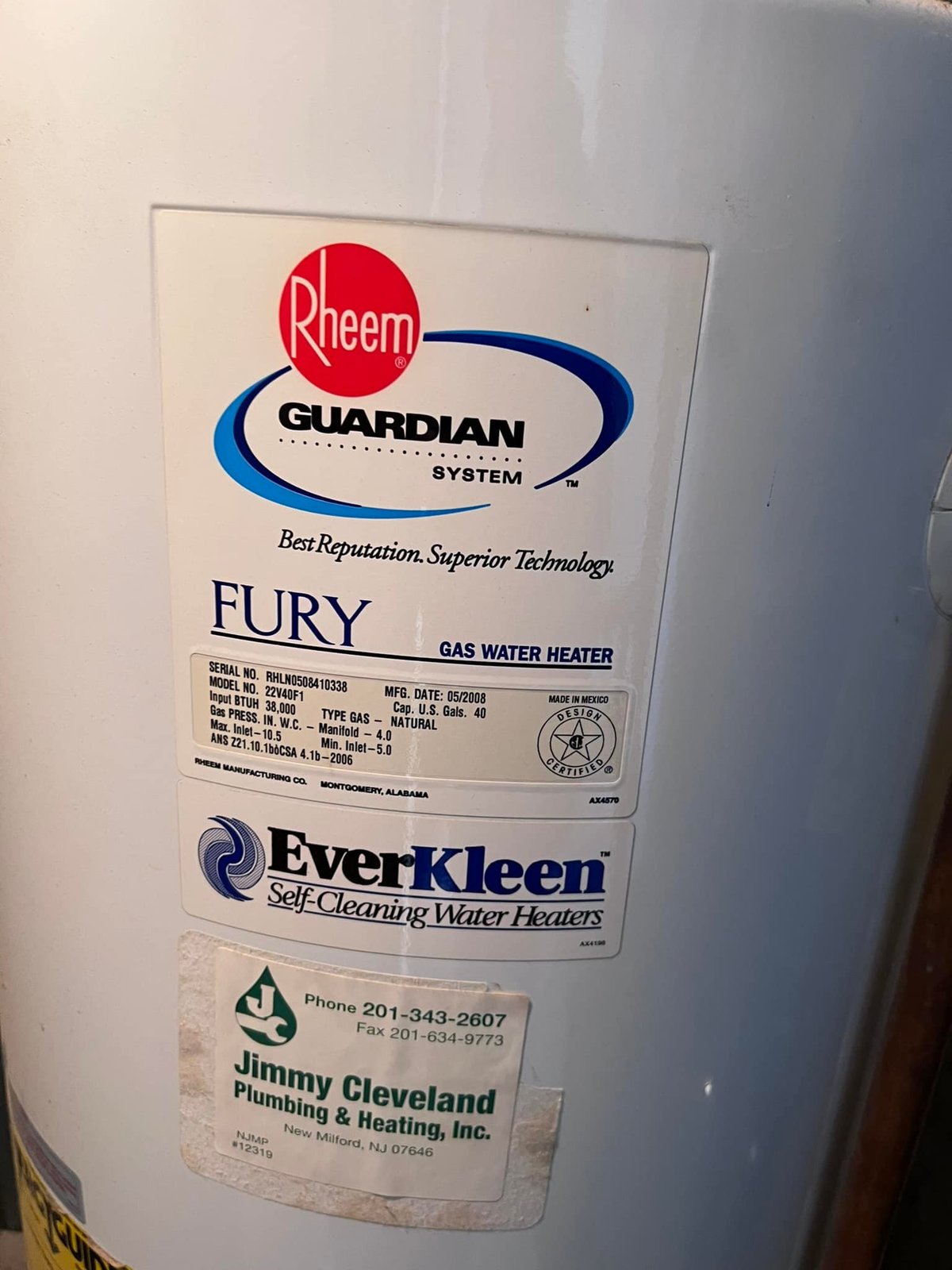
Find the metal data plate on the furnace and on the outdoor AC condenser. It has the model and serial number. Decode the manufacture date (search “[brand] HVAC age serial number”).
The lifespans you’re working against:
- Gas furnace: 15-20 years.
- Central AC / heat pump: 12-15 years.
This single number frames everything below it. A 6-year-old system with a failed part gets repaired, almost always. A 19-year-old system with the same failed part is a different conversation. You can’t make this decision without the age, and a tech who quotes replacement without telling you the age is skipping the most important input.
Step 2: For the AC — what refrigerant does it use?
This is the one that quietly forces a lot of replace decisions, and it’s worth understanding.
Air conditioners and heat pumps made roughly before 2010 use R-22 refrigerant. R-22 was phased out and is no longer manufactured. The remaining supply is expensive and getting more so every year.
So if your older AC has a refrigerant leak and needs a recharge, you’re not paying the old price — you’re paying whatever R-22 costs now, which can run hundreds of dollars per pound, and you’re putting it into a system that’s leaking anyway. An R-22 system that needs refrigerant is usually a replace, not because the unit is junk, but because feeding it is throwing money into a leak.
A newer system on R-410A (or the newest R-454B) doesn’t have this problem. Check the nameplate on the condenser — it lists the refrigerant.
Step 3: Run the 50% rule
Here’s the math, and it’s simple:
If a single repair costs more than 50% of the price of replacing that component — and the unit is in the back half of its lifespan — replace it. If the repair is well under 50%, or the unit is young, repair it.
A $400 igniter or capacitor on a 10-year-old furnace? Repair, obviously. A $2,500 cracked heat exchanger or a compressor on a 16-year-old system, where replacement is $5,000? That’s over the line — replace. The repair cost, the replacement cost, and the age are the three numbers. Get all three before you decide. If a tech only gives you one of them, you don’t have enough to decide.
Step 4: If the complaint is comfort, look at the ducts first
A huge share of “I need a new system” calls are actually comfort complaints — one room never gets warm, the upstairs cooks in summer, the air feels weak. Homeowners assume the unit is too small or worn out.
Very often it’s not the unit at all. It’s:
- Leaky or disconnected ductwork dumping conditioned air into the attic or crawlspace.
- A closed or stuck damper.
- Undersized return air so the system can’t breathe.
- A filter so clogged the system is starving.
A new $10,000 system bolted onto the same bad ductwork delivers the same bad comfort. Before you replace the equipment, have someone actually look at the distribution. The fix is frequently a fraction of the cost — and it’s the thing the equipment salesman has the least incentive to find.
Step 5: Don’t replace a working system for efficiency alone
You’ll hear that a new high-efficiency system “pays for itself” in energy savings. Run that math carefully. Going from an old 80%-efficient furnace to a 96% one, or an old SEER-10 AC to a SEER-16, does cut your bills — but the payback period on a system that’s still working is often longer than you’d expect, sometimes longer than the new system’s own lifespan in mild climates.
The honest version: replace for efficiency when something has already failed and you’re replacing anyway — then absolutely spend up for the efficient unit. Replacing a perfectly good system purely to save energy rarely pencils out.
The thing nobody tells you: you can sometimes replace just one half
If your AC compressor dies but your furnace is fine, you don’t automatically need both. The pressure to “match the system” is real — and sometimes legitimate, if the refrigerant or coil is incompatible — but sometimes it’s just an upsell. Ask specifically: what fails if we replace only the part that’s broken? Make them justify the matched-system upgrade rather than assuming it.
How to apply this
- Get all three numbers: age, repair cost, replacement cost. Don’t decide on fewer.
- Check the AC refrigerant. R-22 plus a leak usually tips toward replace.
- If it’s a comfort problem, check the ducts before the equipment.
- Make them justify a full-system replacement when only one component failed.
Want a second opinion on your quote?
If you’ve got an HVAC quote in hand and a nagging feeling it’s bigger than the problem, send me three photos for a $19.99 diagnostic report — the furnace data plate, the outdoor condenser nameplate, and a copy of the quote or the diagnosis.
I’ll tell you whether the math actually supports replacement, what questions to put back to the contractor, and where I’d push for repair instead.
You can also see mechanical work I’ve done for a sense of what’s behind the panels.
The most expensive HVAC decision isn’t repair or replace — it’s replacing the wrong thing, or replacing too soon, because nobody handed you the three numbers.