Most homeowners look at a driveway and see “good enough” or “needs replacing.” Those are the only two categories most people think exist.
The truth is there’s a third category in between — and it’s where most of the money is. A driveway in that middle zone can be maintained for $2,000–$4,000 with the right work at the right time. The same driveway, ignored for three more winters, becomes a $12,000–$18,000 full tear-out and replacement.
The difference between those two numbers is whether you spotted the right signs early. Here are the five red flags I look for whenever I’m walking somebody’s driveway, ranked by what each one tells you about how much time you have left.
Red flag 1: Alligator cracking
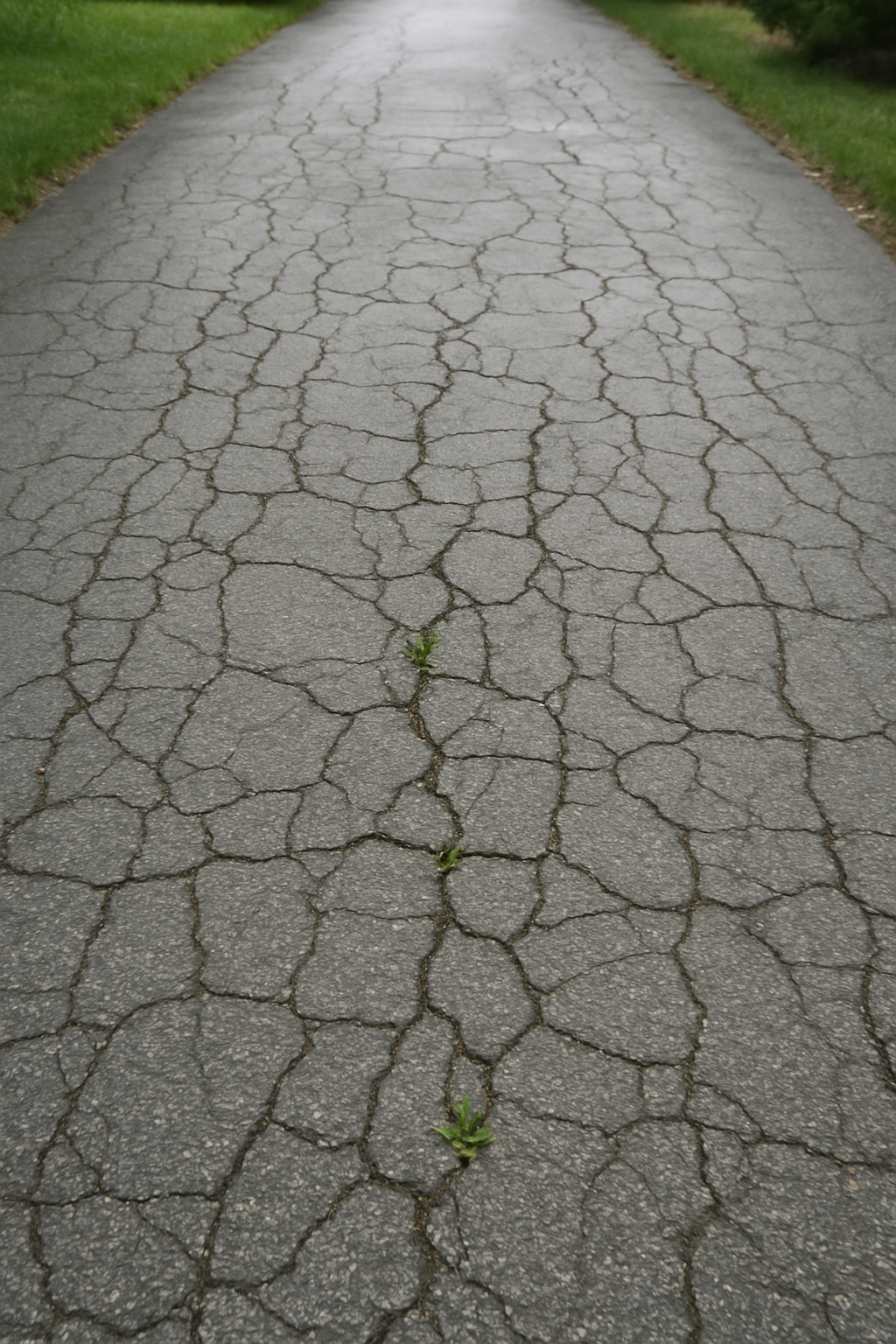
Walk out to your driveway and look closely at the asphalt. Are you seeing a pattern of cracks that interconnect to form little rectangular patches, like reptile skin or dried-out mud? That’s alligator cracking, and it’s the single most expensive pattern to see.
Regular surface cracks — long single lines running with or across the slope — are usually just the top course of asphalt aging. They’re cheap to fix. Alligator cracks are different: they form when the asphalt has failed all the way down through the binder course, which means the sub-base underneath is moving. Sealing the surface doesn’t help, because the failure is structural.
The only real repair for an alligator zone is a cut-out and patch. A contractor saw-cuts a clean rectangle around the failed area, excavates down to good base, re-compacts, and pours fresh asphalt. Costs run $8–$15 per square foot for the patch, plus a markup if it’s a small job. For a 30-square-foot alligator section, that’s $250–$500.
Ignore it for two more freeze-thaw cycles and the patch grows. Once it’s 200+ square feet, you’re not patching anymore — you’re tearing out the whole driveway.
Red flag 2: Birdbath puddles after rain
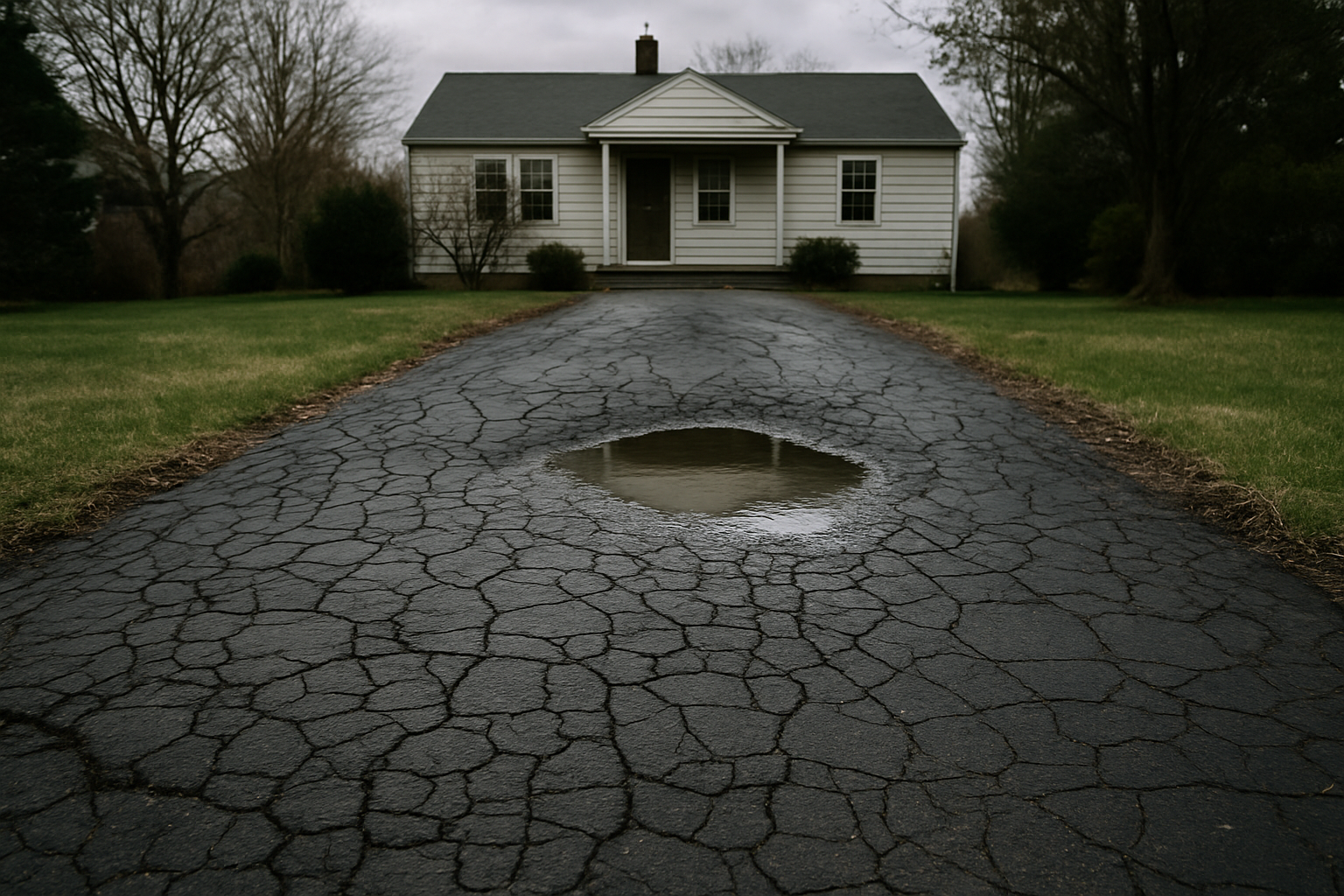
Walk your driveway during or right after a hard rain. You’re looking for water sitting in low spots an hour after the rain stopped. We call these “birdbaths” because they collect water like one.
Birdbaths mean the sub-base has settled under that spot. The asphalt above the settled area is now lower than the surrounding surface, and instead of shedding water down the slope, it’s holding it. That water doesn’t just sit there — it soaks down through any micro-crack in the asphalt and starts saturating the base course below.
A saturated base under your driveway is a problem-in-progress. Every freeze-thaw cycle expands the trapped water, which cracks the asphalt from below, which lets more water in, which makes the cycle worse.
The fix is spot patching with hot mix or cold mix and re-leveling. A contractor heats or pours hot asphalt into the low spot, screeds it level with the surrounding surface, and rolls it. $200–$400 per low spot for a contractor, less if you DIY with a few bags of cold-mix.
Let it go and the birdbath turns into a pothole within 1–3 years. Once it’s a pothole, you’re paying to cut out the surrounding area too.
Red flag 3: Crumbling, eroding edges
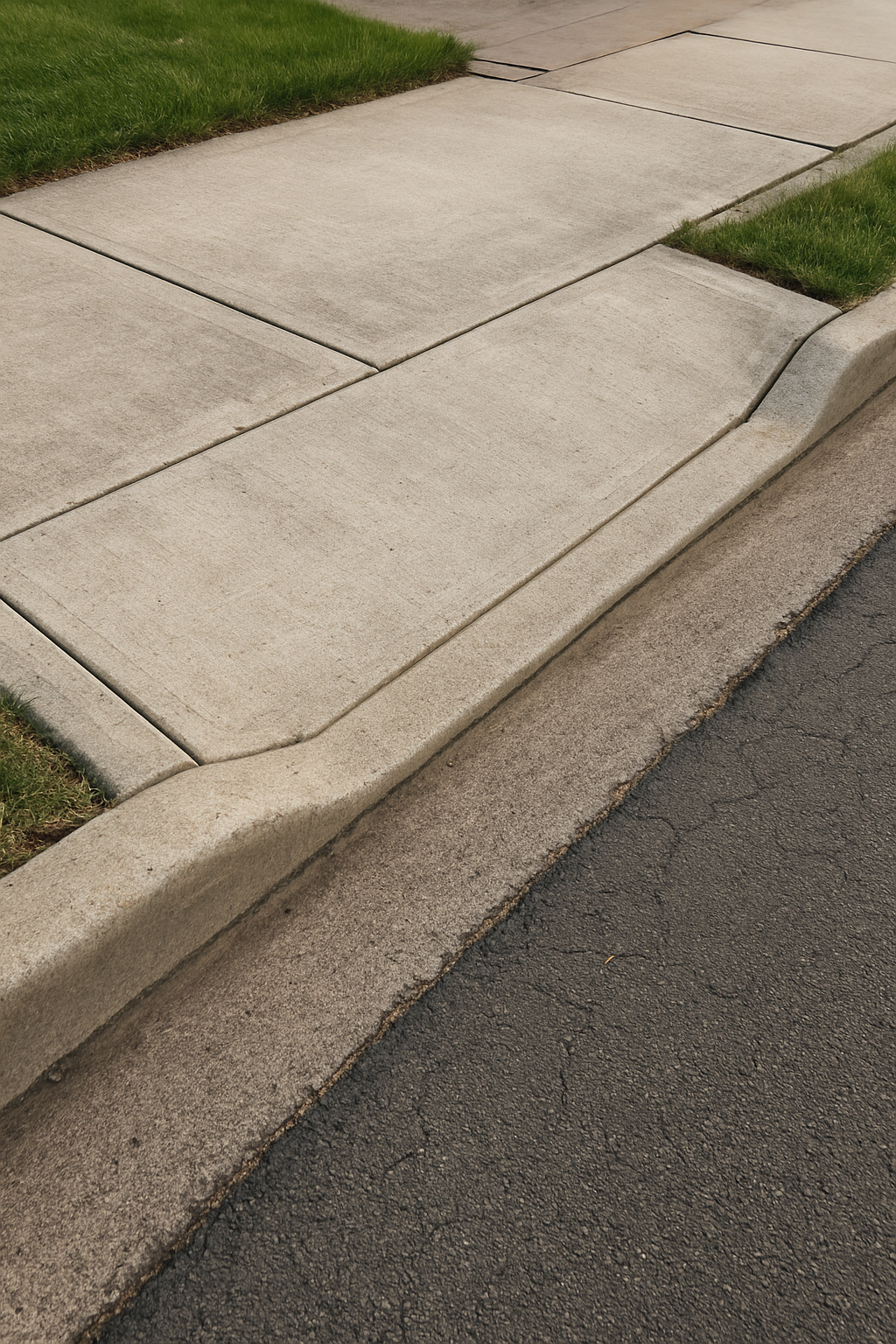
Look at where your driveway meets your lawn, the gravel shoulder, or the road. The edge should be a clean line — asphalt straight down to whatever’s next to it. What you don’t want to see:
- Crumbling edges that flake off in chunks every time you mow nearby
- Tufts of grass growing up through the asphalt along the edge
- Visible brown gravel base course under the broken edge
This pattern means the binder course is exposed on the side, and water is now eating into the driveway from the edge inward. The damage looks cosmetic from above but it’s structural — every storm, water gets into the side and weakens another inch of base.
The fix is edge restoration. A contractor with an edge form will pour a fresh strip of asphalt along the side, tie it into the existing surface, and compact. Runs $5–$15 per linear foot, so a 40-foot edge restoration is $200–$600. Pretty cheap.
Skip it and you’re rebuilding the whole edge during your next repave — meaning your repave costs $2,000–$5,000 more than it should because the contractor has to deal with the failing edge as part of the job.
Red flag 4: Pitched toward the house
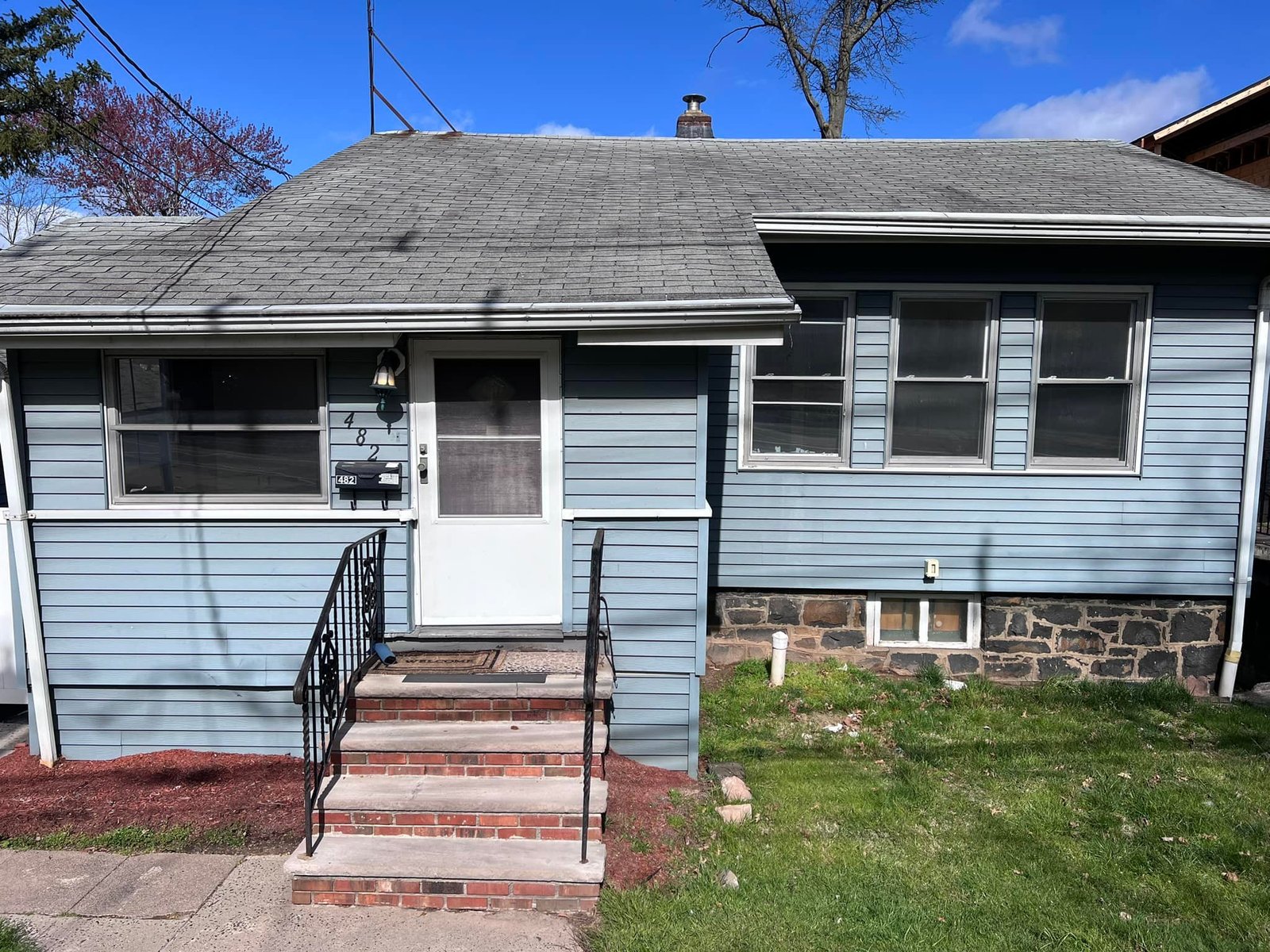
Stand at the foot of your driveway, near the road, and look up at the driveway and the house. The driveway should pitch downward away from the house — water flowing toward the street, not toward the foundation or garage.
If the pitch is wrong — or if the driveway used to be right but has settled over the years so it’s now flat or sloped the wrong way — every rainstorm is delivering water at your foundation or your garage. Look at the bottom of your garage door and the foundation wall along the driveway. Wet stains? Efflorescence on brick? Water marks at the threshold? All signs the pitch is funneling water inward.
The fix depends on severity:
- Mild reverse pitch: sometimes a contractor can grind the high side down to restore positive slope. $1,500–$3,500.
- Moderate: mill the surface (skim off the top inch) and re-pave to a corrected pitch. $3,000–$6,000.
- Severe: remove and re-lay the affected section. $5,000–$10,000.
Skip the fix and you’re paying for downstream damage: foundation waterproofing ($12,000–$25,000), garage sill replacement ($2,000–$5,000), garage floor sealing and damp-proofing ($1,500–$4,000), or some combination of all three. The driveway fix is almost always cheaper than the damage it causes.
Red flag 5: Tree-root heave
Walk the driveway looking for bulges, lifted seams, or crack patterns radiating from one spot. Look especially at sections of driveway within 10 feet of a mature tree.
Tree roots seek water, and a driveway’s compacted sub-base is the best water source in your yard — it captures rainwater and holds it long enough for roots to find it. Once a root gets under the base course, it grows in diameter every year, lifting the asphalt above it.
By the time you can see the bulge from above, the root is already through the base. The driveway is no longer riding on level ground; it’s riding on a wedge of wood.
The fix has two parts:
- Root pruning (sometimes removal if the tree is too close to the driveway): an arborist or root specialist cuts the offending roots cleanly. $300–$800.
- Localized re-pave of the heaved section: cut out the lifted asphalt, regrade the base where the root used to be, re-lay fresh asphalt. $700–$2,000 depending on size.
The trap homeowners fall into: they pave over the heave without dealing with the root. The new asphalt lifts again within 2–3 years.
How to decide which one to fix first
If you have multiple red flags showing, here’s the order that’s worked for me every time:
- Pitched toward the house (red flag 4) — if your driveway is funneling water at your foundation, every other repair is irrelevant until you fix this one. This is the most expensive downstream problem in the list.
- Tree-root heave (red flag 5) — second priority because the root is getting bigger every year. Pruning now is cheaper than pruning later.
- Alligator cracking (red flag 1) — fix while the affected zone is still a patch, not a full section.
- Birdbath puddles (red flag 2) — straightforward spot work.
- Edge crumble (red flag 3) — usually safe to bundle into the next planned maintenance pass.
Want me to look at your driveway?
The fastest way to find out which red flags you’re hitting: send me three photos for a $19.99 diagnostic report — the worst-looking section close up, a wide shot from the road looking up at the house, and one of the edge where it meets the lawn.
I’ll tell you which flags are showing up, what each one likely costs in your area, and which one to attack first.
You can also see paving and driveway projects I’ve worked on — from regrading to full repave to chimney-and-roof tie-ins — for a sense of what the fix actually looks like at each scale.
The driveway tells you it’s failing for years before it actually fails. Most homeowners only listen during the last winter. You don’t have to.