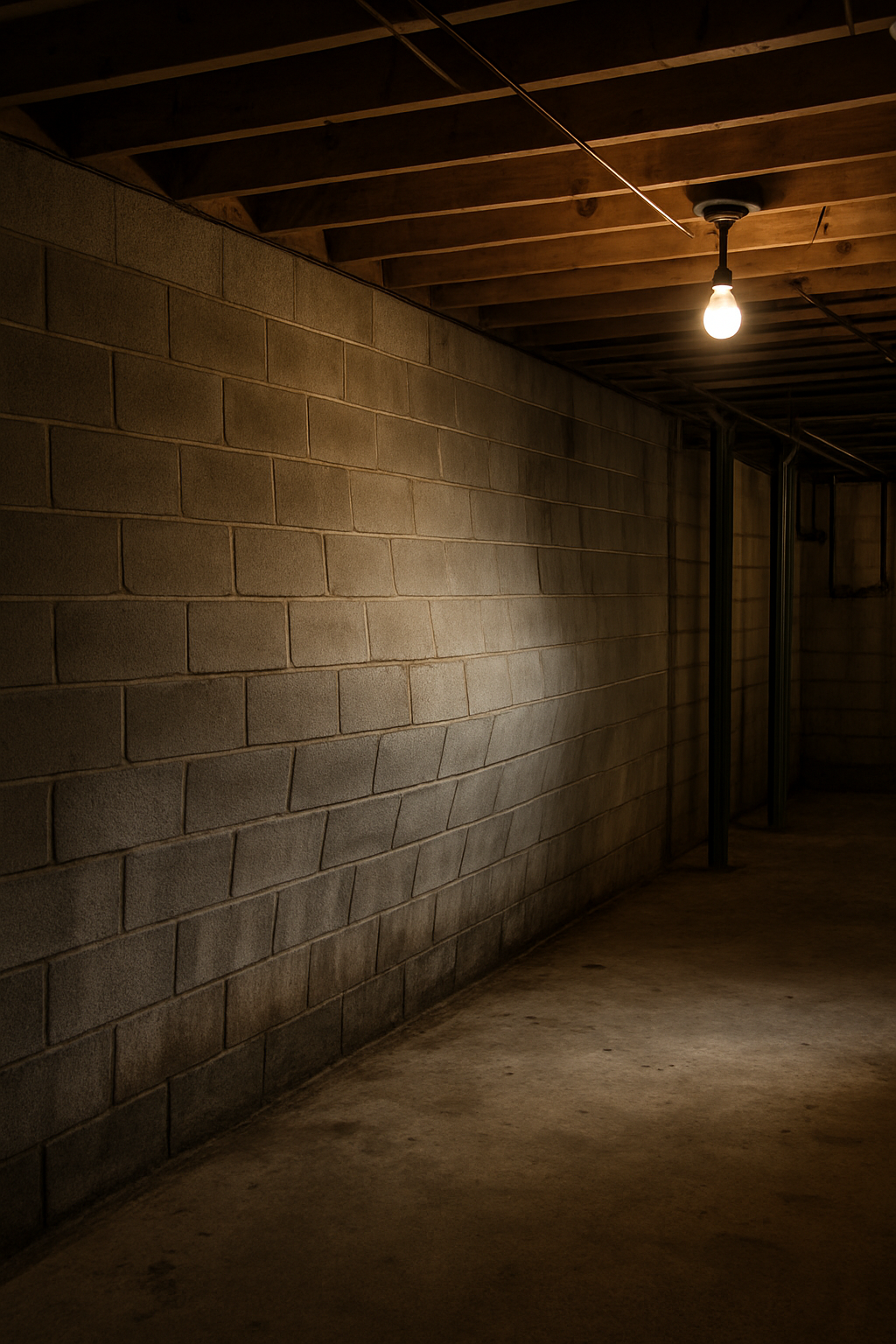
You’re down in the basement and a section of the foundation wall isn’t just cracked — it’s curving inward, like something’s leaning on it from the other side. That’s because something is. A bow is a different problem than a crack, and it means a different level of urgency.
Here’s how to read it.
A bow means the wall is being pushed
A crack can come from simple settling — the house shifting a fraction of an inch over decades, mostly cosmetic. A bow is different: it means the wall itself is deflecting inward under continuous outside pressure, almost always from saturated soil pushing against it (hydrostatic pressure), sometimes made worse by expansive clay soil that swells when wet and shrinks when dry, working the wall back and forth over years. The wall isn’t just aging — it’s actively being loaded past what it was built to resist.
The warning signs that separate “watch it” from “act now”
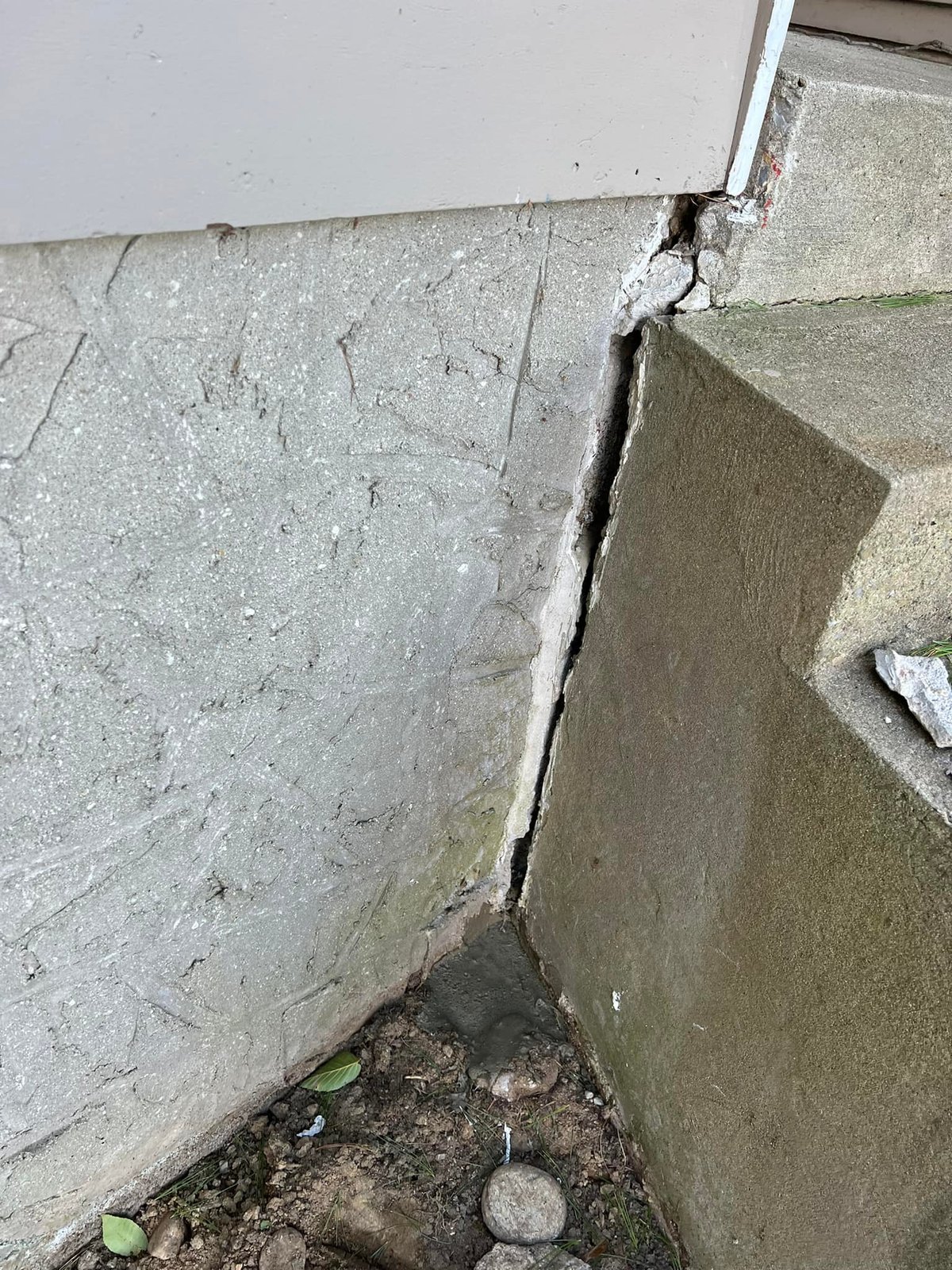
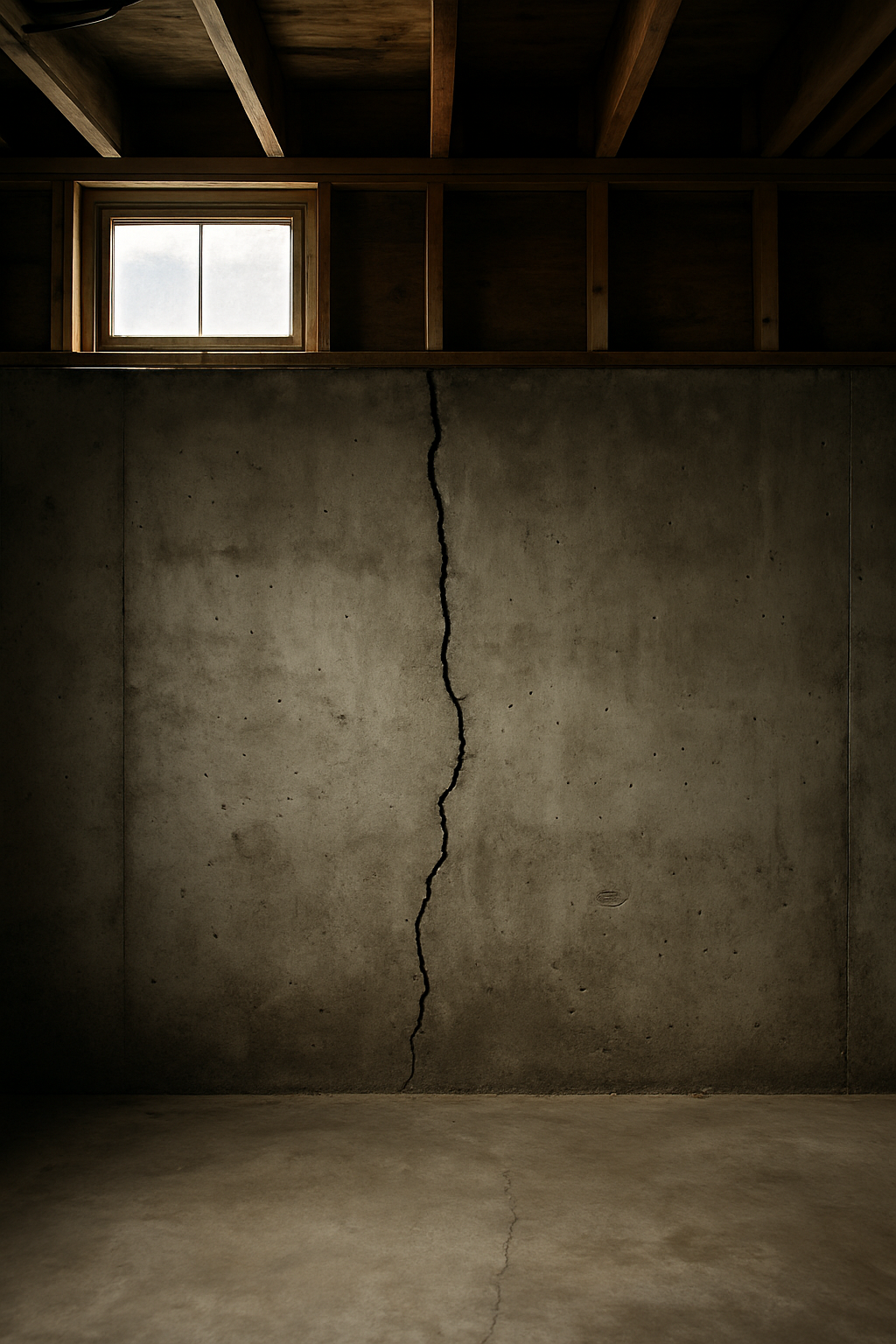
Horizontal, stair-step cracking. Vertical cracks in a poured or block wall are usually cosmetic settling. Horizontal cracks — especially ones that step diagonally along the mortar joints in a block wall — mean the wall is bending, not just settling.
Measurable bow. Hold a straightedge or a taut string against the wall from floor to ceiling. Any visible gap behind the string is a bow. Under about 1 inch of deflection over an 8-foot wall height, most engineers consider it stabilizable without excavation. Beyond roughly 2 inches, or if it’s increasing, you’re typically past a strap-and-anchor fix.
Cracks that are widening, not static. Mark the ends of a crack with a pencil line and date it. No change in a few months is a good sign. Any growth means it’s active.
Doors and windows near the wall sticking or racking out of square. The frame is telling you the wall behind it is moving.
Efflorescence and dampness concentrated at the bow. Water finding a path through a bowing section is common — a wet wall isn’t itself an emergency, but a wet, bowing wall means the same pressure that’s pushing the wall is also driving water through it.
Why it happens
Basement walls are designed to resist a specific amount of lateral soil pressure. That design assumes the soil behind the wall drains reasonably well. When gutters dump water right next to the foundation, grading slopes toward the house instead of away, or a French drain behind the wall clogs or was never installed, the soil behind the wall saturates and its outward push on the wall multiplies — water is far heavier and less compressible than dry soil. Freeze-thaw cycles in cold climates make it worse: water in the soil freezes, expands, and shoves the wall another fraction of an inch every winter.
What it costs
Carbon fiber straps or steel I-beam braces (for bow under about 1–2 inches, confirmed not actively progressing): $400–$1,000 per strap, typically 3–6 straps for an average wall section, so roughly $1,500–$6,000 installed.
Wall anchors (helical anchors driven into stable soil beyond the house, tensioned to pull the wall back): $700–$1,200 per anchor, usually $4,000–$10,000 for a wall.
Push piers or full excavation-and-rebuild (severe bow, active movement, or a wall that’s already failed): $10,000–$30,000+, driven by wall length, excavation access, and whether the wall needs to come down and be poured or built again.
Every one of these numbers assumes the drainage problem causing the pressure also gets fixed — regrading, gutter extensions, a new or repaired French drain. Skip that, and even a correctly installed repair is fighting the same pressure that caused the bow in the first place.
When to call a structural engineer today
Any bow over about 2 inches, any horizontal cracking that’s widening, or a wall that’s bowing and actively leaking — treat as urgent. Most foundation repair companies will send an engineer or a senior estimator out for a free assessment within days; get one out, even if you end up shopping the repair to other contractors after.
DIY or not
This isn’t a DIY repair. Strap and anchor systems are engineered per-wall based on soil type, wall height, and measured deflection — installing them without that assessment risks under-reinforcing a wall that’s still being pushed. What you can do yourself: fix the drainage causing the pressure (extend downspouts 6+ feet from the foundation, regrade so soil slopes away from the house, clear or add a French drain) while you get repair quotes. That won’t reverse existing bow, but it stops making it worse while you decide on a contractor.
Not sure how bad yours is?
Send me photos of the wall — the bow, any cracking, and how water and grading look outside near that section. I’ll tell you whether this reads like a stabilize-in-place repair or something more urgent, and what to ask a contractor before you sign anything. A written diagnostic with the specific read, $19.99, back to you in minutes.