You look at a retaining wall leaning out toward the yard or driveway and the instinct is immediate: that’s about to fail, and it’s going to be an expensive rebuild. Sometimes that’s true. But a lot of retaining walls have some lean built into them on purpose, or settled into a lean decades ago and have been stable ever since. The wall that’s actually failing shows different signs — and once you know what they are, you can tell the difference from across the yard.
Here’s how to read it.
Some lean is normal
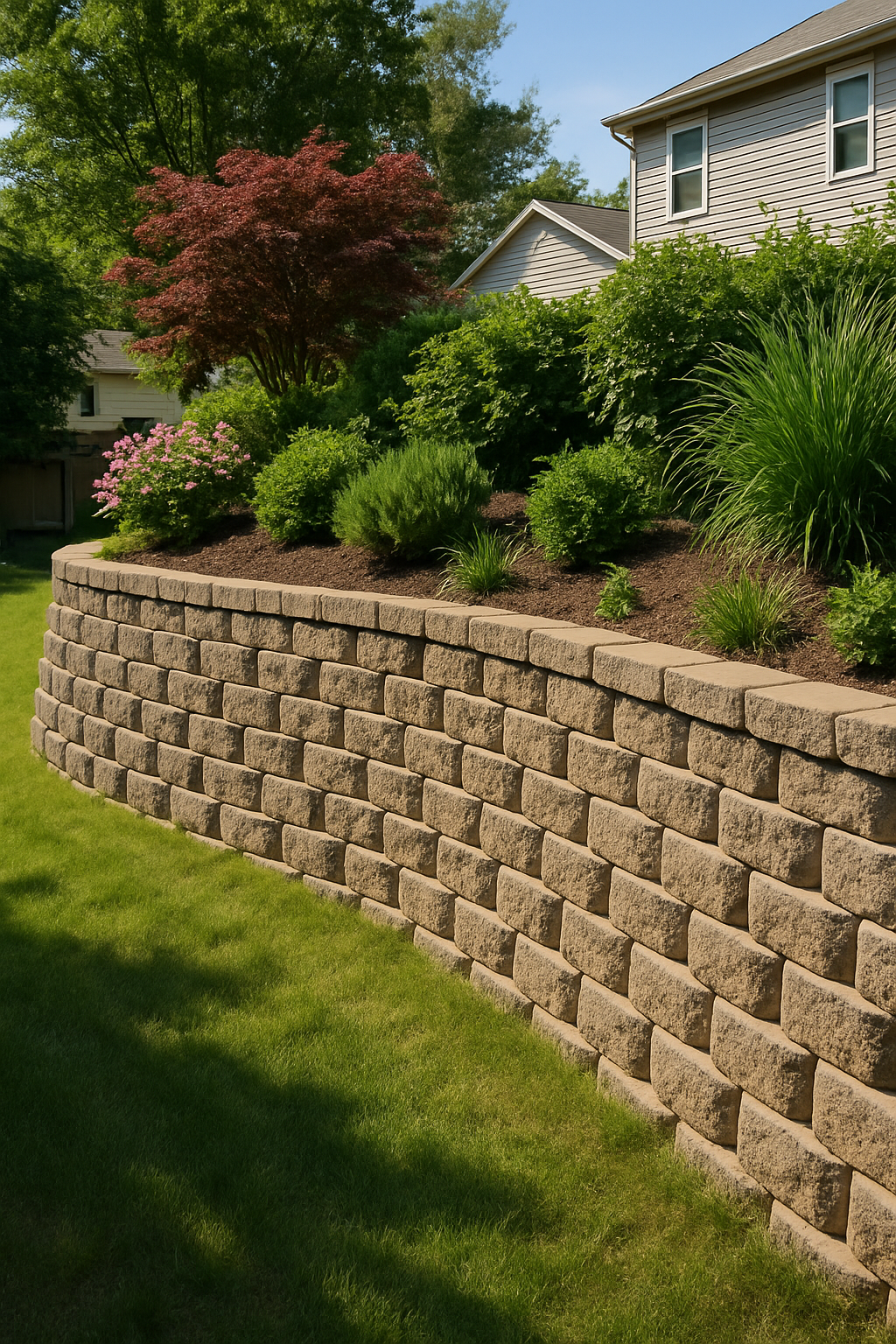
Retaining walls are often built with a slight backward batter — leaning a few degrees into the hill on purpose — so that as the soil behind it settles and pushes forward over the years, the wall ends up closer to vertical instead of leaning out. A wall that’s had a consistent, unchanging lean for years, with no new cracks, no bulging, and nothing moving above it, is very likely just a wall that’s found its resting position.
The signs that mean it’s actually failing
Progressive movement — not just leaning, but leaning more than it used to. Mark a reference point (a screw in the top block and a fixed point behind it, or just take a dated photo) and check it again in a few weeks.
Bulging, not just leaning. A uniform lean along the whole wall is one thing; a bulge in the middle of a section — where the wall pushes outward more in one spot than the rest — is a sign of concentrated pressure behind that section, and it’s a more urgent red flag than an even lean.
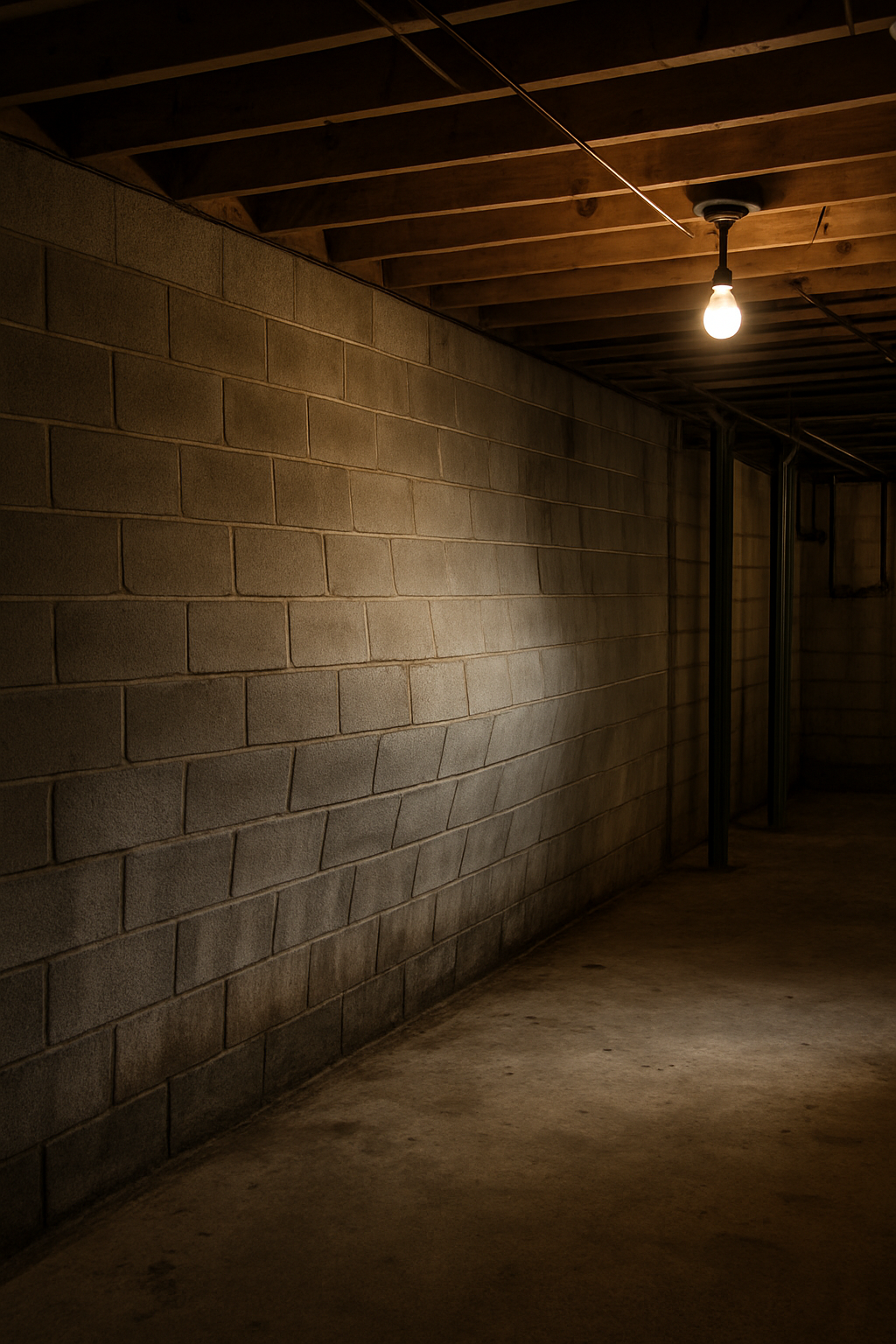
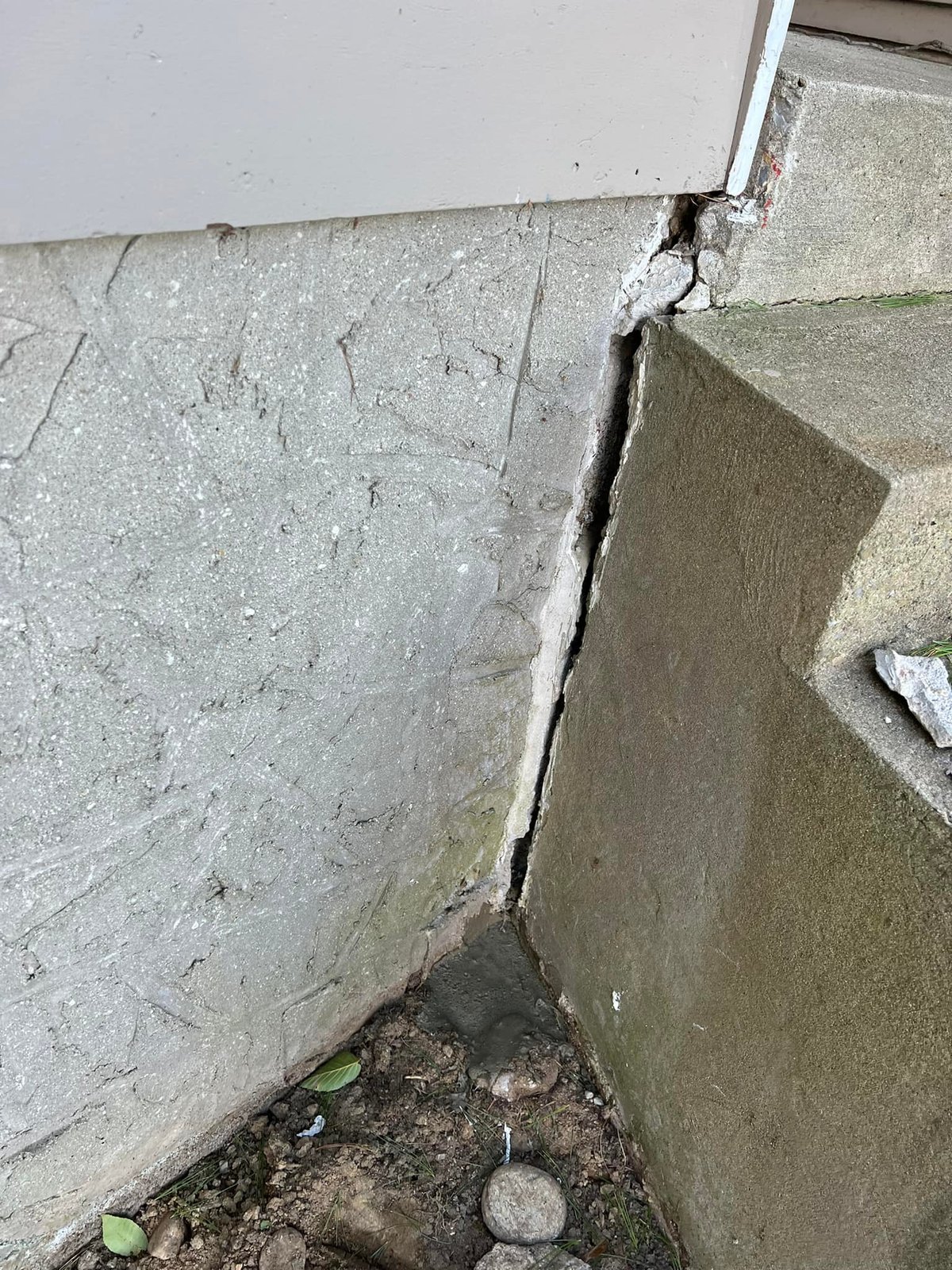
Horizontal cracks or separating blocks/timbers. Vertical hairline cracks in mortar joints are usually cosmetic. Horizontal cracks, or gaps opening up between blocks or timbers that used to sit tight, mean the wall is being pushed from behind.
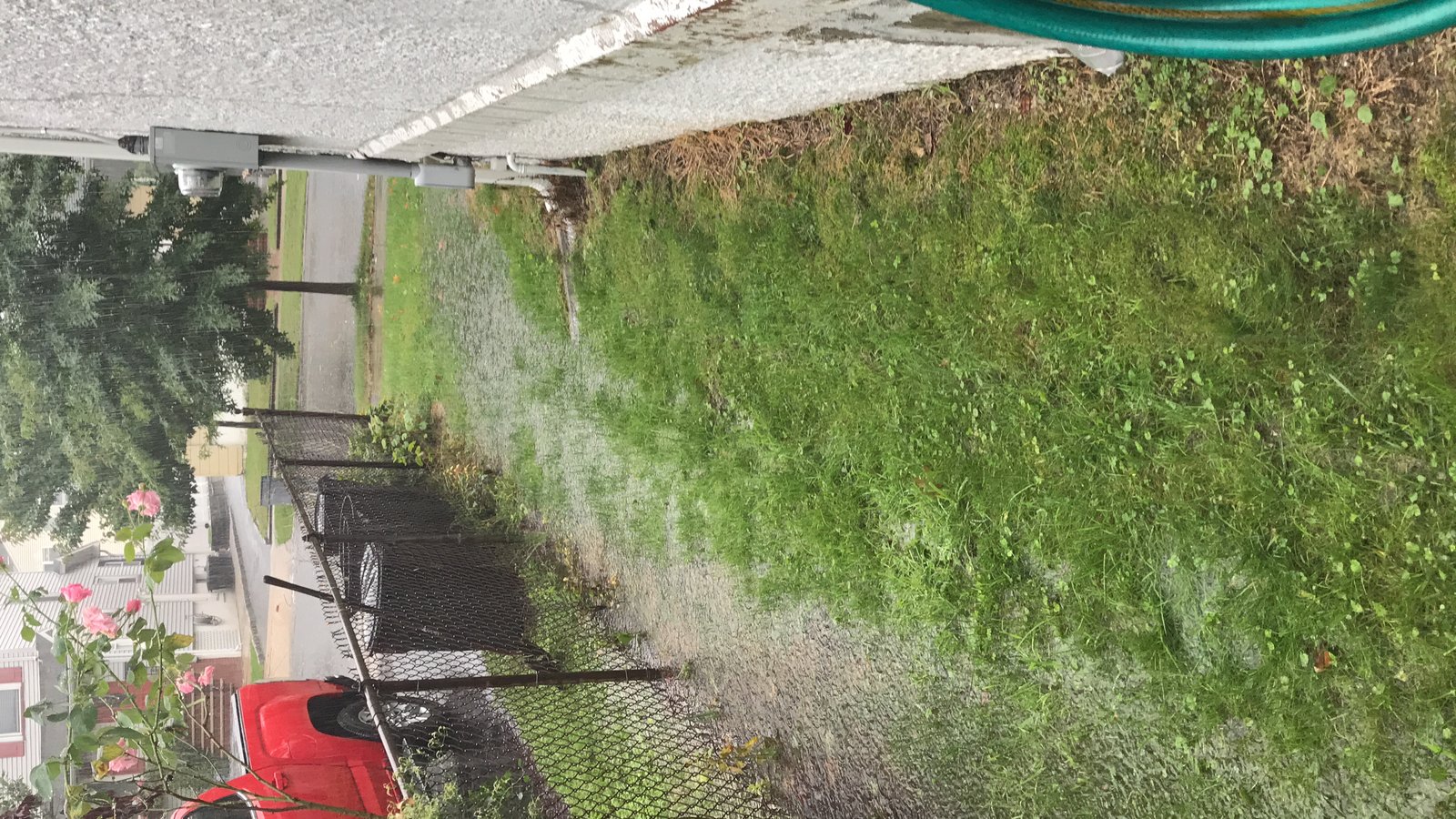
Water pooling at the base, or none draining out at all. A healthy retaining wall should have some water weeping or trickling out at its base or through drain pipes — that’s the drainage system doing its job. A dry wall with no weep and standing water pooling behind it is often worse news than a wall that’s damp.
Leaning trees, fence posts, or a sunken patio near the top. If the ground or anything anchored in it above the wall is visibly moving, the whole soil mass behind the wall is shifting, not just the wall itself.
Why it’s almost always drainage
Retaining walls are engineered to hold back soil, not water. Behind almost every properly built wall is a layer of gravel and a drain pipe meant to carry groundwater away so it never builds up pressure against the wall. When that drainage clogs with silt over the years, was never installed correctly, or gets overwhelmed by poor grading sending extra water toward the wall, hydrostatic pressure builds up behind it — and that pressure, not the wall material itself, is what pushes walls out and eventually topples them. This is why a stone or block wall that’s structurally sound can still fail: the water pressure behind it exceeded what the wall was ever designed to resist.
What it costs
Restoring drainage — clearing or adding a drain pipe, regrading so water moves away from the wall instead of toward it — runs a few hundred to about $2,000 depending on access and how much digging it takes. Reinforcing or rebuilding a failing section runs $3,000 to $10,000. A full teardown-and-rebuild of a taller wall (anything over about 4 feet, or one holding back a slope near the house or driveway) can run $10,000 to $30,000+, largely driven by height, length, and whether an engineer needs to be involved.
When to call an engineer now, not later
If the wall is taller than about 4 feet, holds back a slope close to your house’s foundation or a driveway, or you’re seeing active movement — new cracks appearing, the lean visibly increasing week to week — treat that as urgent. A structural engineer can assess it in a single visit and tell you whether it’s safe to leave alone in the short term while you plan a fix.
DIY or not
A short decorative wall — under 3 to 4 feet, not holding back anything that matters if it fails, no permit typically required at that height — is reasonable for a comfortable DIYer to re-level or add drainage to. Anything taller, anything near a structure, or anything showing active movement is not a DIY project. Retaining walls above a certain height are engineered structures, and getting the drainage or the reinforcement wrong means paying for the fix twice.
Not sure which one you’re looking at?
Send me photos of the wall — the lean, any cracks or bulging, and whatever drainage you can see at the base. I’ll tell you whether this reads like a normal, stable lean or an active failure, and what to have inspected first. A written diagnostic with the specific read, $19.99, back to you in minutes.