Someone tells you that you have mold and you need professional remediation. Maybe you do. Maybe you need a bottle of mold and mildew remover and a sponge. Here’s how to tell the difference — because the line is not as complicated as the industry wants you to think.
I’ve dealt with mold in my own houses, ranging from bathroom tile grout that needed a scrub to a crawl space situation that genuinely needed professional assessment. The EPA gives you the governing rule, and it’s a useful starting point.
The 10-square-foot rule
The EPA’s guidance on mold cleanup says that affected areas less than approximately 10 square feet — roughly a 3-foot by 3-foot patch — are generally appropriate for a homeowner to handle. More than that, or mold in certain locations, warrants a professional assessment.
This isn’t an arbitrary number. Below 10 square feet, the cleanup is contained enough that a careful homeowner with proper respiratory protection (an N95 or better), gloves, and eye protection can do it without creating a bigger problem. Above that, the spore disturbance during cleanup becomes a more serious concern, especially for anyone with respiratory conditions.
But the square footage is just one factor. Location matters more.
When it’s a wipe-down: surface mold in wet areas
Mold on bathroom tile grout, around a sink base, on a shower curtain liner, or on the silicone caulk at the tub surround — this is surface mold. It’s feeding on soap scum, dead skin cells, and the organic film that builds up in wet areas. A mold-specific cleaner (hydrogen peroxide based or bleach based), a scrub brush, and elbow grease handles it.
The key question is whether it comes back. Surface mold that returns within days of cleaning tells you the underlying moisture source isn’t fixed. You can clean it indefinitely and it will keep returning until you improve ventilation (a properly vented exhaust fan that actually moves air, running for 20 minutes after every shower), reduce surface condensation, or re-seal the grout and caulk so the mold has fewer places to grab hold.
Surface mold that responds to cleaning and stays gone with improved ventilation is not a remediation call.
When it’s a pro call: mold on structural wood
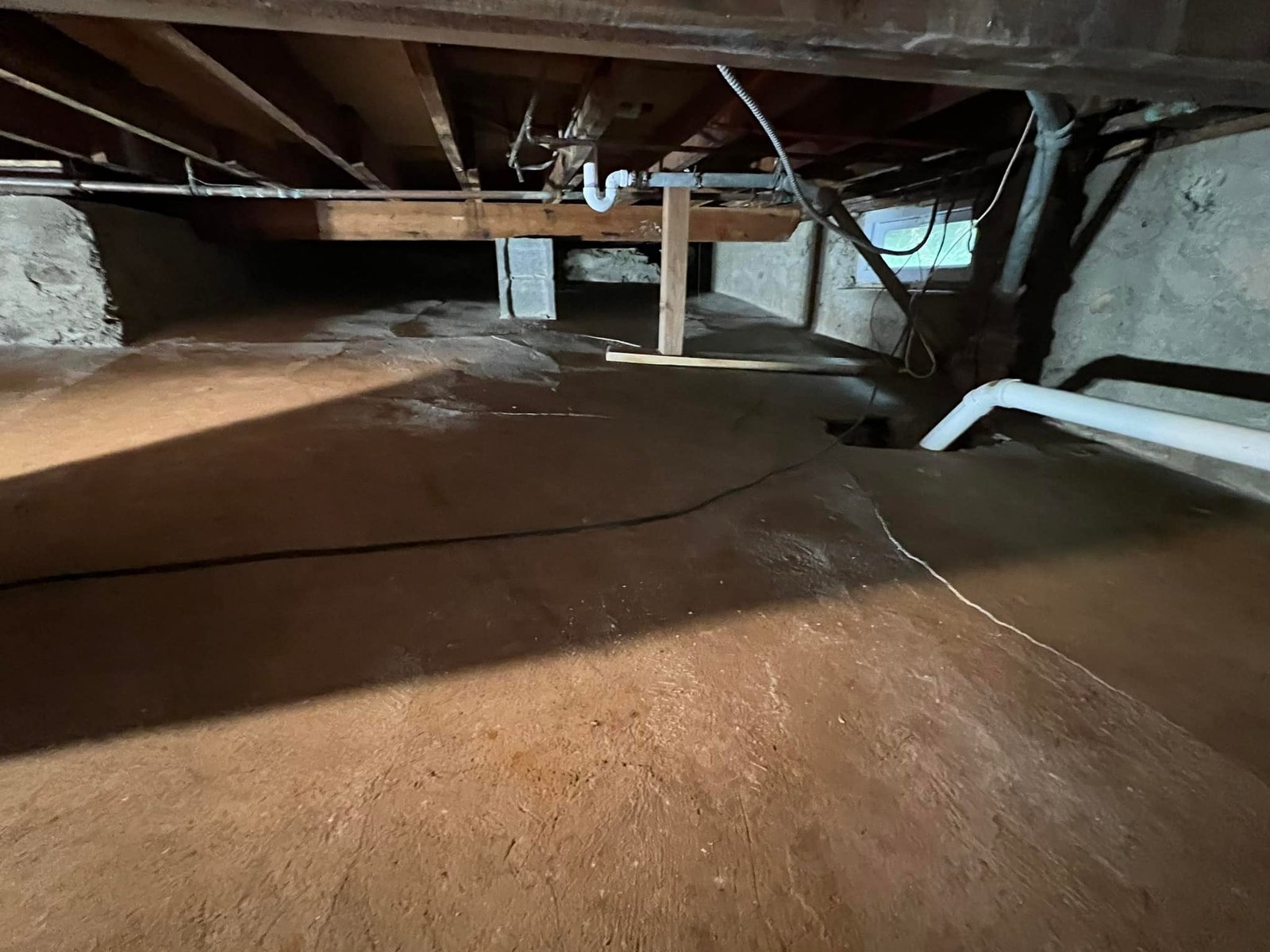
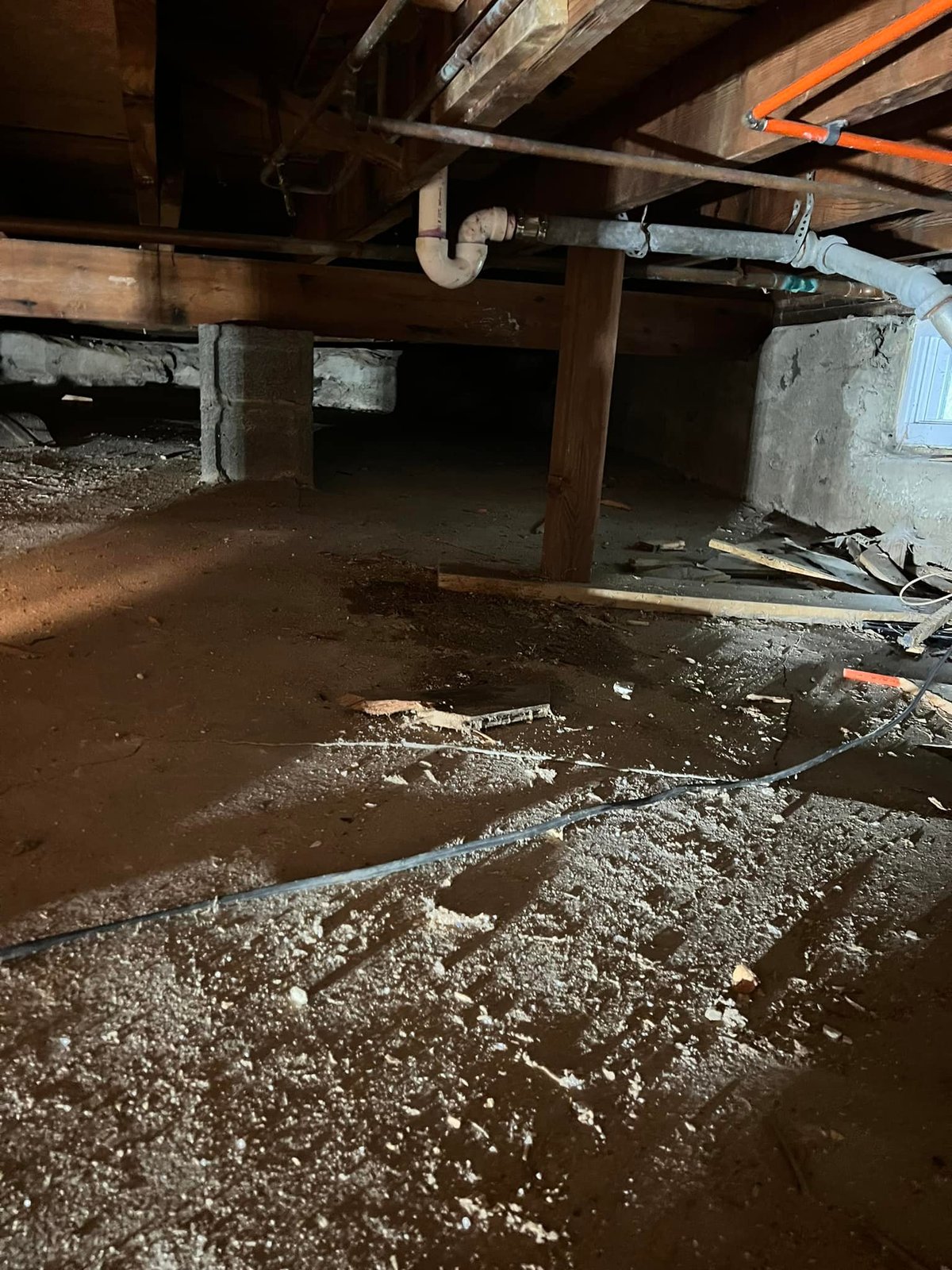
Mold on wood framing — floor joists, subfloor sheathing, wall studs, roof sheathing — is a different category entirely. Wood mold usually indicates a longer-duration moisture source: a slow leak that’s been going on for months, a chronically wet crawl space, inadequate vapor control. And the mold on structural wood is often more deeply rooted than surface mold on tile — it’s not just sitting on top of the material, it’s in the wood fibers.
More importantly, mold on structural wood often means the moisture source hasn’t been identified and fixed yet. The wood will re-mold until the moisture problem is solved. A professional can assess both the extent of the mold and the moisture source simultaneously.
If you find mold on structural wood in a crawl space or basement, get a professional assessment before you do anything else. Don’t just clean it and close the space back up.
When it’s a pro call: behind drywall
Mold on the face of drywall paper is often a symptom of mold on the back of the drywall — where the organic paper backing is a food source and where the mold colony is actually living. If you clean the face of the drywall and the mold returns within a week, it’s coming from behind the surface.
At that point the drywall needs to come out. Which means before you close it back up, you need to know what’s been driving moisture into that wall cavity. Active leak? Condensation from a thermal bridge? Vapor moving from outside to inside? Finding that source is the diagnostic work that prevents you from just closing the new drywall over a wet wall assembly that will mold again in six months.
Don’t put new drywall over a mold problem. Find the moisture source first.
When it’s always a pro call: HVAC system
Mold inside the air handler, on the evaporator coil, in the supply plenum, in the return ducts, or visible at supply registers — this is a professional call without exception. An HVAC system distributes air to every room in the house every time it cycles. Mold in that system gets distributed everywhere, every day, until you fix it.
Cleaning HVAC mold also requires access to duct sections and the interior of the air handler that a scrub brush and a vacuum can’t reach. It’s specialized equipment work. And the underlying cause — usually a dirty coil, inadequate drainage, or excessive moisture in the return air — needs to be addressed at the same time as the cleaning.
If you smell something musty when the HVAC first kicks on, or if you see any dark discoloration inside supply registers, call an HVAC contractor for an inspection before it gets further distributed.
The musty smell with no visible mold
A persistent musty smell — in a basement, a crawl space, a room that stays closed — without any visible mold is not a sign that you’re fine. It’s a sign that the mold is somewhere you’re not looking.
Common locations: inside wall cavities adjacent to exterior walls or below-grade concrete, behind baseboard trim, under flooring in moisture-prone areas, in insulation that has absorbed water. A homeowner with a flashlight can’t find all of these. A moisture meter in the hands of someone who knows what they’re looking at can.
If the smell persists despite cleaning, don’t assume nothing is wrong. Get a professional with moisture testing equipment to identify the source.
The practical summary
Clean it yourself if:
- It’s under 10 square feet
- It’s on tile, caulk, or hard non-porous surfaces
- It’s clearly from high bathroom humidity that you can control
- It goes away and stays away with proper ventilation
Call a professional if:
- It’s on structural wood (joists, subfloor, framing)
- It’s behind drywall (or comes back within days of cleaning the face)
- It’s anywhere in the HVAC system
- There’s a persistent musty smell with no visible source
- You’ve had a slow leak or standing water in the space
And whatever you do, find the moisture source. Cleaning the mold without fixing what’s feeding it is a temporary fix at best. The mold comes from moisture — remove the moisture and the mold stops.
If you’re looking at something and you’re not sure which side of the line it’s on, send me photos. A wide shot, a close-up of the affected area, and anything that looks like a moisture source nearby. hammondreengineered.com/report — $19.99.