A new residential boiler installed runs $8,000–$15,000. The repair work most aging systems actually need runs a few hundred to a couple of thousand. The gap between those two numbers is enormous — and most homeowners never find out which side of it they’re on, because the first contractor they call gives them a replacement quote and that’s the only number they hear.
I rebuilt the heating system on my Mohawk cottage by keeping the Buderus boiler that came with the house and replacing everything around it: the copper manifold, the zone valves, the controller, the thermostats, sections of fin-tube baseboard. The bill was about $3,500 in parts plus my time. A full replace-with-new-boiler quote on that house was around $13,000.
The right call wasn’t obvious until I walked through five questions. Here they are, in order.
Question 1: Is the heat exchanger actually cracked?
This is the only true “you must replace” answer in the entire diagnosis. The heat exchanger is the cast-iron or steel chamber where the burner’s heat transfers into the water that runs through your radiators or baseboard. If that exchanger is cracked, combustion gases — including carbon monoxide — can leak into the water loop or escape into the room. There is no patch for a cracked exchanger. Replace.
The good news: testing for this takes 15 minutes. A reputable HVAC tech runs a combustion analysis, which measures carbon monoxide and combustion efficiency at the flue. A spike in CO that doesn’t match the rest of the readings is the smoking gun for an exchanger crack. They can also do a visual inspection with a borescope on most boiler types.
What to do: Pay $150–$250 for a combustion analysis before you accept any replacement quote. Don’t take “looks old” as the diagnosis. Get the numbers.
If the test says cracked: replace. If it says fine: you have repair options for everything else.
Question 2: How old is the boiler — and what type?
“How old is it?” is the wrong question by itself. “How old is it, and what kind?” is the right one, because boiler longevity depends heavily on the technology.
- Cast-iron sectional boilers from quality brands (Buderus, Burnham, Weil-McLain, Peerless) routinely last 40–60 years when maintained. A 30-year-old Buderus isn’t old. It’s mid-life.
- Steel fire-tube boilers typically last 25–35 years.
- Modular condensing boilers (the high-efficiency kind from the last 20 years) have a design life of 15–20 years, sometimes shorter if the water chemistry was bad or the venting was undersized.
- Electric resistance boilers can last 20–30 years in clean-water conditions.
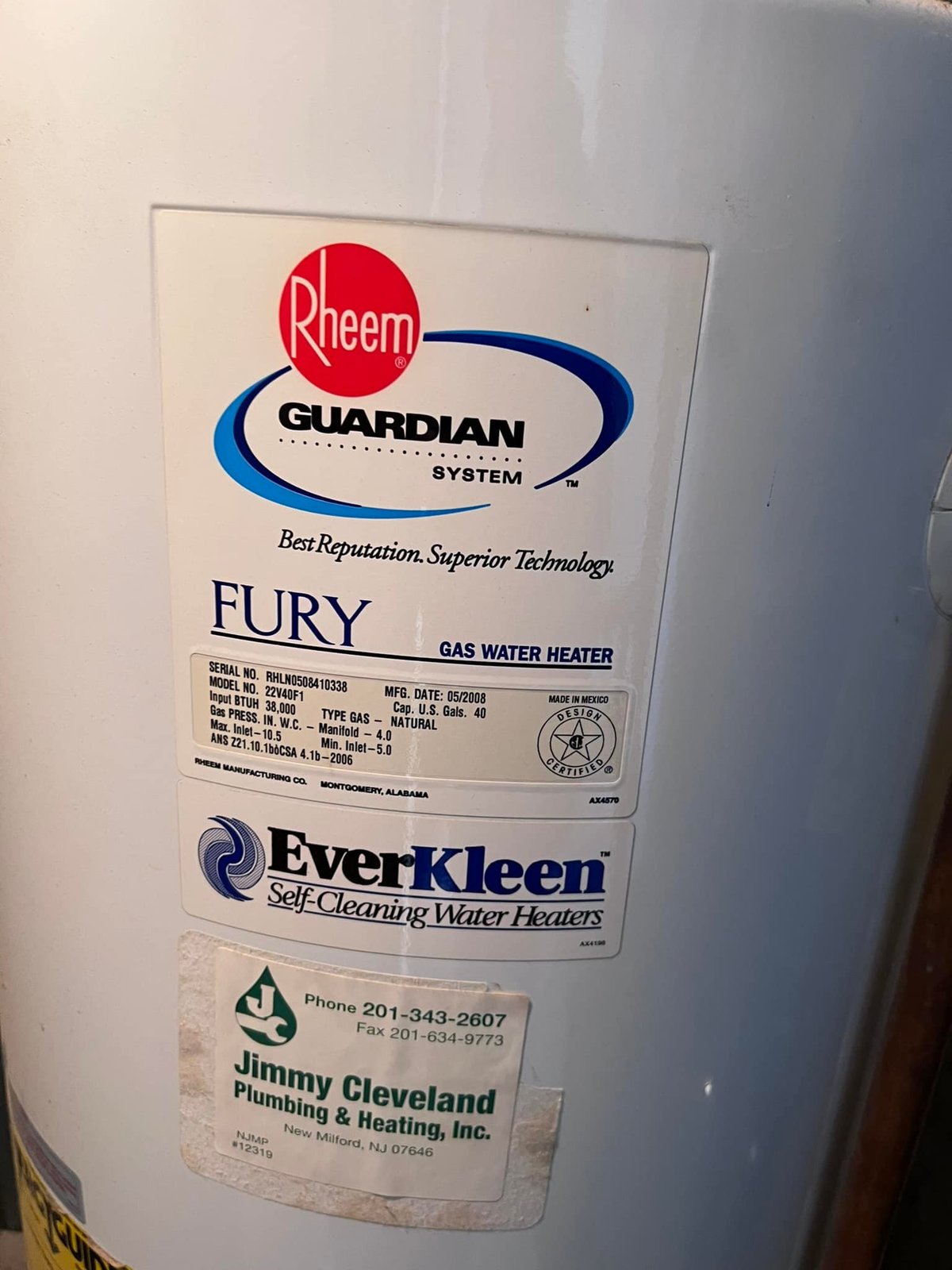
Find the data plate on your boiler — usually a metal tag on the front or side of the cabinet — and write down the make, model, and serial number. A quick web search will tell you the type and rough year of manufacture. Then you’ll know whether “20 years old” means “halfway through” or “near the end.”
Question 3: Is the boiler the problem, or is the rest of the system?
This is the question I see homeowners miss most often. They get a replacement quote because something feels wrong with the heat — uneven rooms, banging pipes, the system never reaching setpoint, weird noises — and they assume the boiler is the cause. Often, it isn’t.
Common culprits I’ve found in my own houses and others’:
- Painted-over fin-tube baseboard — when the aluminum fins between the copper tubes are clogged with paint, they can’t transfer heat to the room. The boiler is doing its job; the baseboard isn’t doing theirs. Fix: strip and clean fins, $200–$500 per zone.
- Stuck or failing zone valves — one zone won’t open, so that part of the house stays cold. Fix: $150–$400 per valve.
- Air-bound loops — air pockets in the piping block water flow. Fix: bleed the system, sometimes add an automatic air vent. $200–$600.
- Dead circulator pumps — the pump that moves hot water through the loops has burned out. Fix: $400–$900 per pump.
- Wrong thermostat or wrong settings — modern smart thermostats configured for forced-air don’t always play well with hydronic systems. Fix: $50–$200 for the right thermostat and config.
None of these problems are fixed by replacing the boiler. All of them are sometimes presented as “evidence” that the boiler needs replacing. Before you accept that diagnosis, have a tech run through each of the above and confirm the boiler itself isn’t keeping up.
Question 4: Are you changing fuel sources?
Sometimes the right answer to “replace or repair” depends on a bigger decision: are you staying with the fuel you have, or switching?
- Oil to natural gas: If gas service has reached your block since the house was built, switching can cut fuel costs 30-50%. But you need a new boiler (oil boilers can’t burn gas without major retrofit), new venting, possibly a chimney liner, and a gas service tap. Total project: $12,000–$22,000.
- Oil or gas to electric heat pump: Whole-house decision, not a boiler decision. Heat pumps and hydronic emitters don’t generally match up unless you’re installing air-to-water (rare in the US). Reframe the project as “convert to forced-air” or “convert to ductless mini-splits.”
- Propane to anything: Propane is the most expensive common residential fuel. Almost any switch saves money long-term.
- Staying with what you have: Repair conversations stay simple. Equipment conversations stay simple. The decision tree is just “fix this, replace that.”
The fuel question has to be answered first, because it shapes everything else. Don’t let a salesman start with “you need a new boiler” if you haven’t decided whether you want to stay on the same fuel.
Question 5: Would zone upgrades fix what you actually hate?
Most “I need a new boiler” complaints, dug into, are actually comfort complaints in disguise.
- “The bedroom is always cold.” → Zoning issue.
- “It takes forever to warm up.” → Could be a circulator, zone valve, or controller.
- “The heat is uneven.” → Almost always zoning or air-bound loops.
- “The pipes bang.” → Air, expansion tank, or pressure issue. Not the boiler.
A modern zoning upgrade looks like this: new copper manifold with proper Honeywell or Taco zone valves, one valve per area you want to control independently. A Taco SR503 zone controller. New smart thermostats wired in. Done right, this delivers the kind of comfort improvement homeowners think they’re going to get from “a new heating system” — for about $2,500–$4,500 in parts and labor.
That’s the path I took at Mohawk. The Buderus stayed, the comfort got dramatically better, and I saved about $10,000 versus replacement.
The order to work through this
If you’re staring at a replacement quote, here’s the order that protects your wallet:
- Get the combustion analysis (Q1). If it shows a cracked exchanger, the answer is replace. If it doesn’t, the path is open for everything else.
- Identify what you have (Q2). Find the data plate, write down make/model/year. Know which longevity curve you’re on.
- Diagnose the actual complaint (Q3). Run through the common non-boiler culprits before you accept “the boiler is dying.”
- Decide the fuel question (Q4). Is this a “replace with the same fuel” conversation, or are you also switching?
- Cost out the zone-upgrade alternative (Q5). Get one quote for replacement and one for keep-and-upgrade. Compare honestly.
You may still decide to replace at the end of that — sometimes it’s genuinely time. But you’ll know why, and you’ll have a real comparison number for the alternative.
Want me to look at your boiler?
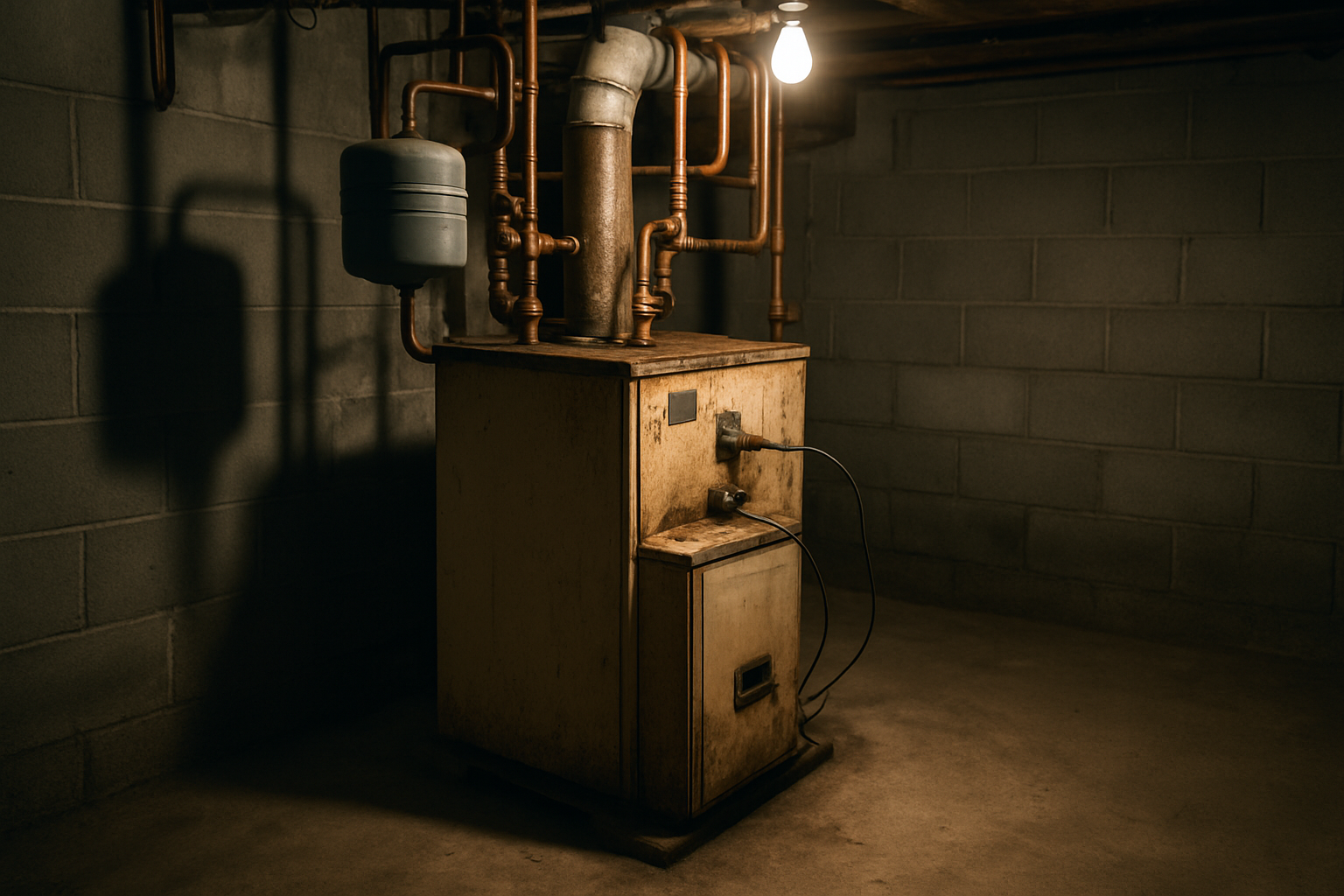
The fastest way to figure out which questions point repair vs. replace for your specific system: send me three photos for a $9.99 diagnostic report — the data plate, the manifold and any zone valves you have, and a wide shot of the boiler room.
I’ll tell you what type of boiler you have, where it sits on the longevity curve, and which of the five questions are likely to flip the math in your favor.
You can also see the boiler-and-baseboard rebuild I did on my Mohawk cottage — same Buderus boiler, completely new manifold, controller, zones, and thermostats. Comfort improvement was night-and-day. Replacement quote was about $13,000. Final spend was about $3,500.
The first quote a homeowner hears about an aging boiler is almost never the cheapest path to a comfortable house. Five questions in, you’ll know whether it’s the right path, or whether you’re three repairs away from another decade.