You get two roofing quotes and one is noticeably cheaper. The difference is usually simple: the cheaper one is planning to install new shingles right over your existing roof, no tear-off. The pricier one strips everything down to the deck first. The overlay isn’t a scam — it’s a legitimate, code-recognized option in most places. But it only works under specific conditions, and two signs mean you need the tear-off regardless of price.
Here’s how to tell which one your roof actually needs.
Why overlaying works — sometimes
Installing a new layer of shingles over an existing one saves the labor and disposal cost of tearing the old roof off, which is a real chunk of a roofing job’s price. It’s allowed by most building codes, provided a few conditions are met. It’s not a shortcut that skips inspection or quality — a good roofer overlaying a roof still nails it correctly and flashes it properly. The catch is what an overlay can’t do: it can’t fix or even see what’s happening at the deck underneath.
Sign 1: check how many layers are already up there
Most residential codes cap roofs at two layers of shingles maximum. If your roof already has one layer (the original), an overlay puts down the legal second layer — fine. But if it’s already been overlaid once before, you’re at two layers, and code requires a full tear-off before anything new goes on. A roofer can tell you this from the roof edge or a ridge vent cut, or check your own permit history if you’ve owned the house since the last reroof.
Sign 2: curled or cupped shingles will show through
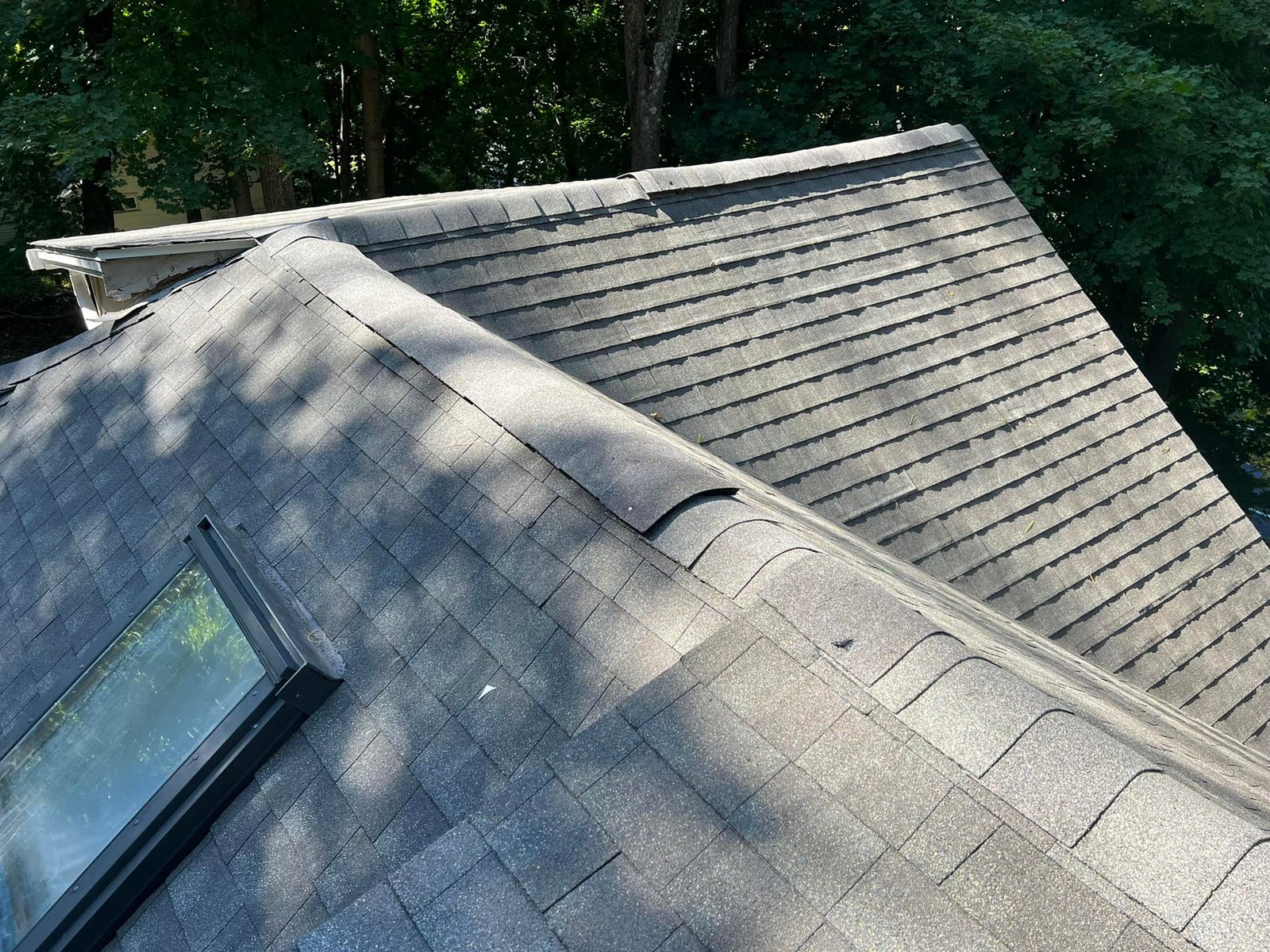
Even when a second layer is legally allowed, it’s not always a good idea. Old shingles that are curled, cupped, or buckled — lifting at the edges or corners instead of lying flat — will telegraph that unevenness right through a new layer installed over them. You’ll pay for a new roof that already looks lumpy and won’t lay as flat or last as long as it should. If your existing shingles are still lying flat and well-adhered, an overlay goes down clean. If they’re curling, that roof needs to come off first regardless of the layer count.
The thing an overlay can never tell you
A tear-off is the only way to actually see the roof deck — the plywood or OSB sheathing underneath the shingles. Rot, soft spots, and old storm damage hide there, invisible from above. An overlay can’t catch or fix any of it; it just gets covered up again for another 20 years. If your roof has had any history of leaks, ice dam issues, or you’re not sure about its condition underneath, a tear-off is the only way to actually know what you’re building on.
The decision, simply
Overlay is a legitimate option when your roof has just one existing layer, the shingles are lying flat without curling, and you have no reason to suspect deck damage underneath. Tear-off is required when you’re already at two layers (code max), the existing shingles are curled or cupped, or you want the roofer to actually inspect and address the deck while it’s open.
DIY or not
Roofing is not a beginner DIY project — it involves working at height, on a sloped and often slippery surface, with real fall risk. This is squarely a job to hire a licensed roofer for, regardless of whether it ends up being an overlay or a tear-off.
Not sure which one you’re looking at?
Send me photos of your roof from the ground — a few different angles, plus a close-up of the shingle texture if you can get one. I’ll tell you whether an overlay is a reasonable option or you should be pricing a tear-off — a written diagnostic with the specific read and honest next step, $19.99, back to you in minutes.