The short answer: yes. In virtually every New Jersey municipality, finishing a basement requires one or more permits. If you’re framing walls, adding electrical circuits, running HVAC into the space, or adding a bathroom — you need a permit. Full stop.
I’ve finished two basements in my own homes. Both were permitted. Both passed inspection. And both added meaningful appraised value to the house specifically because they were done with permits. This isn’t bureaucratic overhead — it’s protection for you, and it’s a selling point when you go to close.
Here’s everything you need to know before you frame a single stud.
What Work Triggers a Permit in NJ?
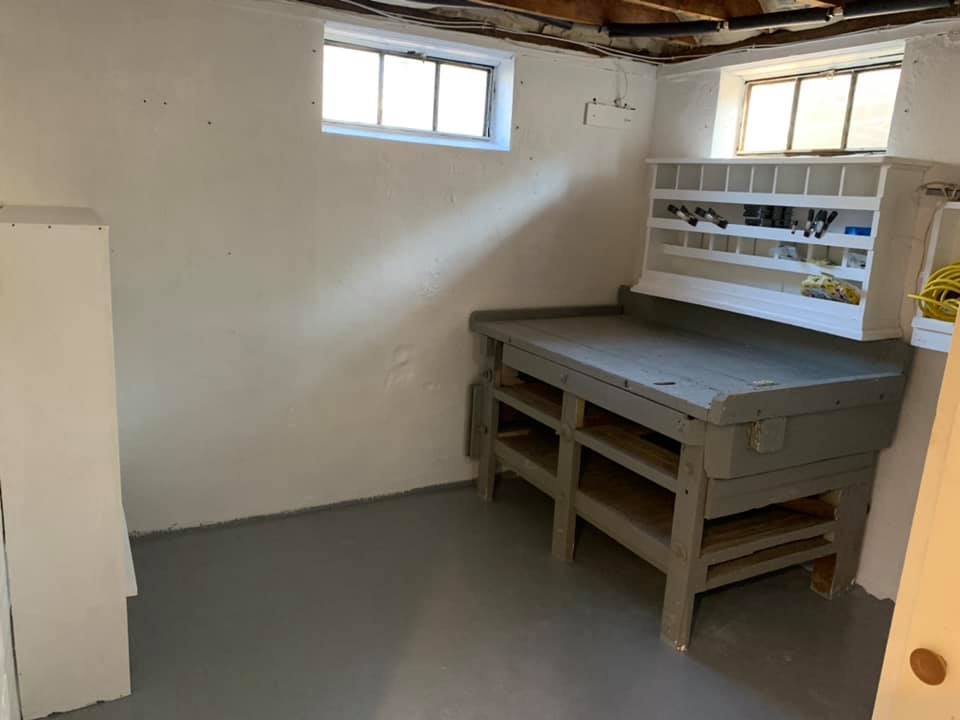
Not every basement project requires a permit. A cosmetic refresh — painting the concrete floor, adding some shelving, throwing down rubber flooring — typically doesn’t. But the moment you start any of the following, you’re in permit territory:
Structural / Framing
- Building interior partition walls
- Framing out against the foundation walls
- Dropping a ceiling (even a drop ceiling in many towns)
Electrical
- Running new circuits from the panel
- Adding outlets, switches, or lighting fixtures on new circuits
- Upgrading the panel to accommodate new loads
Plumbing
- Adding a bathroom, wet bar, or utility sink
- Running new drain lines
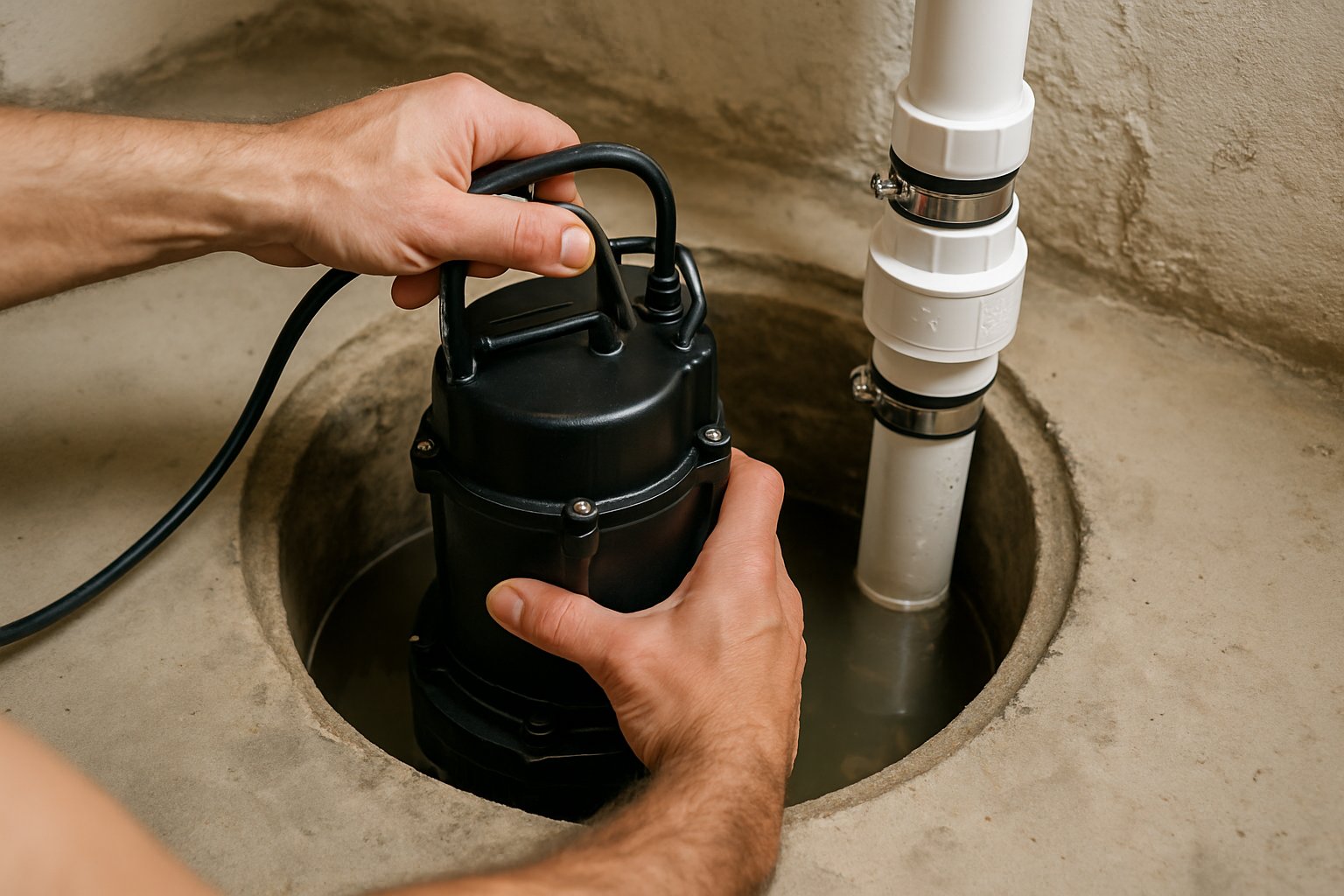
- Installing a sump pit (varies by municipality)
HVAC
- Extending ductwork into finished spaces
- Adding a mini-split or baseboard heat
- Installing exhaust fans for a bathroom
Egress
- Cutting a new window opening for egress (required for any bedroom use)
- Enlarging an existing window opening
If your scope includes any of these, pull the permits before you start.
How to Get a Basement Permit in New Jersey
Permits are issued at the municipal level — your town, not the county. The process varies slightly by municipality, but the general flow is the same across NJ:
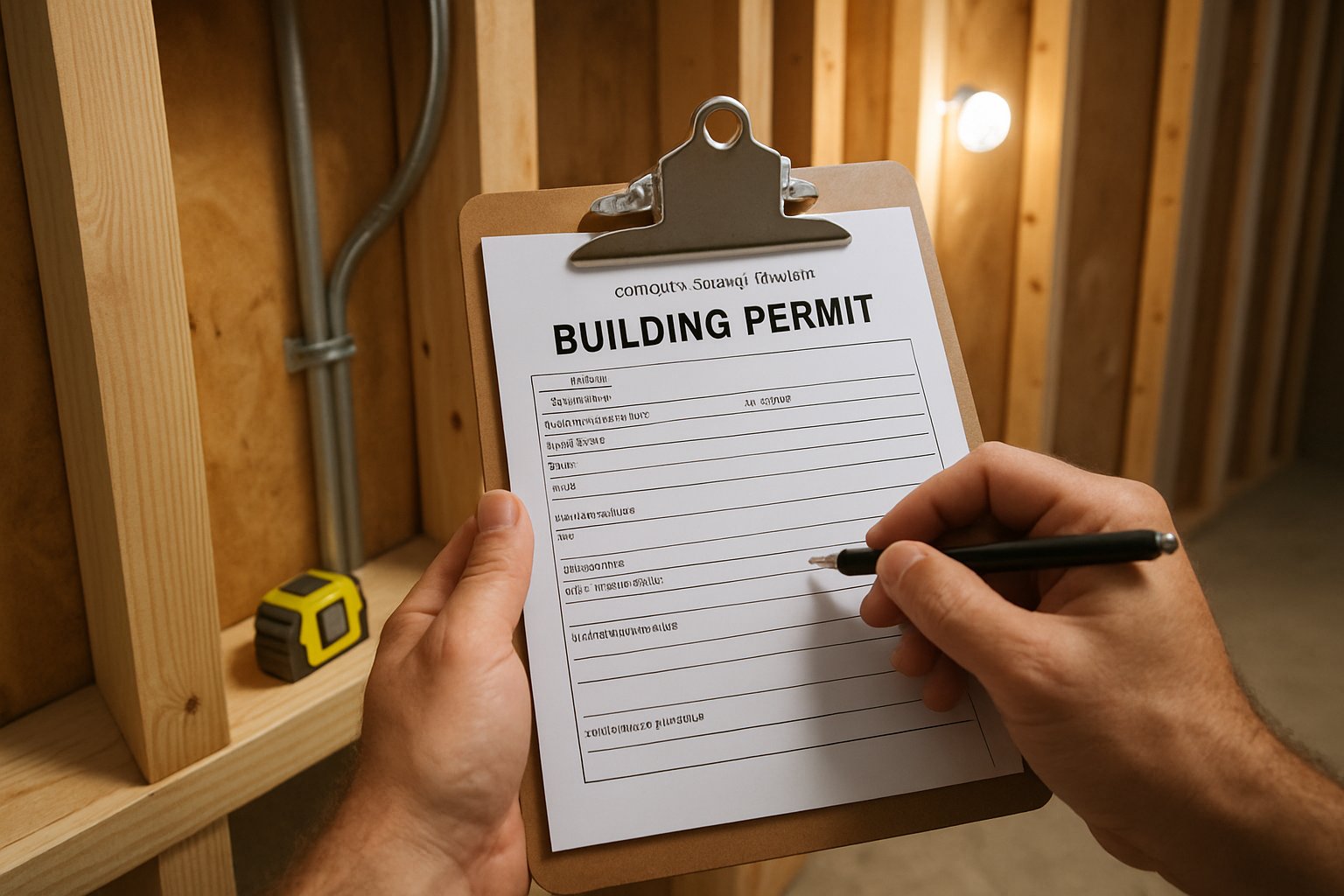
Step 1: Contact your local building department. Every NJ town has a construction official and a building department. Find the number on your town’s website. Call or stop in and ask what’s required for a basement finishing project with your specific scope. Some towns have pre-application checklists.
Step 2: Submit plans. Most towns require a simple floor plan showing the layout of new walls, room designations, window locations, electrical panel location, and any bathroom/plumbing fixtures. You don’t need to hire an architect — a hand-drawn or computer-drawn dimensioned floor plan is usually fine for a basic basement finish. If you’re adding a bedroom or modifying structure, some towns require engineered drawings.
Step 3: Pay the fee. Permit fees in NJ are typically based on the project value. For a $30,000–$50,000 basement finish, expect to pay $500–$1,500 in permit fees across the building, electrical, and plumbing permits. Some towns bundle these; others issue them separately.
Step 4: Post the permit and get to work. Once approved, you’ll receive a permit card. Post it visibly on the job site. Work can begin.
The Inspection Sequence
This is where most DIYers trip up. There’s a specific sequence of inspections, and you cannot close up walls until each one is approved. Skipping an inspection — or having a contractor “close up” before the inspector comes — is how you end up with a failed final inspection and expensive demolition.
Here’s the typical NJ sequence for a full basement finish:
1. Framing Inspection
Called after all framing is complete but before any insulation, drywall, or electrical work begins. The inspector verifies wall layout, header sizes, stairway dimensions, and egress compliance.
2. Rough Electrical Inspection
Called after all wiring, boxes, and panel work is done, but before anything is covered. The inspector checks circuit sizing, box fill, AFCI breakers (required in NJ for finished spaces), and ground fault protection.
3. Rough Plumbing Inspection (if applicable)
Called after drain lines, supply lines, and venting are roughed in, before walls are closed. The inspector typically pressure-tests the drain system.
4. Rough HVAC / Mechanical Inspection (if applicable)
Called after ductwork or mechanical rough-in, before walls are closed.
5. Insulation Inspection (many towns)
Called after insulation is installed, before drywall. The inspector verifies R-value compliance for your climate zone.
6. Final Inspection(s)
One or more final inspections after the space is fully finished — drywall up, flooring down, fixtures installed. Inspectors verify that everything matches the permit drawings and that all finish work is complete.
The golden rule: never close up a wall before it’s been inspected.
What If I Buy a House With an Unpermitted Finished Basement?
This is more common than you’d think — and it’s a real problem when you go to sell.
When you list the house, your real estate attorney and the buyer’s attorney will pull permits. An unpermitted finished basement will appear as a discrepancy. You’ll typically have three options:
- Disclose it and reduce the price — buyers discount heavily for permit issues.
- Retroactively permit it — most towns allow this, but it can require opening walls for inspection, which means drywall demo and repair.
- Walk away from the deal — buyers sometimes back out entirely.
I’ve seen homeowners spend $8,000–$15,000 in remediation and legal fees on unpermitted basement issues at closing. The $800 building permit up front is not optional.
What Bedroom Use Requires (Egress)
If you want to call a basement room a “bedroom” — in the listing, in your property tax records, or anywhere official — it must have code-compliant egress. In NJ, that means:
- Minimum window opening: 5.7 square feet net clear opening
- Minimum height: 24 inches clear
- Minimum width: 20 inches clear
- Maximum sill height from floor: 44 inches
A standard 30”×14” basement hopper window does not meet egress requirements. If you want a legal bedroom, you need to cut a larger opening, which means cutting through the foundation wall and installing a proper egress window well. That work requires a separate permit.
You can still build a “bonus room” or “office” in the basement without egress — just don’t call it a bedroom or list it as one.
Frequently Asked Questions
How long does it take to get a basement permit in NJ? Typically 2–4 weeks for approval, though some towns turn around simple residential permits in a week. Call your building department and ask — they’ll usually tell you their current review times.
Can I do my own electrical work with a permit? Yes — in NJ, homeowners can pull electrical permits for their own primary residence. You’ll need to pass the rough and final electrical inspections. Some towns require a licensed electrician for the service panel work regardless; ask your building department.
What happens if I do the work without a permit and get caught? Stop-work orders, fines, and a requirement to retroactively permit the work — which often means exposing completed work for inspection. The fine in NJ can be up to $2,000 per day for continuing after a stop-work order.
Does a permitted basement add to my assessed value? Yes, typically. A finished basement adds to your home’s square footage calculation for assessment purposes. Expect your property taxes to increase modestly. But the appraised value for sale purposes increases significantly more than the tax increase — it’s almost always worth it.
Do I need an architect to draw my plans? For a straightforward basement finish with no structural modifications, no. A dimensioned floor plan showing wall locations, room labels, window locations, and electrical panel position is usually sufficient. Ask your building department what they require for your specific scope before paying an architect.
The Bottom Line
Pull the permits. Every time. The process is less painful than it sounds — a few trips to the building department, a few scheduled inspections, and you end up with a finished basement that adds real, documented value to your home.
The inspections are also a second set of eyes on your work. I’ve had inspectors catch things I missed. That’s the system working correctly.
If you’re planning a basement finish in New Jersey and want a custom project plan — including a permit checklist tailored to your municipality and a complete sequence that matches the inspection schedule — send your photos for a $19.99 diagnostic report.