Drains are running slow all over the house, maybe there’s a soggy or unusually green patch out in the yard, and the fear that comes to mind is your septic system dying — a full replacement that can run well into five figures. Take a breath first. Most of the time, this just means the tank needs pumping, which is routine maintenance, not a failure. But there’s a pattern that points somewhere much more expensive, and it’s worth knowing the difference before you call anyone.
Here’s how to tell which situation you’re in.
Pumping is normal, not a red flag
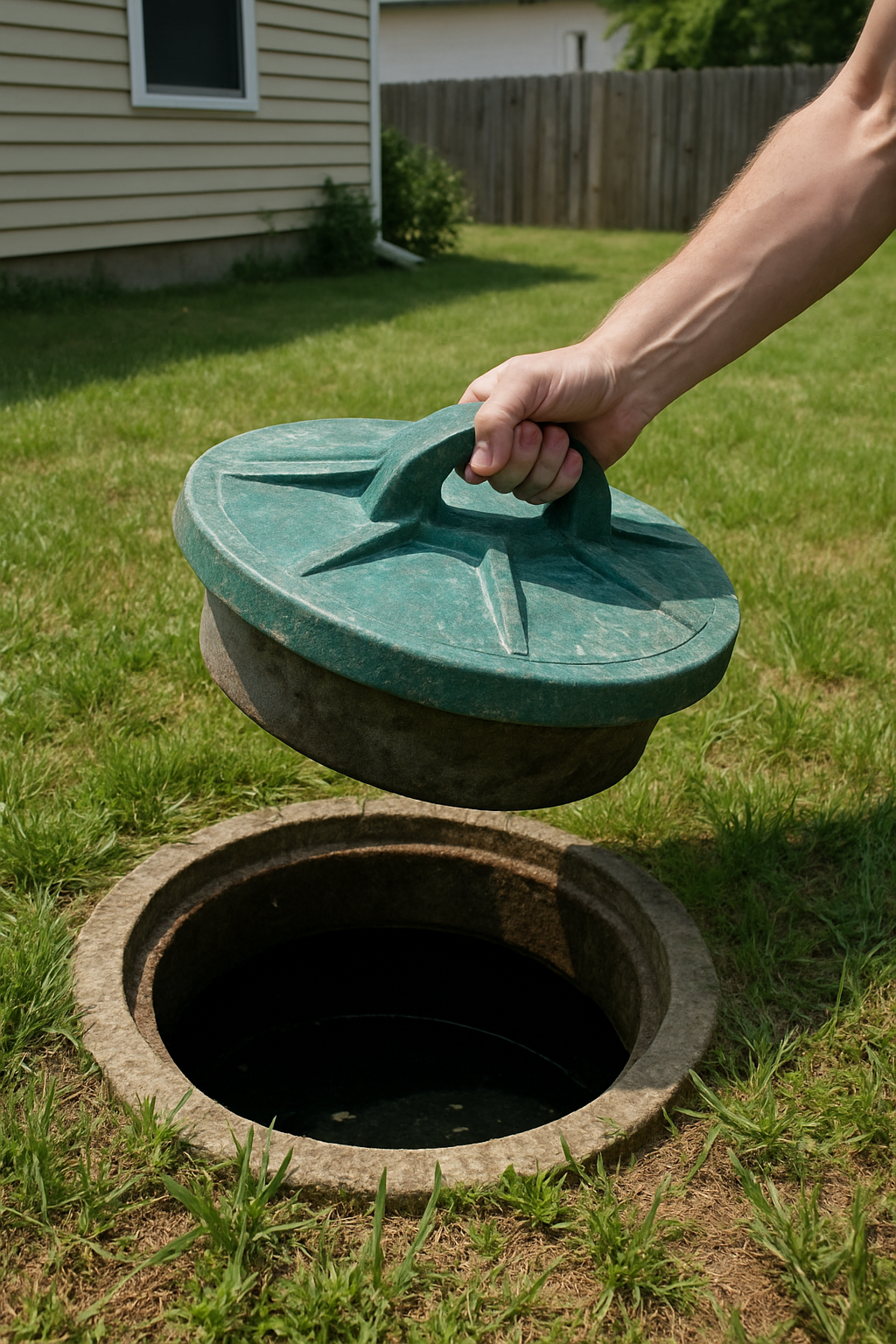
A septic tank needs to be pumped out roughly every 3 to 5 years, depending on household size and tank capacity. Solids settle to the bottom over time and need to be removed before they build up enough to flow out toward the drain field, which is where real trouble starts. If it’s been a few years since your last pump-out and you’re seeing slow drains or occasional gurgling, that’s very likely just due maintenance — a pump-out (a few hundred dollars) resolves it.
The pattern that means something bigger: it comes right back
Here’s the key diagnostic: if the tank gets pumped and the same symptoms return within days or a couple of weeks, that’s not a tank problem anymore — pumping fixed the tank, but something downstream is still failing. That points to the drain field (also called the leach field), the buried system of pipes that disperses treated wastewater into the soil. When the field itself is saturated or clogged, pumping the tank buys a little time but doesn’t fix the actual bottleneck.
Signs the drain field itself is failing
- Sewage odor outdoors, specifically over the area where the field is buried
- Standing water or soggy ground over the field, especially in dry weather when it shouldn’t be wet
- Unusually lush, dark green grass over the field compared to the rest of the yard — it’s being fed by effluent
- Backups that return quickly after a pump-out, rather than staying resolved for years
Any of these, especially more than one together, point to field failure rather than a tank that just needs emptying.
Why the tank rarely fails, but the field often does
Septic tanks themselves — especially concrete ones — are simple, durable structures. They can occasionally crack or settle after many decades, but true tank failure is uncommon. The drain field is the part that actually wears out: soil can only absorb so much effluent over so many decades before it becomes saturated or biologically clogged, especially if the system’s been overloaded, poorly maintained, or is simply old. This is also why the cost gap is so large — a pump-out is routine and cheap; a drain field replacement involves excavation, new piping, and sometimes an entirely new leach area, often $5,000 to $20,000 or more depending on soil conditions and local regulations.
The decision, simply
Just needs pumping if it’s been 3+ years, symptoms are mild (slow drains, occasional gurgling), and you have no outdoor odor or wet spots. Drain field problem if symptoms return quickly after pumping, or you see soggy ground, unusually lush grass, or sewage smell over the field — that needs a septic professional to evaluate the field itself, not just another pump-out.
DIY or not
Pumping the tank is a service call, not a DIY job — it requires a vacuum truck and proper waste disposal. Diagnosing and repairing a drain field is specialized work requiring percolation testing and often permits; this is exclusively a job for a licensed septic contractor.
Not sure which one you’re looking at?
Tell me when the tank was last pumped, what symptoms you’re seeing, and whether there’s any odor or wet ground over the field area. I’ll tell you whether this sounds like routine maintenance or the field needs a professional look — a written diagnostic with the specific read and honest next step, $19.99, back to you in minutes.