Most homeowners think a wet basement is a basement problem. It’s almost never a basement problem.
Nine times out of ten, water in a basement is a drainage problem outside the house — something moving water toward the foundation when it should be moving water away — and nobody dealt with it for years. By the time the water shows up on the inside, the homeowner is staring at a $20,000–$30,000 interior waterproofing quote for what could have been a $2,000–$5,000 exterior fix.
I’ve handled drainage on every house I’ve owned, including one where I had to undo what a previous contractor did. Here are the five red flags that tell you water is already moving toward your foundation. None of them is a leak yet. Catch them now, fix them outside, and your basement stays dry for the next twenty years.
Red flag 1: Standing water against the foundation during or after rain
This is the easiest one to spot and the most expensive one to ignore.
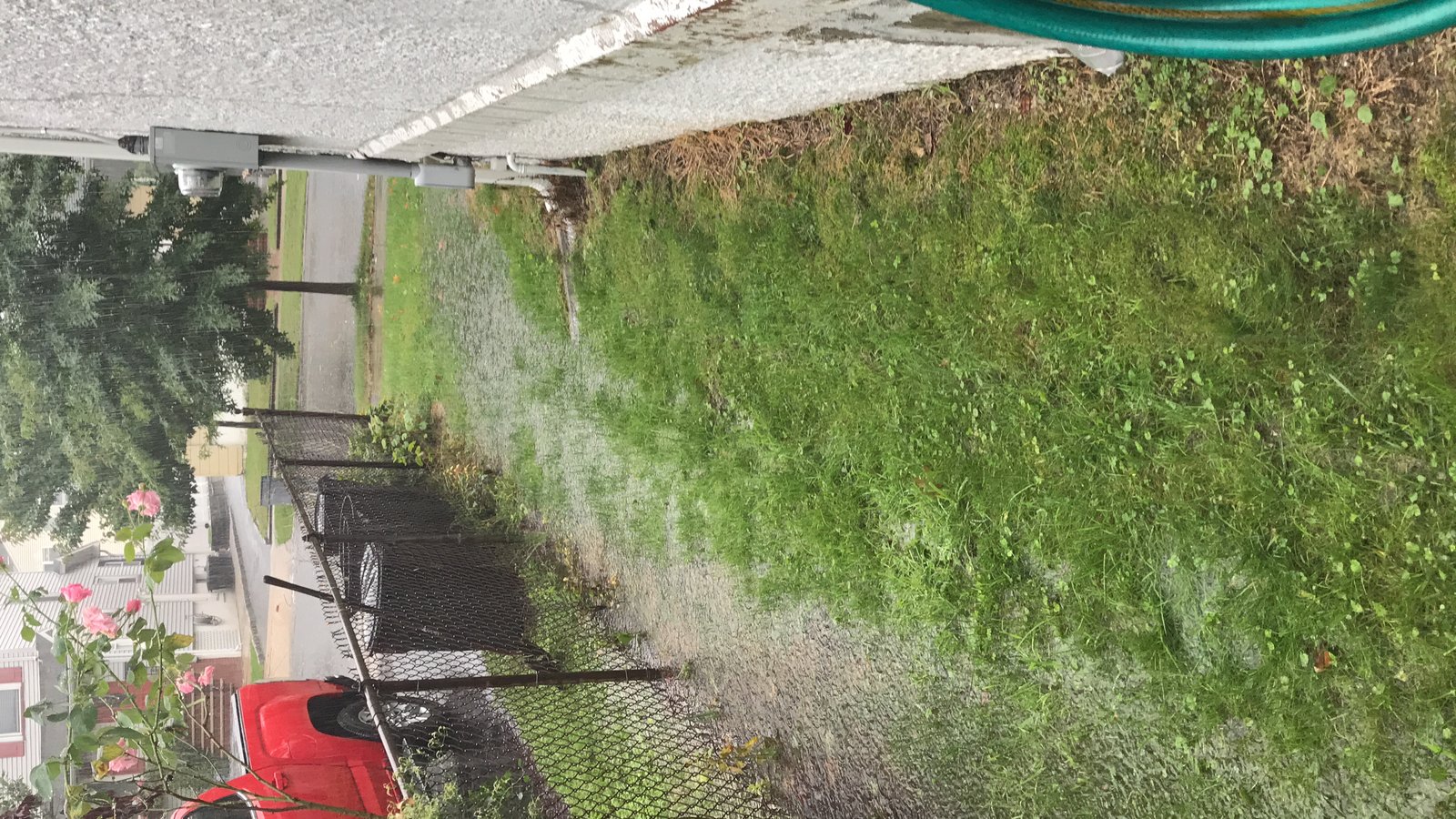
Walk the perimeter of your house in the middle of a hard storm, or right after it stops. You’re looking for standing water — even an inch of it — anywhere within three feet of the foundation wall. If you find it, that water is going into your basement. Foundation walls are not waterproof; they’re water-resistant. Given enough time and enough hydrostatic pressure, water gets through.
The fix is regrading — pulling soil back from the foundation and resloping it. Code wants at least 6 inches of drop over the first 10 feet horizontally away from the wall. That’s a noticeable slope. Most older houses have settled or had landscaping added over the years that buried that slope or actually reversed it.
Cost reality: Regrading 30–50 linear feet of foundation runs $2,000–$4,500 (DIY with rental + topsoil delivery is half that if you can handle the labor). Interior waterproofing — drain tile, sump system, sealed walls — after water has been getting in for years: $12,000–$25,000.
Red flag 2: Downspouts dumping right at the foundation
This is the cheapest fix on the list and the one homeowners skip the most.
Look at every downspout on your house. Where does the bottom elbow end? If it’s within 3–4 feet of the foundation wall, every gutter-full of roof water is being delivered to your foundation on purpose. A 1,500-square-foot roof in a one-inch rainstorm produces about 900 gallons of water. Where do you want that going?
The fix is extensions — black corrugated tubing, splash blocks, or buried PVC running 10–12 feet out from each downspout. Big box stores sell 6-foot extensions for $8–$15 each. Two extensions per downspout, and you can do every downspout on the average house for under $100.
Cost reality: $40–$100 for the extensions. Skip it and you’re funneling 900 gallons of roof water at the same wall every storm until it gets through. Compare that to red flag 1’s regrading cost.
Red flag 3: Mulch beds and soil sitting against the siding
Walk the foundation again. Look at where your mulch beds, garden soil, or landscape rocks sit. Are they touching the siding? Mounded above the bottom edge of the siding? Sitting against the foundation block above grade?
This is the slowest drainage problem in the list and the one that causes the most invisible damage. Mulch retains moisture against whatever it touches. Soil mounded above the bottom of the siding wicks water up under the siding by capillary action. Both create a chronic wet zone in your wall structure that you can’t see for years — until you finally pull a piece of siding off and find black mold, rotted sheathing, and sometimes rotted framing.
The fix: pull mulch back at least 4–6 inches from the foundation and from any siding. Soil grade should be at least 6 inches below the bottom of the siding or stucco. If you can’t get there because the house is sunk, you’re looking at exposing more of the foundation or installing a flashing kick-out at the siding bottom — bigger jobs, but still better than the alternative.
Cost reality: Pulling mulch back and adjusting beds: free, one Saturday afternoon. Discovering 8 feet of rotted sheathing behind your siding 6 years from now: $5,000–$15,000 in siding, sheathing, and possibly framing replacement.
Red flag 4: Drains and pipes that aren’t tied to anything
Walk your yard. Look for drain grates, French drain outlets, buried PVC stubs sticking out of garden beds, or “pop-up” emitters that haven’t worked in years.
For each one, trace where it goes. If you can’t figure out where the water from that drain is supposed to exit, it isn’t draining — it’s collecting. Underground.
I’ve found, in my own houses and friends’: drain stubs that disappeared into nothing, sump pump discharge lines that emptied 3 feet from the foundation they were supposed to protect, French drain trenches that were supposed to outlet to daylight but the daylight outlet got buried in fill years ago, and downspout buried pipes that pop up under the front porch instead of out in the yard.
When buried drainage doesn’t actually drain, it creates a saturated zone underground that sits right against the foundation. That’s worse than no drain at all, because at least without the buried pipe the water might have spread out and evaporated.
Cost reality: Tracing existing drains with a hose test and a probe takes a couple of hours. Replacing a non-functional buried drain with a proper system — $500–$3,500 depending on length and whether you need a pop-up emitter or a daylight outlet. Doing nothing — eventual interior leak when the saturated zone outweighs the foundation’s water resistance.
Red flag 5: Efflorescence and hairline cracks on the foundation
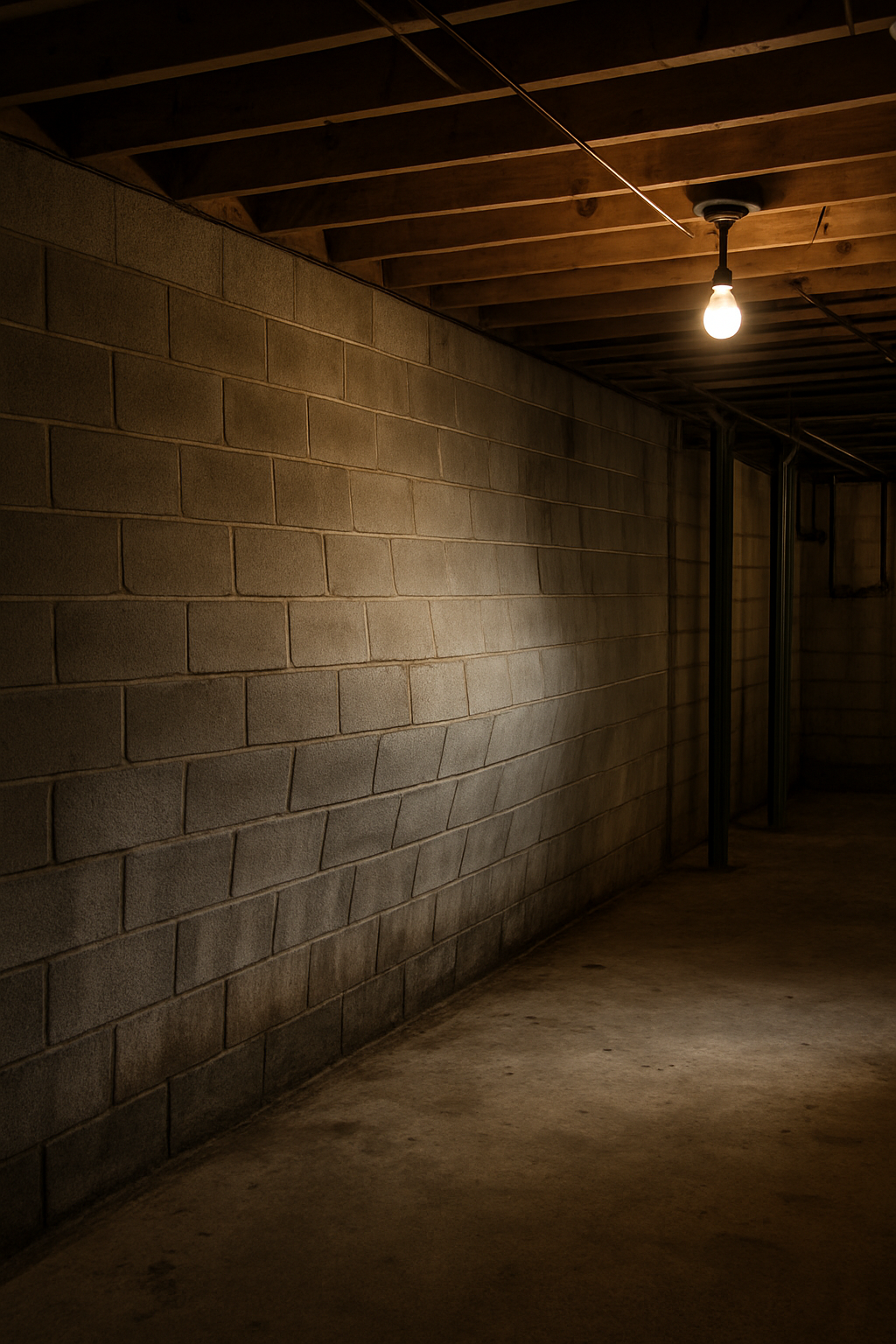
Go down to the basement (or the crawlspace) and look at the interior side of the foundation walls. What you’re looking for:
- Efflorescence — white, chalky, sometimes crystalline deposits, usually concentrated near floor level or along mortar joints. This is mineral salts left behind by water that’s already moving through your wall.
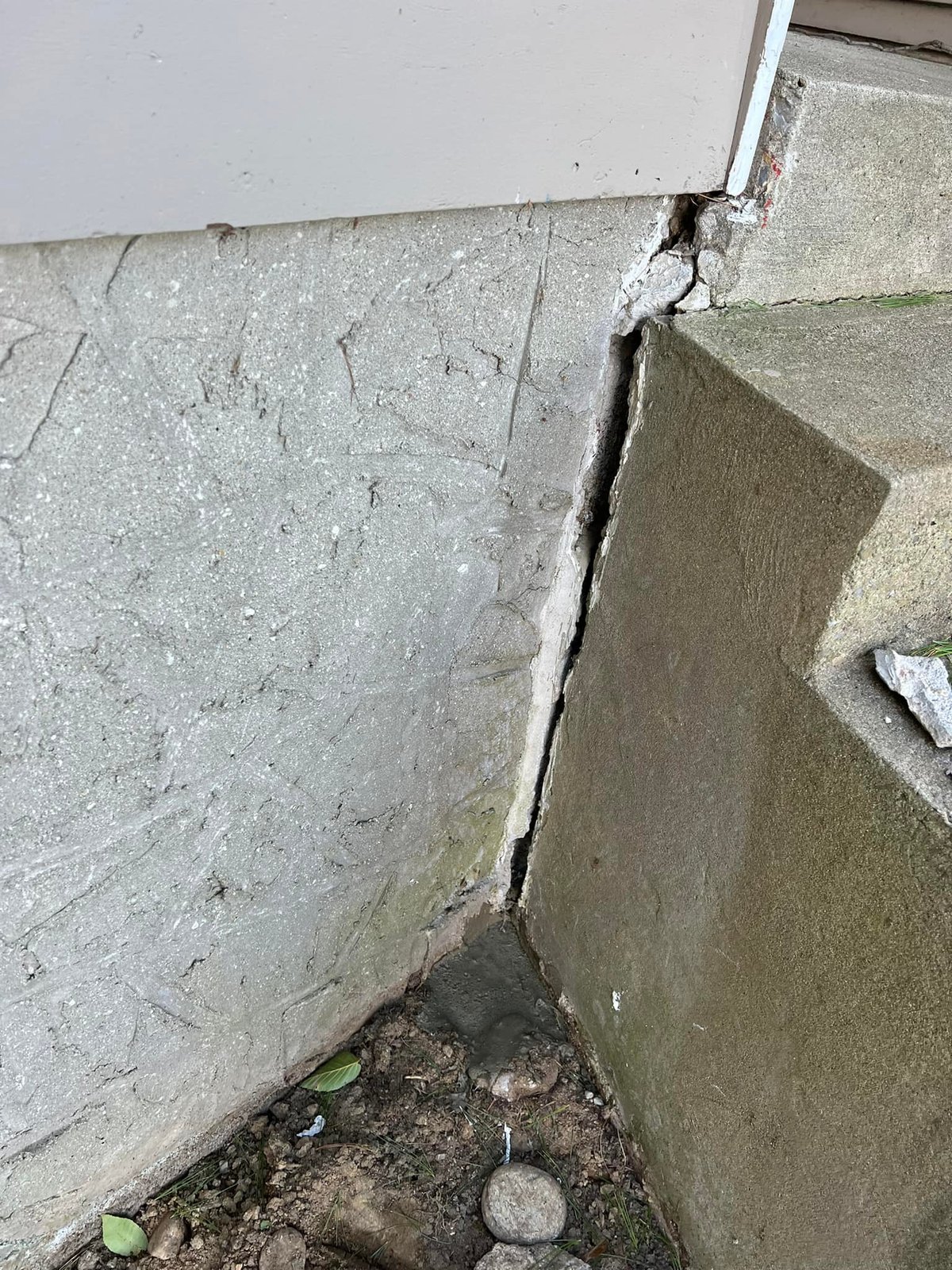
- Hairline cracks following the mortar joints in a concrete-block wall, or vertical hairlines in a poured-concrete wall. These are the paths water is taking.
- Damp patches that show up after rain and dry out between storms.
Any of these means water has already started getting in. The water isn’t pooling in the basement yet because it’s evaporating into the basement air as fast as it comes through — but the air is humid, the smell is musty, and the framing in any finished room down there is taking on moisture cycles it shouldn’t.
This is the red flag where the homeowner instinct goes wrong. The instinct is “seal it from the inside.” Hydraulic cement, drylock paint, interior waterproof membrane. None of that works long-term. Sealing from the inside doesn’t stop the water; it just changes where it goes. Either it builds pressure and finds another path, or it builds pressure and pushes the sealant off.
The fix is always exterior. Find what’s letting water reach the wall — almost always one of red flags 1–4 above — and fix that first. Then if needed, re-point the mortar joints from the outside, apply exterior waterproof membrane, and back-fill with proper drainage stone.
Cost reality: Exterior re-point and seal on a typical wall — $3,000–$8,000. Pretending the inside fix worked, then doing the exterior fix three years later anyway plus replacing all the interior finishes — $15,000–$30,000.
How to decide which one to fix first
If you have multiple red flags, here’s the order that’s worked for me every time:
- Downspout extensions first (red flag 2). Cheapest, fastest, biggest immediate impact on water volume reaching the foundation.
- Regrading next (red flag 1). The single best investment in long-term basement dryness.
- Pull back mulch and beds (red flag 3). Free, this weekend.
- Trace and fix buried drains (red flag 4). Bigger job, but stops the saturated-zone problem.
- Last, only after 1–4 are done: address efflorescence and cracks (red flag 5). Because if you fix the inside before the outside, you’ll do it twice.
Want me to look at your drainage?
The fastest way to find out which flags are showing up at your specific house: send me three photos for a $19.99 diagnostic report — one of the worst-looking foundation wall (interior or exterior), one of any downspout that ends near the wall, and one of the soil grade right against the house.
I’ll tell you which of the five flags you’re hitting, in what order to attack them, and what each one is likely to cost in your area.
You can also see drainage and foundation projects I’ve worked on — regrades, foundation repointing, drain trenching — for a sense of what the fix actually looks like at each scale.
A wet basement is almost never a basement problem. It’s a drainage problem with a 12-month lead time you don’t have to ignore.