A gutter that leaks defeats the entire purpose of a gutter — to channel rainwater away from the foundation. A single small leak puts water against your house wall, and over years that water finds its way into the basement, the wall structure, or the soffit.
Patching a leaky gutter section is one of the cheapest, fastest exterior repairs in homeownership. $15 in materials and 30 minutes per leak. Done before a major rain, you save yourself from much more expensive water damage.
Here’s the sequence.
Find the Leaks
Best time to inspect: during or right after rain. Watch the gutter from the ground while it’s actively flowing.
You’re looking for:
- Water dripping from the bottom of the gutter (not from the downspout) = pinhole leak in the bottom
- Water spilling over the top edge = gutter is sagging at that point or clogged
- Water leaking from a seam between gutter sections = sealed seam has failed
- Water running down the back of the gutter (between gutter and house) = the back edge is cracked or the gutter slope is wrong
Mark each leak with chalk or a small piece of tape so you can find it again on a dry day.
For dry-day inspection: clean the gutter and look at the inside surface. Look for:
- Small rust holes in steel gutters
- Cracks in plastic gutters
- Failed sealant at seams
- Loose hangers (causing sag)
Tools and Materials
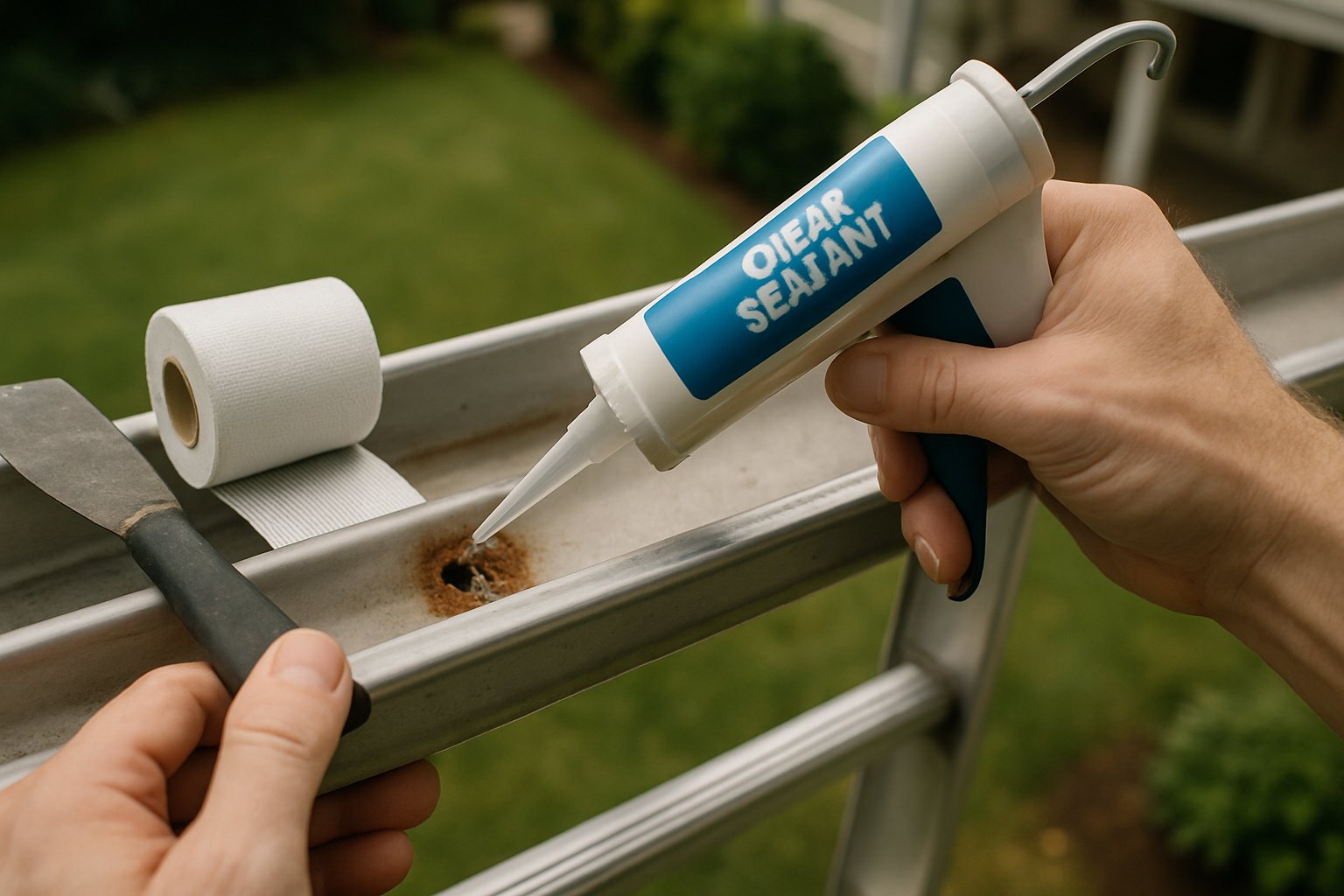
- Gutter sealant (Lexel, Through the Roof, or specifically gutter-rated polyurethane sealant — about $7 a tube)
- Caulk gun
- Wire brush
- Rubbing alcohol
- Clean rags
- Putty knife or plastic application tool
- Aluminum or fiberglass gutter patch fabric ($10-$15)
- Tin snips (for trimming patch material)
- Stiff scrub brush
- Garden hose
- A solid extension ladder
- Gloves and safety glasses
Step 1: Clean the Gutter Section Thoroughly
Sealant only works on clean, dry surfaces. This step is what separates a 5-year fix from a 6-month fix.
- Set up the ladder safely.
- Remove all debris from the gutter — leaves, twigs, mud, biological gunk.
- Scrub the area around the leak with a stiff brush.
- Rinse with the garden hose.
- Dry the area with a clean rag.
- Wipe with rubbing alcohol on a clean rag — removes oils and any residual film.
- Let dry completely (5-10 minutes in the sun).
Step 2: Apply the Patch (Multiple Methods Based on Leak Size)
Method 1: Pinhole or small crack (under 1/4 inch)
For a tiny rust hole or crack:
- Apply a generous bead of gutter sealant directly over the hole, from inside the gutter.
- Smooth with a putty knife to ensure full contact.
- Cover an area at least 1 inch in every direction beyond the hole.
- Let cure per label (typically 24 hours).
Method 2: Larger hole or rust patch (up to 2 inches)
A patch fabric strengthens the repair:
- Cut a piece of aluminum or fiberglass gutter patch fabric, 1 inch larger than the hole in every direction.
- Apply a layer of sealant over the hole, slightly wider than the patch.
- Press the patch fabric into the wet sealant.
- Apply a second layer of sealant over the top of the patch.
- Smooth with a putty knife. Edges should feather into the existing gutter surface.
- Cure 24 hours.
Method 3: Failed seam between gutter sections
Most gutter leaks are at section joints — where two sections of gutter butt together.
- Scrape out any old failed sealant from the seam.
- Clean thoroughly per Step 1.
- Apply a generous bead of sealant inside the seam.
- Smooth with a putty knife, working sealant into the joint from both inside and underneath.
- Apply additional sealant on the outside of the seam if accessible.
- Cure 24 hours.
Method 4: Sagging gutter section (overflowing not leaking)
The gutter has lost its slope:
- Add new gutter hangers between existing ones — at least every 24 inches for proper support.
- Use hidden hangers that screw into the fascia (or replace any failed hangers).
- Re-establish slope: 1/4 inch per 10 feet toward the downspout.
- Test with the hose — water should flow to the downspout without pooling.
Step 3: Test the Repair
After sealant cure (24+ hours):
- Run a garden hose at full flow into the gutter at the high end.
- Watch the area you patched. No drips = success.
- Watch the rest of the run. Often patching one leak reveals a second one nearby that you didn’t notice.
If the patch leaks: clean and retry. Most leaks come back because of inadequate cleaning, not bad materials.
When to Replace Instead of Patch
- More than 4-5 leaks in one section: replacement is more efficient
- The gutter material itself is heavily rusted (steel) or cracked throughout (vinyl) — the gutter is at end of life
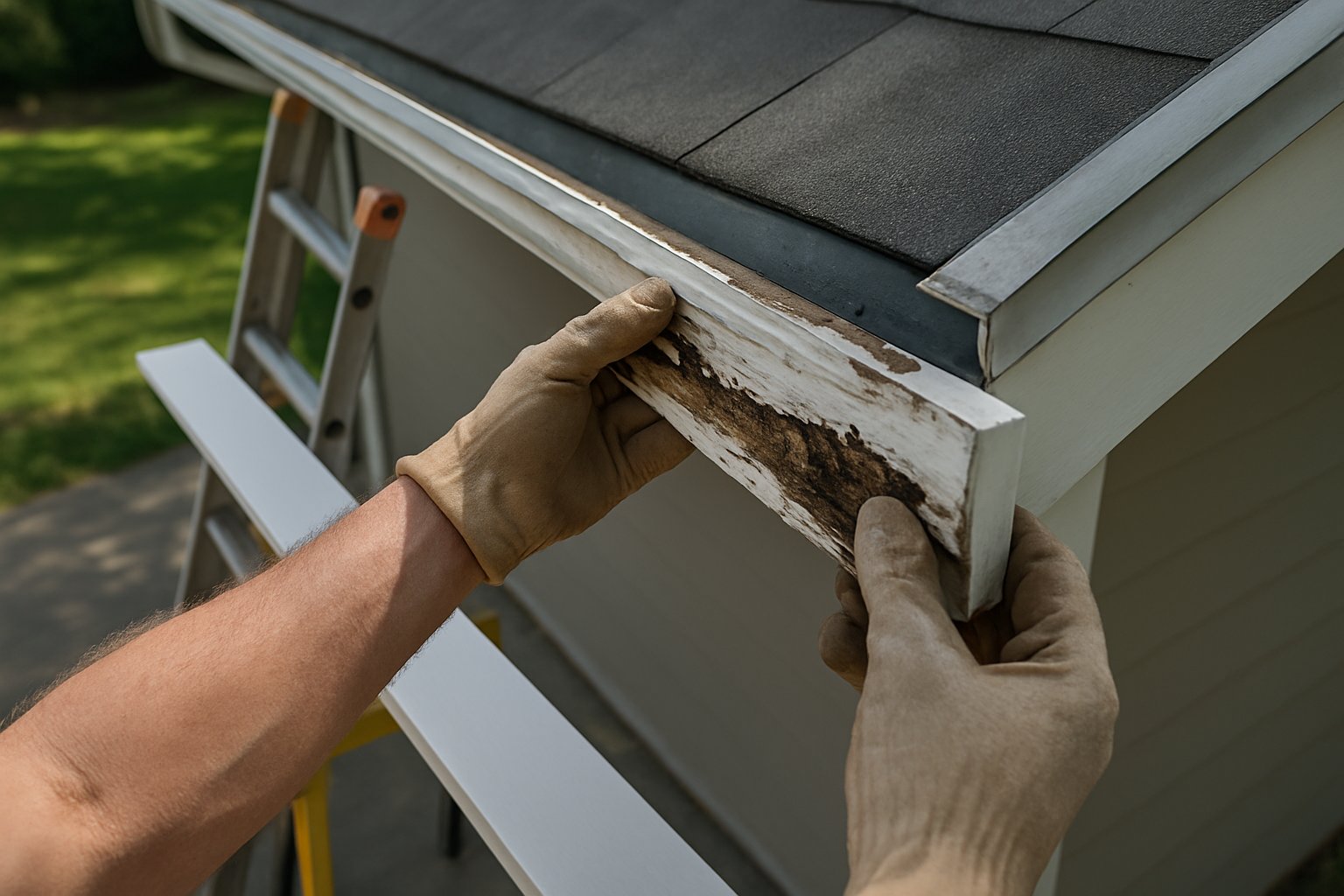
- The gutter is sagging in the middle even with new hangers — the fascia behind it is rotted (separate post on that)
- You’re looking at gutters with downspouts in awkward places — the redesign that comes with replacement may be worth it
A new gutter run is typically $5-$15 per linear foot installed. For a single 30-foot section, $150-$450 in pro labor + materials.
Common Mistakes
- Skipping the cleaning step. Sealant doesn’t bond to dirty surfaces. Bond fails in months.
- Using regular caulk instead of gutter sealant. Standard silicone caulks fail in UV exposure. Use gutter-specific or roof-specific sealants.
- Patching from outside only. Water flows down from above. Patch from INSIDE the gutter (where the water actually is) for primary effect, with optional outside patch for backup.
- Not adding patch fabric for medium-sized holes. A bead of sealant alone may shrink and crack. The fabric adds physical strength.
- Ignoring the cause of the rust hole. Steel gutters rust through from the inside, usually because debris held water against the metal. Clean gutters more often after the patch.
- Working in cold weather. Sealant doesn’t cure properly below 40°F. Patch on a mild day.
When to Hire It Out
- Gutter work on third-story or higher
- Gutters that are part of a larger water-damage problem (rotted fascia, water in basement)
- Whole-section replacement
- Adding gutter guards or relocating downspouts
The Bottom Line
A leaking gutter is a low-cost, high-leverage repair. $15 in sealant and 30 minutes prevents the much larger problem of water against your foundation. Inspect during rain, mark leaks, fix on a dry day. Annual inspection catches problems before they become structural ones.
For the full sequence including downspout repairs, gutter guard installation, and the gutter-replacement scenarios, see Patch a Section of Gutter.
For chronic gutter problems, foundation water issues, or planning a downspout-and-drainage redesign, send your photos for a $19.99 diagnostic report.