I’ve replaced roofs on four of my own houses. The number-one mistake I see homeowners make on this job isn’t picking the wrong roofer or buying the wrong shingles. It’s waiting until water is running down a wall before they pick up the phone.
By the time you’ve got an interior leak, you’re not paying for a roof anymore. You’re paying for a roof, plus drywall, plus insulation, plus maybe a ceiling, plus the dehumidifier rental while everything dries out. The job that should have been one well-scheduled tear-off in dry weather turns into emergency pricing, the next available crew at whatever rate they’re charging, and three weeks of stress while you wait to see if the mold spreads.
The thing is — roof failure isn’t sudden. There are five visible signs your roof has about five years of life left, and none of them is a leak yet. If you know what to look for, you can plan the tear-off, get three estimates, schedule it for dry weather, and pay forty percent less than the homeowner who waited.
Here’s what to look for.
Sign 1: Moss or dark algae streaks
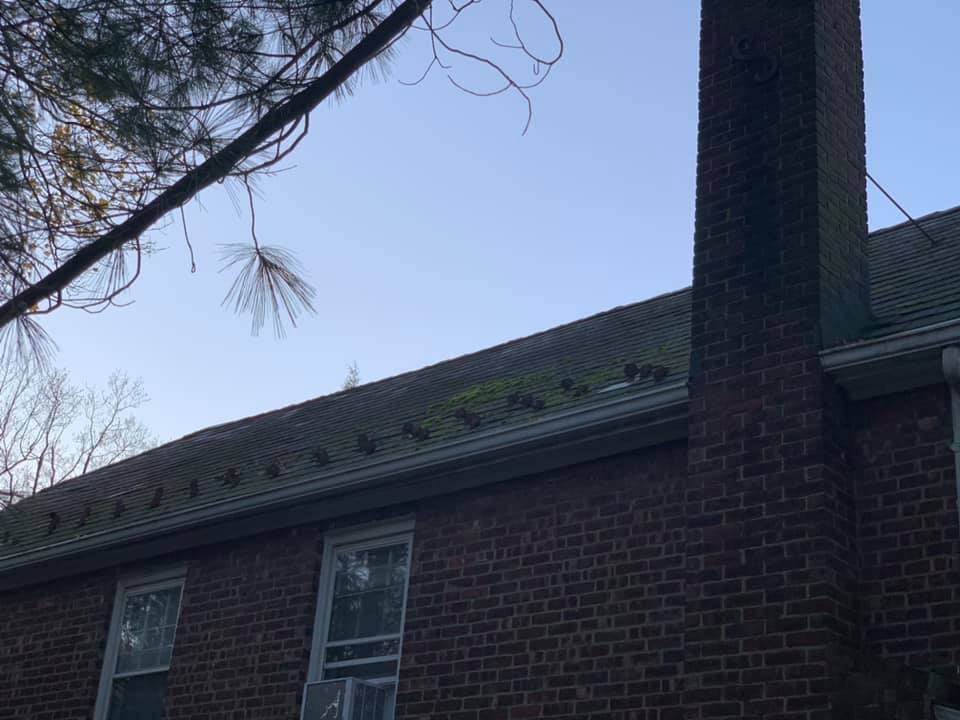
Walk to the side of your house that faces north (or the most shaded slope). Look up. If you’re seeing green moss patches or dark vertical streaks running down the shingles, that’s the first sign.
People assume moss is cosmetic. It’s not. Moss holds moisture against the shingles instead of letting them dry out — and moisture, repeated through hundreds of freeze-thaw cycles, is what cracks asphalt. By the time moss is clearly visible, the granule layer underneath it is already lifting, and the shingle bond to the underlying mat is weakening.
You can power-wash moss off (though I don’t recommend it — the pressure damages the shingles more than the moss does). You can apply zinc strips at the ridge to inhibit regrowth. Both of those are stalling tactics. Once moss is established on a roof, you have two to five years before that section starts to leak.
Caveat: A few spots of moss in heavily shaded areas, on a roof that’s otherwise in good shape, isn’t an emergency. It’s a flag to start looking at the other four signs.
Sign 2: Curling or cupping shingles
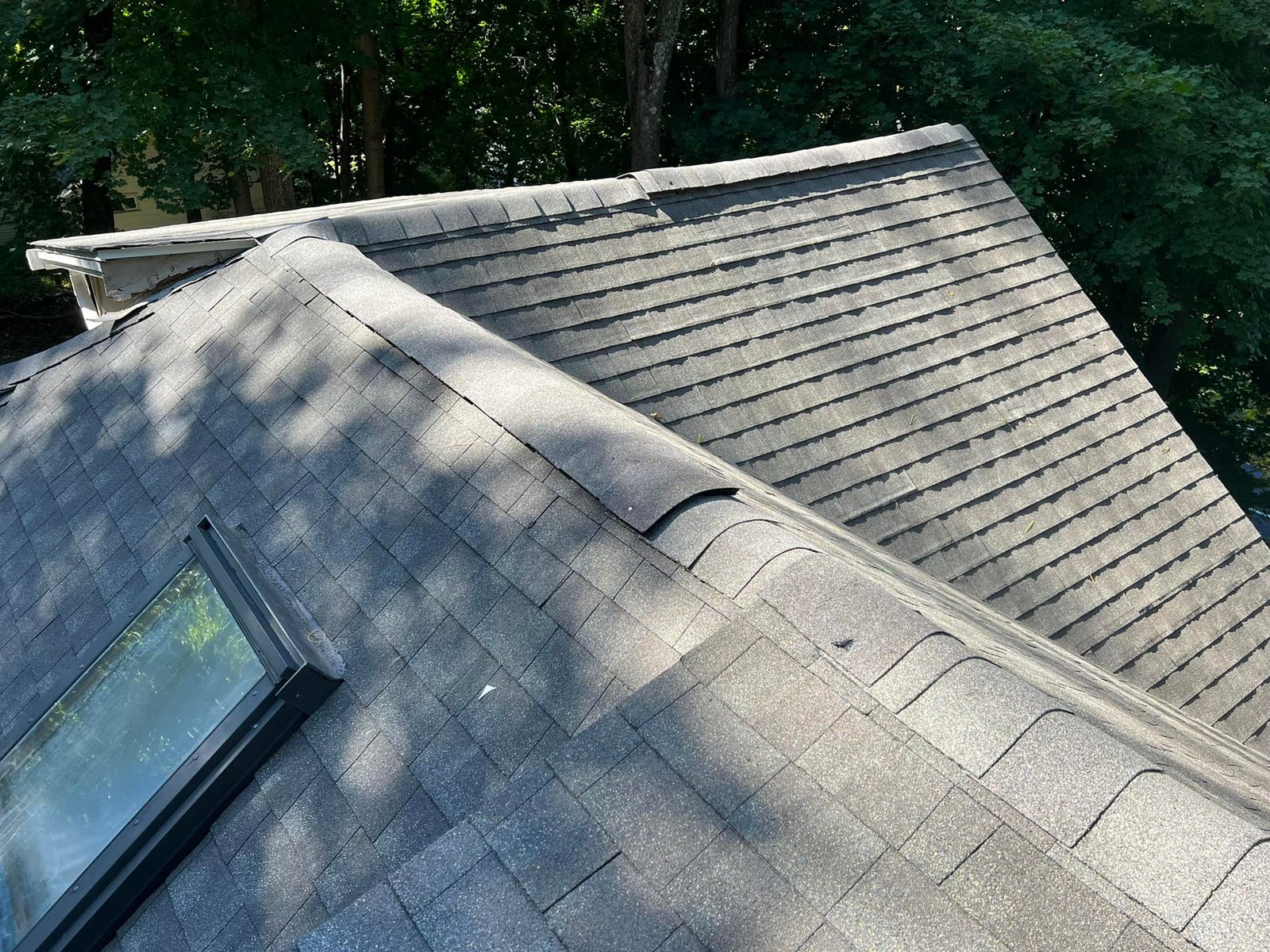
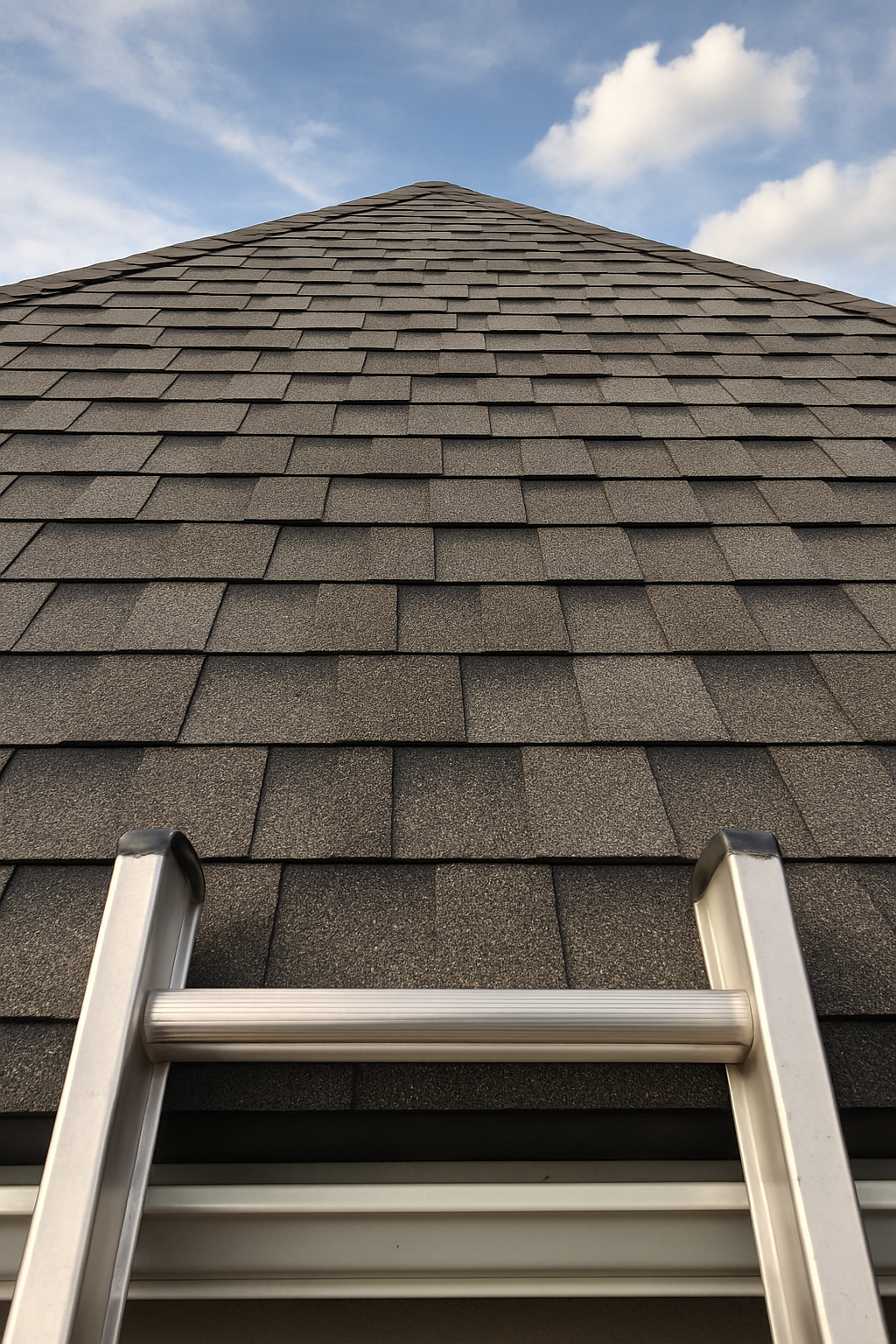
This is the most common sign I see on roofs in the 15-20 year range. Walk outside, look up at the roof from a few different angles. If the corners of the shingles are lifting up like potato chips — that’s “curling.” If the centers are dished out — that’s “cupping.” Either pattern means the same thing: the asphalt has dried out and the underlying mat has shrunk.
Curled shingles can’t shed water properly. Instead of channeling rain down the slope, they create little dams that hold water at each shingle edge — and from there, water either soaks into the now-exposed mat, or it gets driven sideways under the shingle by wind. Both ways, it ends up on the deck.
If more than 20% of a slope is visibly curling or cupping, you’re inside the five-year window. If you’re at 50% on a single slope, you’re inside the two-year window for that slope specifically.
Sign 3: Granules in the gutters
Asphalt shingles are designed to shed a small amount of granule grit every year. That’s normal — the granules are the sand-and-ceramic layer that protects the asphalt below from UV breakdown, and a little shedding doesn’t matter.
The test: how much is “a little”? Walk to your downspouts in spring (after the winter and the first hard rain has flushed the gutters) and look at what’s collecting at the base. If you can scoop a handful of granules out of a 6-foot section of downspout, the granule layer is failing in chunks, not shedding evenly.
Why this matters: once the granules are gone, the shingle is essentially bare asphalt. Bare asphalt cooks in summer sun, brittles up, cracks, and stops holding the seal between shingles. The shingle is now actively decomposing. Two to four years from heavy granule loss to active leak.
Bonus check: stand at street level and look at the roof slope facing the sun. If you can see bald, gray-black streaks running down the slope while the rest is still grit-textured, those bald streaks are where the granules are gone. The shingles underneath those streaks are functionally bare.
Sign 4: Chimney and roof-penetration flashing pulling away
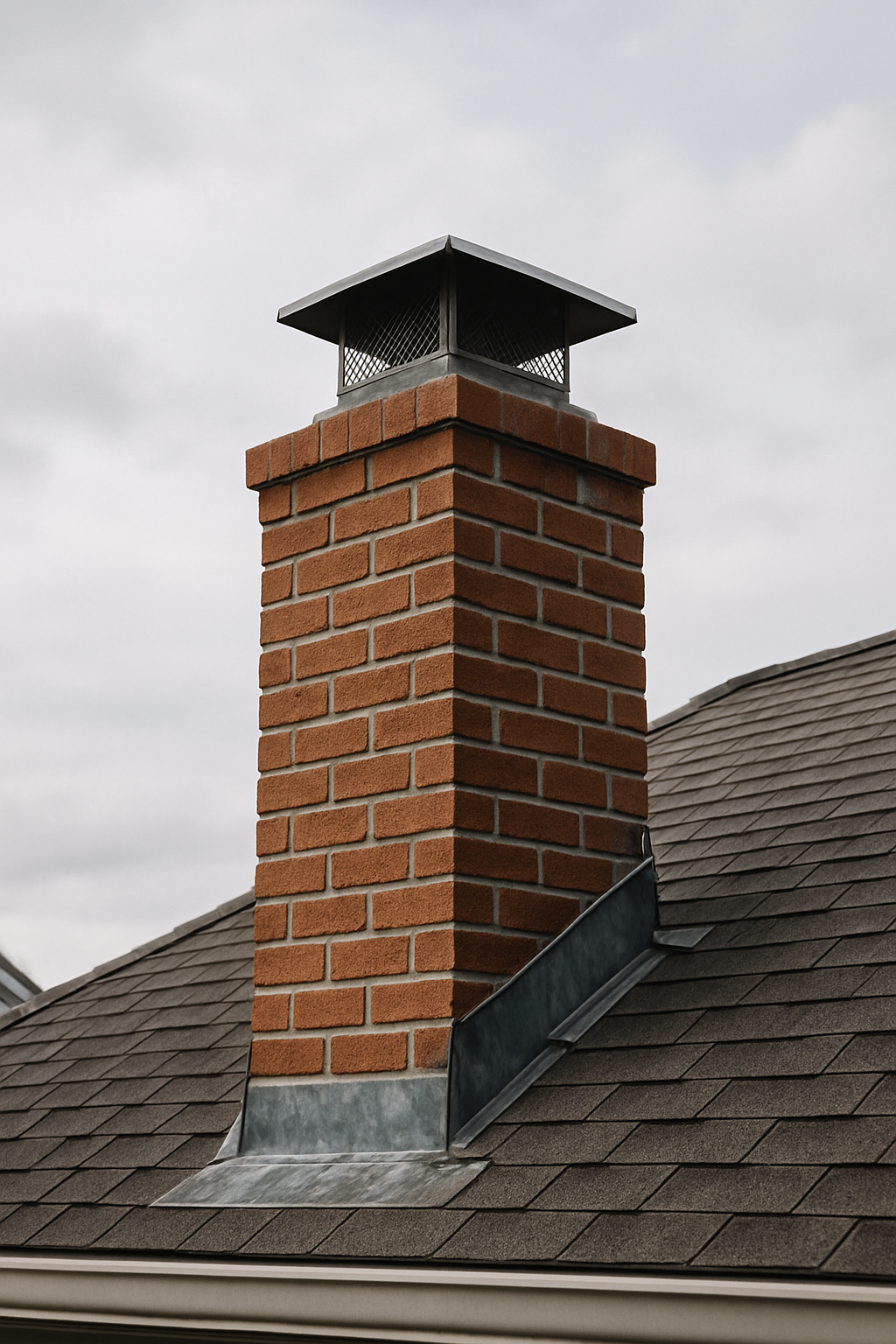
Walk around your house and look up at every place where your roof meets something else — a chimney, a sidewall, a skylight, a vent pipe. Each of those joints has metal flashing covering the seam. The flashing is what keeps water out of the joint, because shingles alone can’t seal those angles.
What you’re looking for:
- A visible gap between the flashing and the structure it’s against
- Rust streaks running down from the flashing onto the shingles
- Tar (the black gooey stuff) smeared over what used to be metal — that’s the previous repair, and it’s almost always failing
- Flashing that’s been pulled up at the edges, exposing the underlying tar paper
Here’s why flashing failures matter more than shingle failures: most interior leaks start at flashings, not at shingles. Water gets in around a chimney or skylight years before the actual roof field fails. By the time you have a wet spot on a ceiling under a chimney, you’ve already had water getting into the framing — and probably into the insulation — for months.
If your flashing is visibly failing on a roof that’s otherwise still in decent shape, you may not need a full tear-off — you may need a flashing-only repair (typically $400-$1,500). But you do need to act now.
Sign 5: Stains on the underside of the roof deck
Grab a flashlight, go up in your attic, and look at the underside of the plywood roof deck between the rafters. What you’re looking for:
- Dark streaks running down from the nail heads — water has been wicking down nails and drying out, repeatedly
- Ring stains that look like rusty halos — water sat there long enough to leave a mark
- Soft, punky spots where the plywood gives if you press on it — the sheathing is failing
- Daylight visible through gaps — pretty obvious, but worth checking
Most attic stains are old — water that got in years ago and dried out. That’s still a warning sign, because if water has gotten in once it can get in again. If you find a stain pattern that’s clearly recent (still wet to the touch, or smelling musty), you have an active leak right now that probably isn’t visible from inside the living space yet.
By the time these stains show up on the inside, the outside has been failing for a while. This is the sign that tells you to stop researching and start getting estimates.
What to do if you see two or more of these
If you’re seeing one of these five signs in isolation, on an otherwise-good roof, you’re in monitoring territory. Walk the roof twice a year, document with photos, and plan a tear-off in the next 3-5 years.
If you’re seeing two or more of these signs, the question is no longer if — it’s when, and how cheap can you keep it. The cheapest version of this job is:
- Plan the tear-off 6-12 months out. Roofers are cheaper in spring/fall than in summer (their peak season).
- Get three estimates from local roofers, not the storm-chasing companies that show up after hail events.
- Schedule for dry weather, with a tarp plan if the forecast turns.
- Replace flashing and sheathing as needed — don’t let a roofer just shingle over rot.
The most expensive version is the same job, but done as an emergency after the leak finds you. Add 30-50% to the price tag, plus interior repairs, plus the dehumidifier rental and the time off work to be home for crews.
Want me to look at your roof?
The fastest way to figure out where your roof actually is on the five-year scale: send me three photos for a $19.99 diagnostic report — one of the worst-looking slope, one close-up of the shingles, and one from inside the attic looking up at the deck. I’ll tell you which of the five signs you’re showing, how urgent it is, and whether a flashing-only repair could buy you more time.
You can also see roof projects I’ve worked on — tear-offs, chimney repairs, full re-decks — for a sense of what each stage of failure looks like in real life.
The goal here isn’t to scare anyone into replacing a roof early. It’s to make sure that when the roof does need to come off, you’re the one scheduling it — not your ceiling.