A slow-filling toilet usually comes down to one of three issues: a partially closed shutoff valve, a clogged screen on the fill valve, or debris in the supply line. Each is a 5 to 15-minute fix with no parts required — or a $12 replacement if the valve itself is failing.
Here’s the diagnostic order and fix for each.
What Counts as “Slow”?
A standard toilet should fill in 45 seconds to 90 seconds after flushing. Anything over 2 minutes is slow. Anything over 4 minutes is a problem that needs fixing.
Cause 1: Partially Closed Shutoff Valve (Free Fix)
The most common cause — and the most often missed.
The shutoff valve behind the toilet is often turned not-quite-fully-open, especially if someone has worked on the toilet recently. Even a slight partial closure drops flow dramatically.
Fix:
- Check the shutoff valve on the wall behind the toilet.
- Turn it counterclockwise fully — all the way to the stop.
- Flush and time the refill.
If the valve is a quarter-turn ball valve (handle parallel to pipe = open), make sure the handle is fully parallel.
If this is your issue, you’re done. 30 seconds and zero dollars.
Cause 2: Clogged Screen on the Fill Valve (15-Min Fix)
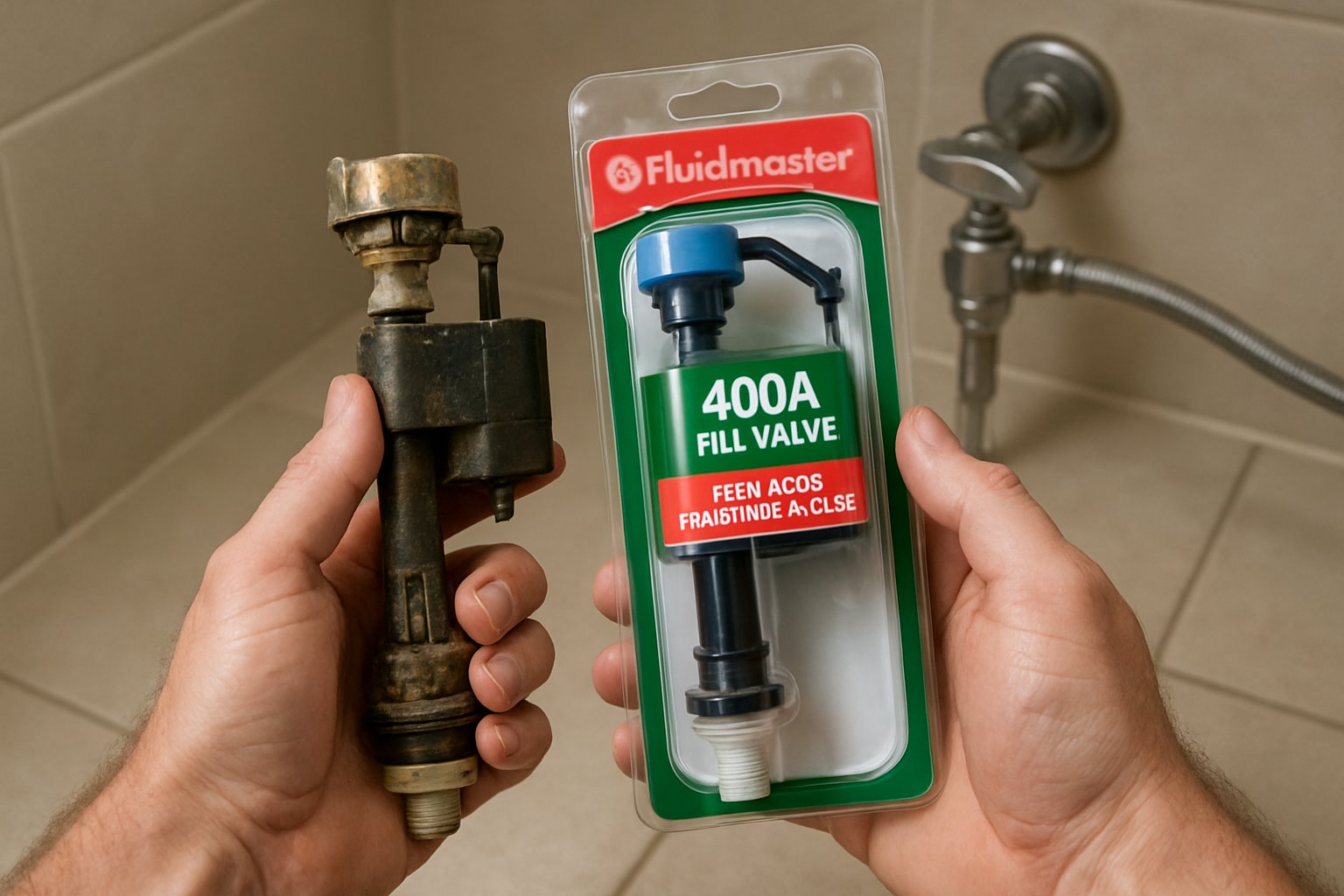
Modern fill valves (Fluidmaster 400A and similar) have a small debris screen at the water inlet — where the supply line connects to the valve. Sediment from the water line collects here over months, reducing flow.
Fix:
- Shut off the water at the shutoff valve.
- Flush to empty the tank. Sponge out any residual water.
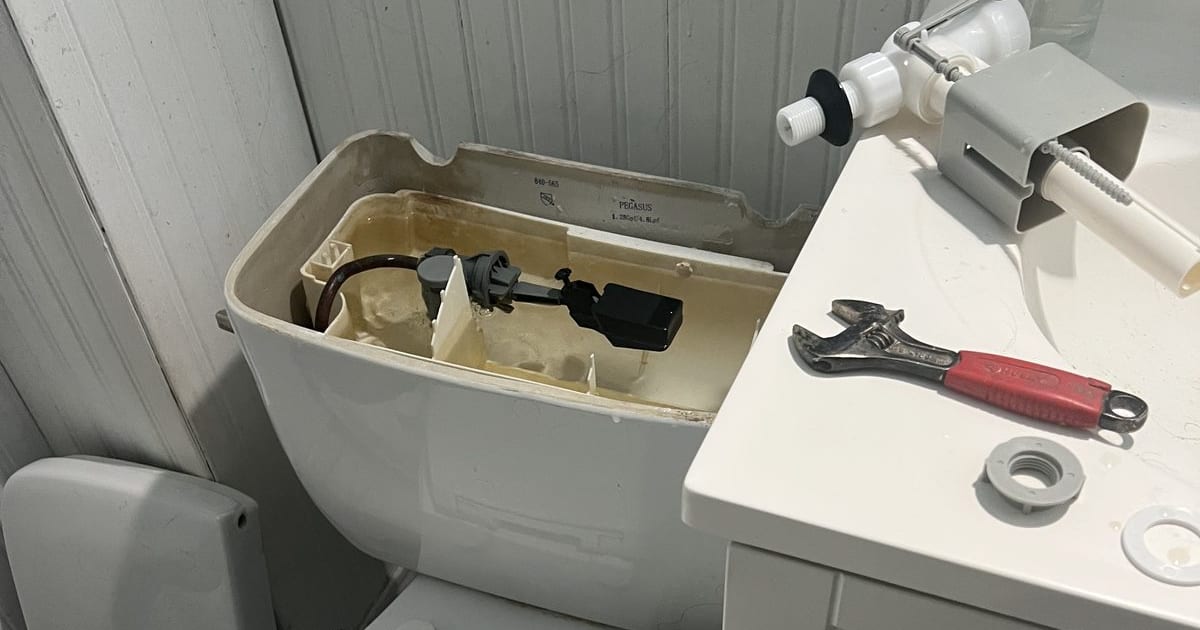
- Disconnect the supply line from the bottom of the fill valve (have a bucket ready).
- Look up inside the valve inlet with a flashlight. You’ll often see a white or gray mesh screen.
- Pry the screen out gently with a small flat-head screwdriver. Rinse it under running water to remove debris.
- Briefly turn the water back on with a cup under the supply line to blow out any loose debris from the line itself.
- Reinstall the screen.
- Reconnect the supply line.
- Turn water on and flush to test.
Cause 3: Fill Valve Itself Is Failing
If cleaning the screen didn’t speed things up, the fill valve internals are worn or mineral-crusted. Replace the whole valve — see our “how to replace a toilet fill valve” guide for the full process.
The Fluidmaster 400A is $12, and replacement takes 30 minutes. It’s the right fix for any toilet where the fill valve is 10+ years old.
Cause 4: Diaphragm-Style Fill Valve Needs Cleaning
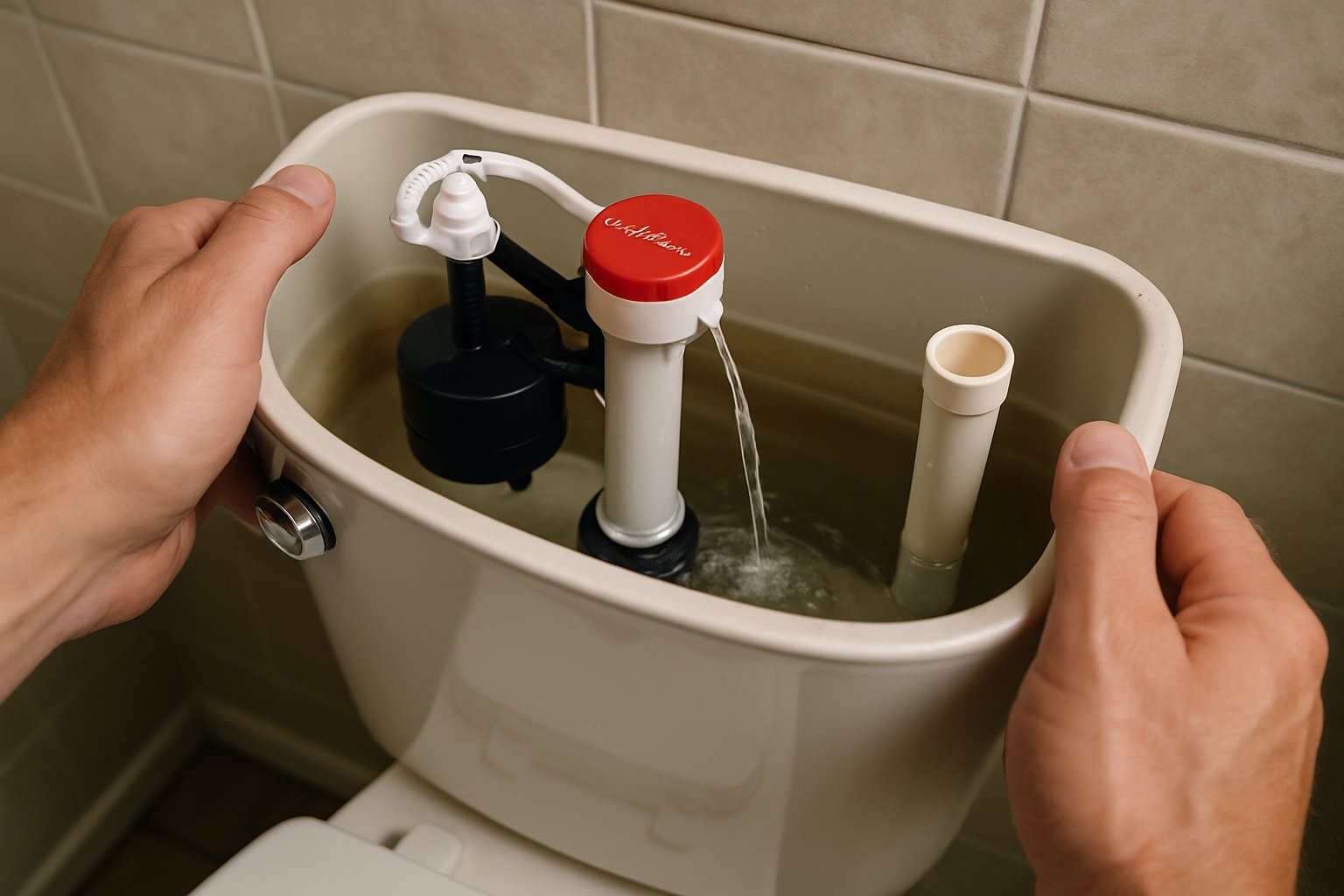
Some fill valves (older Fluidmaster and Korky designs) have a rubber diaphragm that controls water flow. Mineral buildup under the diaphragm slows fill dramatically.
Fix (Fluidmaster 400A and similar):
- Shut off water, drain tank.
- Twist the cap off the top of the fill valve (arrows on the cap show direction — usually 1/8 turn counterclockwise while pressing down).
- Under the cap, lift out the rubber diaphragm/seal.
- Rinse the diaphragm and the valve body under water to remove debris.
- Briefly run the water (with a cup over the valve opening to catch the spray) to flush debris from the line.
- Reassemble.
Takes 5 minutes. Often restores full fill speed without replacing the valve.
Cause 5: Supply Line Kinked or Clogged
Inspect the flexible supply line between the shutoff valve and the toilet.
- Kinked line: Often happens when a toilet is pushed back against the wall too hard. Straighten or replace.
- Old plastic line: Replace with braided stainless ($5). Plastic lines sometimes develop interior restrictions.
- Debris inside the line: Disconnect at both ends, hold over a bucket, briefly turn on water from the shutoff to flush.
Cause 6: Low Water Pressure Throughout the House
If every fixture fills slowly, not just the toilet, you have a whole-house pressure problem — not a toilet problem.
- Check the pressure-reducing valve (PRV) near the main water entry.
- Test pressure with a gauge at an outside spigot ($12 tool at Home Depot). Normal is 45–70 psi.
- If whole-house pressure is low, fix that first — see our “how to fix low water pressure in a shower” guide for the full diagnostic.
Diagnostic Order
Go in this sequence — each test takes under 5 minutes:
- Check the shutoff valve — is it fully open?
- Time the fill — how many seconds?
- Check another fixture — is the bathroom sink slow too? If yes, whole-house pressure issue.
- Clean the screen — 15-minute fix, no parts.
- Clean the diaphragm — another 5-minute fix for most Fluidmaster/Korky valves.
- Replace the fill valve — if 10+ years old or the above didn’t work. $12 part.
Common Mistakes
- Skipping the shutoff check. It’s always the first thing. Partially closed valves are the most common cause.
- Replacing the valve before cleaning. Often the screen or diaphragm is the issue, not the whole valve.
- Not flushing the supply line. If the screen is clogged, the line itself probably has debris — flush briefly before reinstalling.
- Overtightening on reassembly. Hand-tight plus a quarter turn. Cracks porcelain otherwise.
When to Call a Plumber
- Whole-house pressure is low and you don’t know why (could be PRV, main valve, water company service).
- Shutoff valve is frozen or leaks when turned (needs replacement — requires shutting off main).
- You’ve replaced the fill valve and it’s still slow — may indicate a partial blockage deeper in the line or an old galvanized pipe run that needs repiping.
Frequently Asked Questions
How long should my toilet take to refill? 45–90 seconds for most modern 1.28 GPF and 1.6 GPF toilets. Some older pressure-assisted models fill in 20–30 seconds. Over 2 minutes is slow.
I cleaned the screen and it’s still slow. What now? Try cleaning the diaphragm next (5 minutes). If still slow after that, the valve is at end of life — replace it. Also check the shutoff valve one more time.
My other fixtures are fine — only the toilet is slow. Why? Almost always the toilet’s fill valve or the shutoff behind the toilet. The fixture itself is the bottleneck.
Why is my fill valve whistling while it fills? Pressure is too high for the valve’s design. Most fill valves whistle at 80+ psi. Reducing whole-house pressure via the PRV stops the noise.
Does refill speed affect water bill? Not directly — the total water used per flush is the same either way. Slow fill just means you wait longer for the next flush. If your bill is high, look for a leaking flapper (dye test), not fill speed.
The Bottom Line
Always check the shutoff valve first — partially closed valves are the single most common cause and a 30-second fix. If the shutoff is fine, clean the screen and the diaphragm in that order. If all three haven’t solved it, replace the fill valve. Total cost: $0 to $12, time: 5 to 30 minutes.
If you’re planning a bathroom remodel and want a fixture plan and permit checklist tailored to your project, send your photos for a $19.99 diagnostic report.