The fix for low shower pressure is almost always free: unscrew the showerhead, remove the flow restrictor or clean the mineral buildup, screw it back on. That resolves 80% of “low pressure” complaints. The remaining 20% involve the shower valve, supply lines, or main pressure — and those each have specific fixes.
Here’s the 5-minute diagnosis and the right fix for each cause.
The Quick Diagnosis
Only the shower is low pressure; other fixtures are fine. → Showerhead clog or flow restrictor (Fix 1 or 2).
Only the hot side is low; cold is normal. → Water heater supply valve not fully open, or mineral buildup in the hot-side shower valve cartridge (Fix 3).
Both hot and cold shower flow is low, but the sink in the same bathroom is fine. → Shower valve cartridge is clogged (Fix 4).
Everything in the house is low pressure. → Main pressure issue (Fix 5).
Fix 1: Clean the Showerhead
Mineral deposits from hard water clog the tiny holes in the showerhead face. Over 12–18 months, the face looks normal but the internal passages are blocked.
- Fill a plastic bag with enough white vinegar to submerge the showerhead face.
- Tie the bag onto the showerhead with a rubber band or zip tie — submerging the face in vinegar.
- Leave it for 4 hours (overnight if buildup is heavy).
- Remove the bag, run the shower for 60 seconds to flush debris.
- Use an old toothbrush or a pin to clear any remaining clogged holes.
Done. 90% of “my shower is weak” calls are fixed by this alone.
Fix 2: Remove or Open the Flow Restrictor
Federal code requires new showerheads to flow no more than 2.5 GPM. They do this with a plastic flow restrictor disc inside the base of the showerhead. If the restrictor is partially clogged or simply too aggressive for your taste, you can remove it or enlarge the hole.
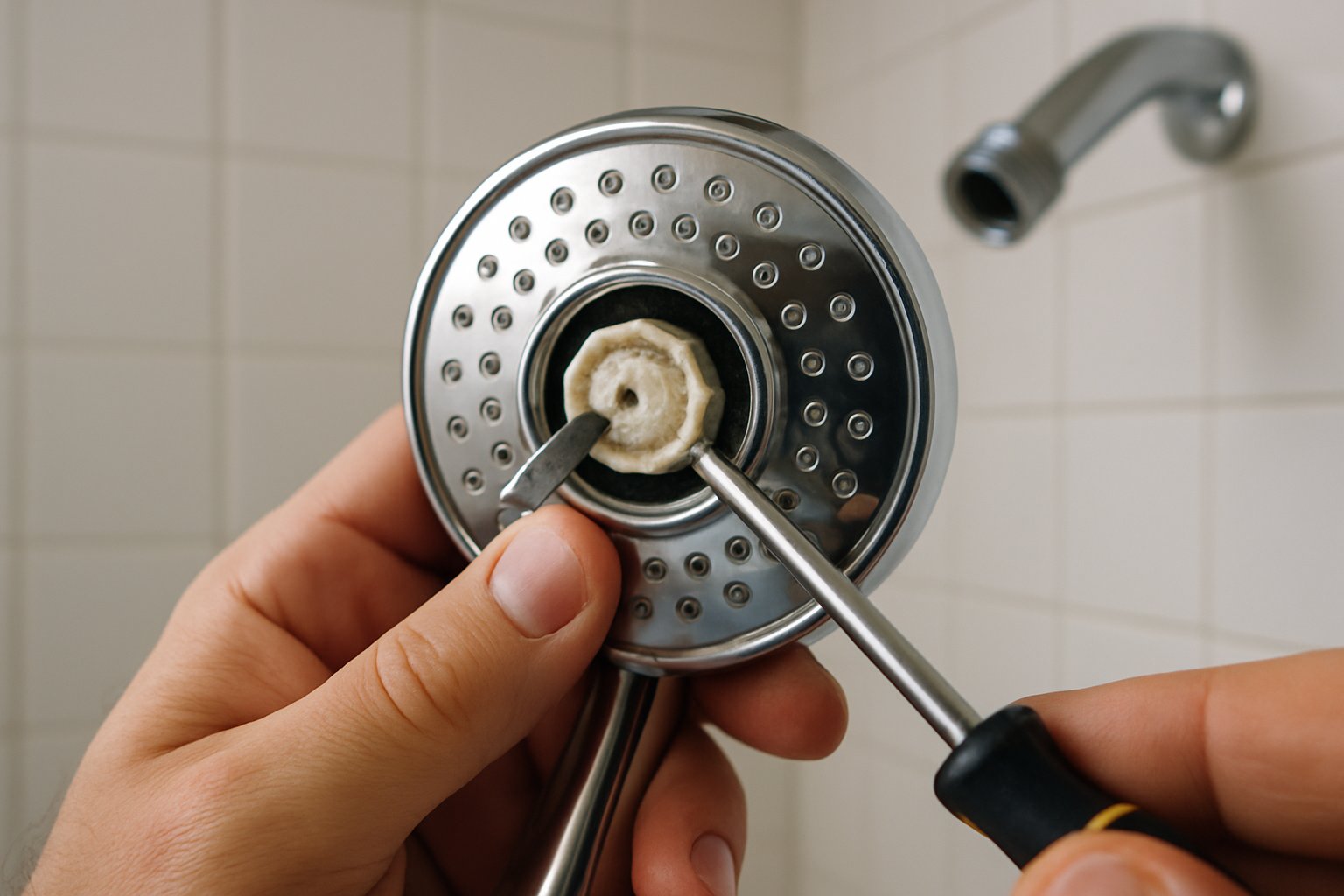
- Unscrew the showerhead from the shower arm (counterclockwise, using channel locks with a rag on the jaws to protect finish).
- Look inside the base. You’ll see a plastic disc with a small center hole (the restrictor) — often colored (white, green, pink).
- Pry it out carefully with needle-nose pliers. Keep it in a drawer in case you need to reinstall.
- Wrap the shower arm threads with 2–3 wraps of plumber’s tape (Teflon tape).
- Screw the showerhead back on. Hand-tight plus a quarter turn.
Note: Some areas (parts of CA, NY) require flow restrictors by state code — removing them is not illegal federally but may be restricted locally.
Fix 3: Hot Side Only Is Low
If only the hot water is weak:
Check the water heater shutoff. On top of the water heater is a cold-supply shutoff. It should be fully open. Also check any shutoff on the hot-out line.
Sediment in the hot cartridge. Over time, sediment from the hot water tank collects in the hot side of the shower mixing valve. You’ll need to pull the cartridge (shut off water to the house, remove handle, pull cartridge, flush with clean water) or replace it.
Flush the water heater. If hot pressure is low at every fixture (not just the shower), the bottom of the tank is full of sediment. Drain the tank via the bottom spigot once a year to prevent this.
Fix 4: Shower Valve Cartridge Is Clogged
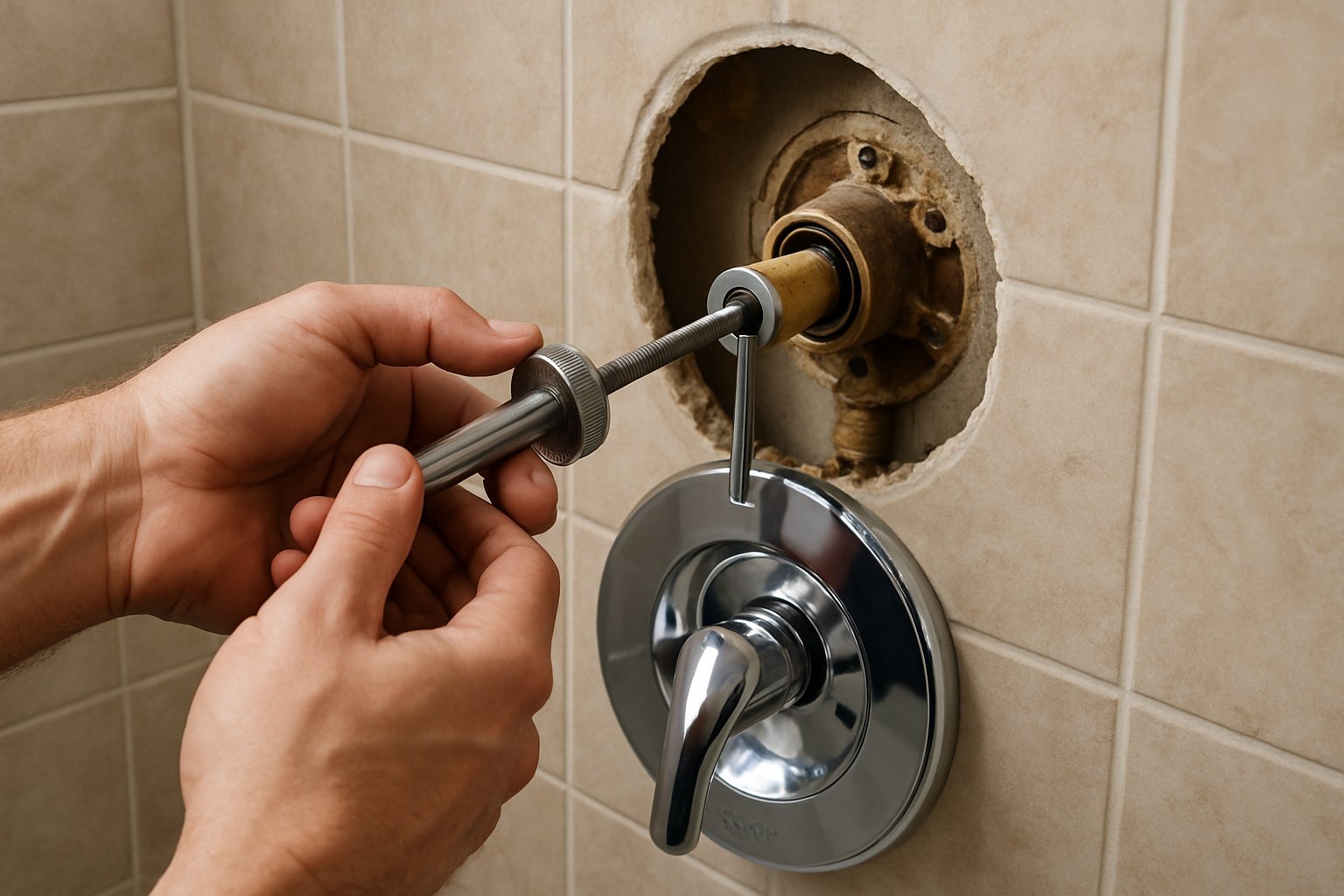
If both hot and cold shower flow are low, but other fixtures in the bathroom are fine, the mixing valve cartridge inside the wall has mineral buildup.
- Shut off water to the house (or to the bathroom if you have a dedicated branch).
- Remove the shower handle (usually one screw hidden under a decorative cap).
- Remove the escutcheon (the large trim plate).
- Remove the cartridge retaining clip or nut.
- Pull the cartridge straight out. Expect significant buildup.
- Option A — clean it: soak in vinegar for 4 hours, scrub with a toothbrush, reinstall.
- Option B — replace it: take the old cartridge to the hardware store, match by brand. $25–$60.
- Reinstall in the correct orientation (there’s always a tab or flat).
- Turn water back on slowly.
For the specific steps on shower valve repair, see our “how to fix a leaky shower valve” guide.
Fix 5: Whole-House Low Pressure
If everything is low, the problem is before the fixtures.
Check the main shutoff. Fully open (parallel to the pipe). If it’s a gate valve (round handle), turn it fully counterclockwise.
Check the pressure-reducing valve (PRV). Most NJ homes have a PRV near where the main enters the house. It reduces municipal pressure (often 80+ psi) to a safer 55–65 psi. PRVs fail closed over time. If yours is failing, a plumber can adjust or replace it ($300–$500 with labor).
Get a pressure reading. Buy a water pressure gauge at Home Depot ($12). Screw it onto any outside hose bib and turn the water on. 45–70 psi is normal. Below 40 psi, call the water company first (maybe a service issue), then investigate the PRV.
Clogged supply line. In older homes with galvanized pipe, the interior diameter shrinks over decades due to corrosion and scale. By the time the pipe is 50+ years old, flow can be reduced by 80%. The only fix is re-piping, typically with copper or PEX. Not a DIY job.
Common Mistakes
- Replacing the showerhead without cleaning the old one first. 90% of the time the old head is fine, just clogged. A 10-minute vinegar soak saves $40.
- Removing the flow restrictor permanently without keeping it. Some new code in your area or a future renter may require you to put it back. Keep it in a drawer.
- Overtightening the showerhead. Cracks the collar. Hand-tight plus a quarter turn with plumber’s tape is plenty.
- Not using plumber’s tape. Results in drips at the showerhead-to-arm joint. 2–3 wraps, clockwise around the threads.
When to Call a Plumber
- Pressure-reducing valve replacement (requires cutting the main).
- Galvanized-to-copper/PEX repipe (specialty work).
- Shower valve replacement where the cartridge isn’t available or the valve body itself is damaged — replacing a valve behind the wall means opening the wall.
- Well pump issues (if you’re on a well, low pressure throughout the house often means a failing pressure switch or pump).
Frequently Asked Questions
My shower pressure dropped suddenly. What happened? Usually a piece of debris from the water main dislodged and traveled to your showerhead. Clean the head or check the shower valve cartridge. Also check if the water company did any work in your neighborhood recently.
Is a low-flow showerhead the same as having low pressure? No. Low-flow (2.5 GPM or less) by design still delivers satisfying pressure through the showerhead’s internal design — modern low-flow heads (Delta H2Okinetic, Speakman Anystream) are excellent. Low pressure means actual supply restriction.
Should I replace my showerhead with a “high-pressure” model? If your whole-house pressure is adequate (50+ psi), a good head makes a big difference. But if the problem is the supply, no showerhead will fix it.
Can hard water damage my shower valve? Yes — over 5–10 years, mineral buildup inside the cartridge seals will cause stuck handles, pressure loss, and temperature inconsistency. Install a whole-house water softener if you’re on hard municipal water or a well.
How do I know if I have hard water? Chalky white residue on the shower glass, spots on dishes, soap that doesn’t lather well, and scale buildup on faucet aerators. NJ water varies widely — some towns are very hard.
The Bottom Line
Start at the showerhead — soak it in vinegar, pop out the flow restrictor if needed. If that’s not it, check the cartridge. If that’s not it, check whole-house pressure. Every step takes 5–20 minutes and costs under $10.
If you’re planning a bathroom remodel and want a plumbing plan and fixture spec tailored to your project, send your photos for a $19.99 diagnostic report.