A properly ventilated attic in summer is about 10–15 degrees hotter than the outside air. A poorly vented one can hit 150°F. That heat:
- Cooks asphalt shingles from below, cutting roof life by 5–10 years.
- Radiates down through your ceiling insulation into the rooms below, driving up cooling bills.
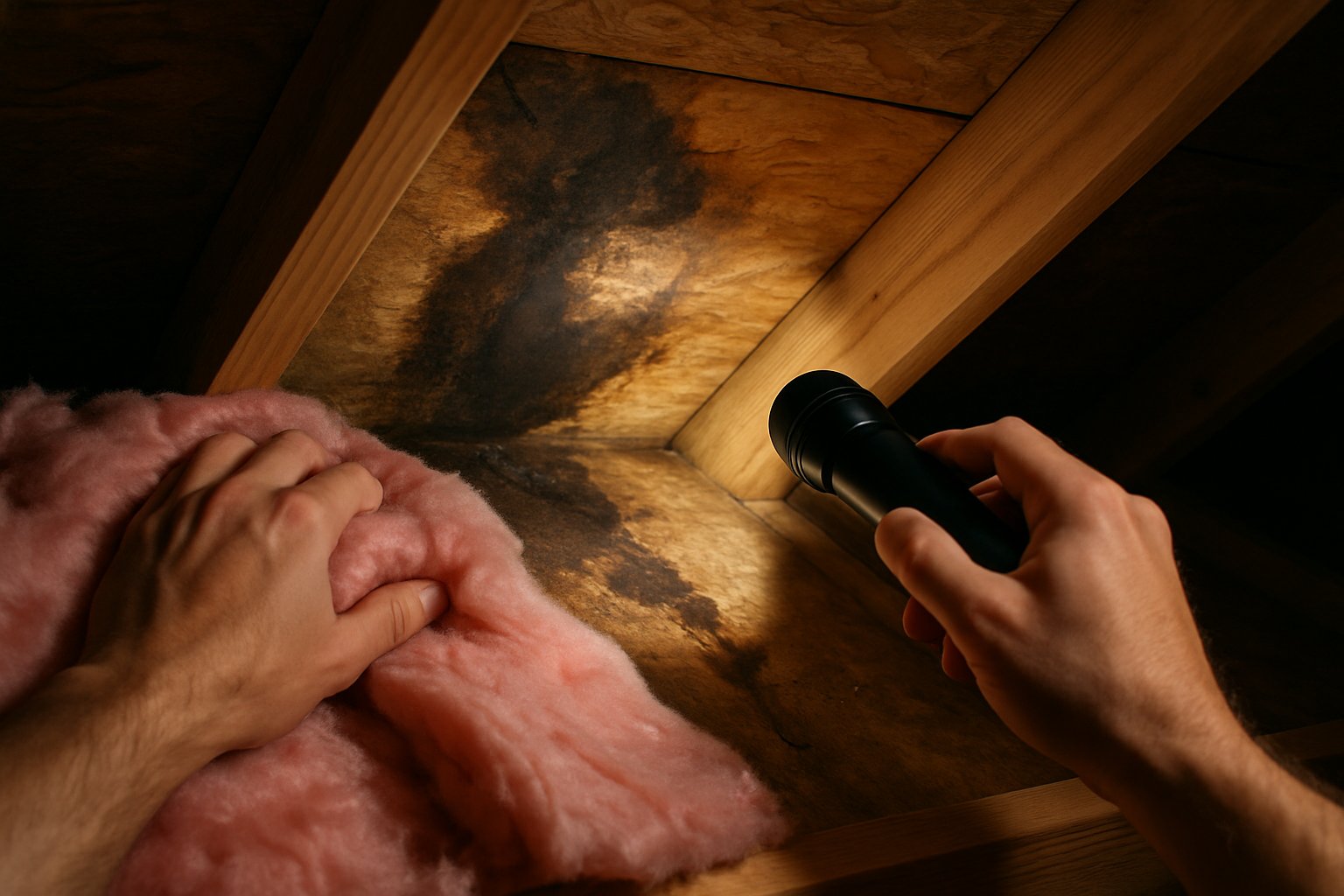
- Combined with humid air leaking up from the house, condenses inside the attic and grows mold on rafters even when there’s no roof leak.
Fixing attic ventilation is one of those upgrades that pays back in three ways at once: lower bills, longer roof life, and avoided mold remediation.
Here’s how to evaluate what you have and add what’s missing.
The Attic Ventilation Equation
Attic ventilation works like a chimney. Cool air enters at the bottom (soffit vents under the eaves), heats up inside the attic, rises, and exits at the top (ridge vent or gable vents). The system needs both intake and exhaust in balanced amounts to actually flow air.
The standard rule: 1 square foot of ventilation per 300 square feet of attic floor, split roughly 50/50 between intake (soffit) and exhaust (ridge or gable).
A 1500 sq ft attic needs about 5 sq ft of total venting — 2.5 sq ft of soffit vents and 2.5 sq ft of ridge or gable vents.
Most older houses are dramatically under-vented, especially on the intake side.
Step 1: Audit What You Already Have
Walk around the outside of your house and note every visible vent.
Soffit vents (intake): Look up at the underside of the roof eaves. You’re looking for:
- Continuous strip vents — long perforated metal strips running the length of the eave. Best modern setup.
- Individual round or rectangular vents — every 2-3 feet along the eave. Common in older houses.
- No visible vents at all — you have a “blocked soffit” problem and need to add intake. Big issue.
Ridge vent (exhaust): Stand back from the house and look at the roof peak. A ridge vent looks like a slightly raised cap running the length of the ridgeline, usually with a fine black mesh visible underneath. If your roof peak is a solid line of shingles with no visible cap vent, you don’t have a ridge vent.
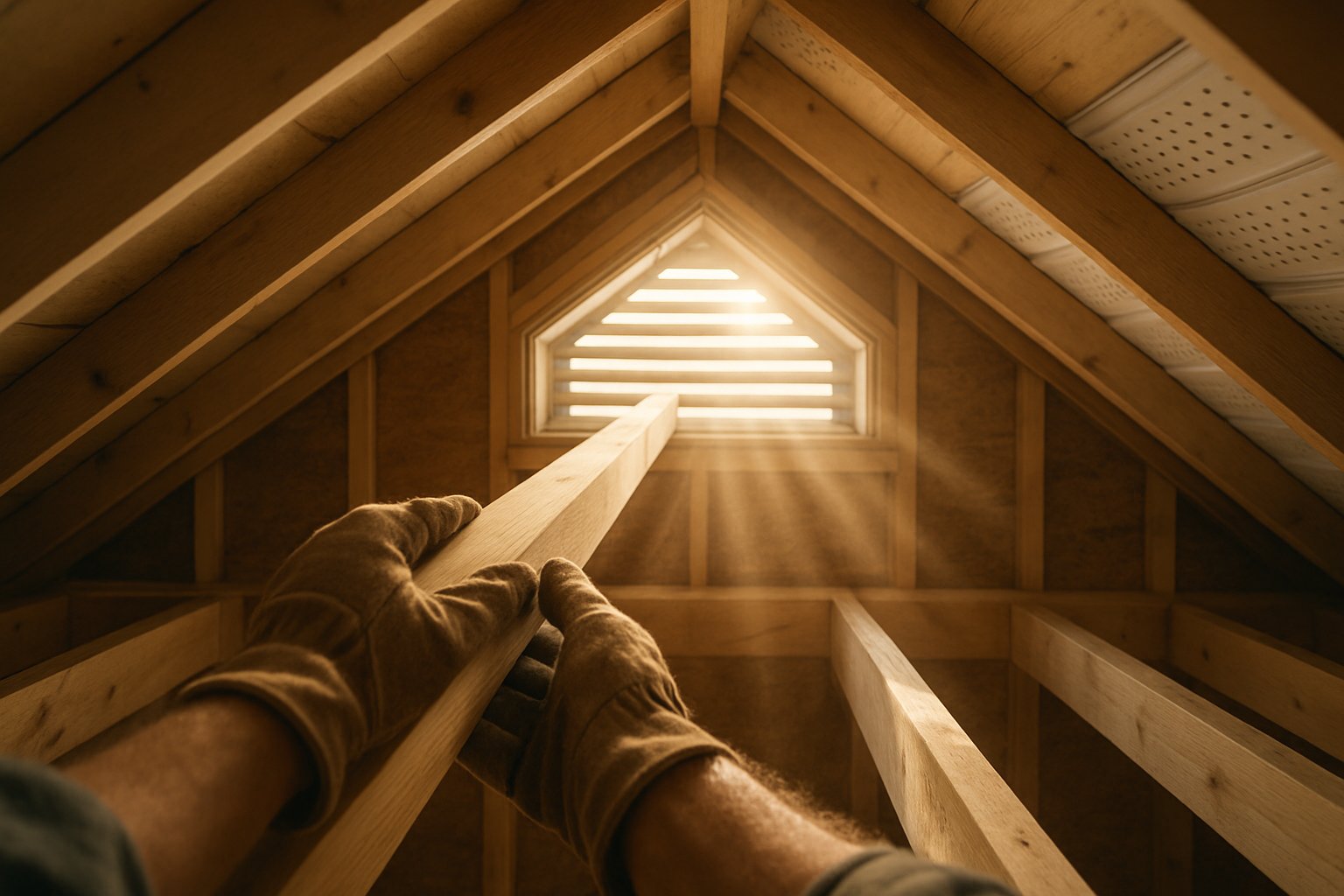
Gable vents (exhaust): Triangular or rectangular vents at the ends of the house, near the roof peak. Common in older houses and houses with hip roofs that can’t have ridge vents.
Powered attic fans: A round dome on the roof or a fan in the gable end. Less common; some are useful, some create more problems than they solve (more on this below).
Now go in the attic. With the lights off, look toward the perimeter:
- Can you see daylight through the soffit vents? If yes, they’re at least partially open. If no, they may be blocked by paint, dirt, or insulation.
- Look at the underside of the roof at the peak. If you see a continuous strip of daylight or moving air, you have a working ridge vent. If solid wood, no ridge vent.
Step 2: Diagnose Common Problems
Match your situation to one of these patterns:
Pattern A: Soffit vents present but blocked by insulation. You see vents from outside but no daylight from inside. Insulation has been blown right against the roof deck, blocking airflow. Fix: install eave baffles in every rafter bay (see the post on attic insulation for the technique). One-day DIY job.
Pattern B: Soffit vents present but small/old. A few small individual vents per side. Insufficient intake. Fix: pull the existing vents and replace with continuous strip vents — sold in 8-foot sections at any home center, screw straight into the existing soffit. Per side: 2–3 hours, $50–$80 in materials.
Pattern C: No soffit vents at all. Common in older houses with closed boxed eaves. Fix: cut new openings in the soffit and install vent grills. From a ladder. About $200 in materials for a typical house, half a day per side. Doable DIY but heights matter; if you’re uncomfortable on a ladder, hire it out.
Pattern D: Adequate intake but no ridge vent. Good airflow into the attic but no easy exit. Fix: have a roofer cut and install a ridge vent next time you have any roof work done. Typical cost: $400–$800 retrofit on an existing roof. Don’t DIY this — it requires opening shingles along the entire roof peak.
Pattern E: Gable vents only (no ridge vent). Gable-only ventilation works but is less effective than ridge venting. If you have gable vents and add a ridge vent without sealing the gables, the airflow shorts past the soffit-to-ridge path. Either keep gable-only OR convert to ridge-only — don’t run both unless designed by a pro.
Pattern F: Powered attic fan running constantly. Often a sign of inadequate passive ventilation. The fan pulls air through whatever opening it can find — sometimes pulling conditioned air up from the house through ceiling gaps, dramatically increasing cooling bills. The fix isn’t a bigger fan; it’s better passive ventilation. Often you can disable the fan after improving soffit + ridge.
Step 3: The Easy DIY Fixes
If your inspection turned up Patterns A or B, here’s what to do.
Fix Pattern A (clear blocked soffits):
- Climb into the attic with a flashlight, eave baffles, and a stapler.
- At each rafter bay around the perimeter, pull insulation back from the eave area.
- Slide a foam baffle up against the roof deck so it creates a permanent air channel from soffit vent to attic.
- Staple the baffle to the rafters.
- Push insulation back, but stop short of the baffle — leave the channel clear.
A 1500 sq ft house has roughly 30–40 rafter bays around its perimeter. Plan a half-day for the install.
Fix Pattern B (upgrade to continuous soffit vents):
- From a ladder outside, locate the existing small vents.
- Use a utility knife and tin snips to cut out an opening between the existing vents, creating a continuous slot.
- Slide in continuous vent strips (sold in 8-foot lengths). Most are aluminum or vinyl, with built-in screw flanges.
- Screw the strip in place along its length.
- Caulk along both edges where the strip meets the soffit material.
- Repeat down each side of the house.
This is genuinely better than spot-vent, by a lot. Modern continuous soffit vents typically provide 4–9 sq inches of ventilation per linear foot — far more than the old round vents.
Common Mistakes
- Adding more exhaust without adding more intake. The system has to balance. A ridge vent with no soffit vents will pull air down from the ridge instead of up — short-circuiting the convection loop and accomplishing nothing.
- Installing both gable vents and a ridge vent. Either one alone works. Both together usually creates a short-circuit where outside air enters one and exits the other without ventilating the attic.
- Powering a fan to compensate for blocked passive vents. Fix the passive vents instead. A fan pulling air through a poorly designed system pulls conditioned house air through the ceiling, costing you on cooling.
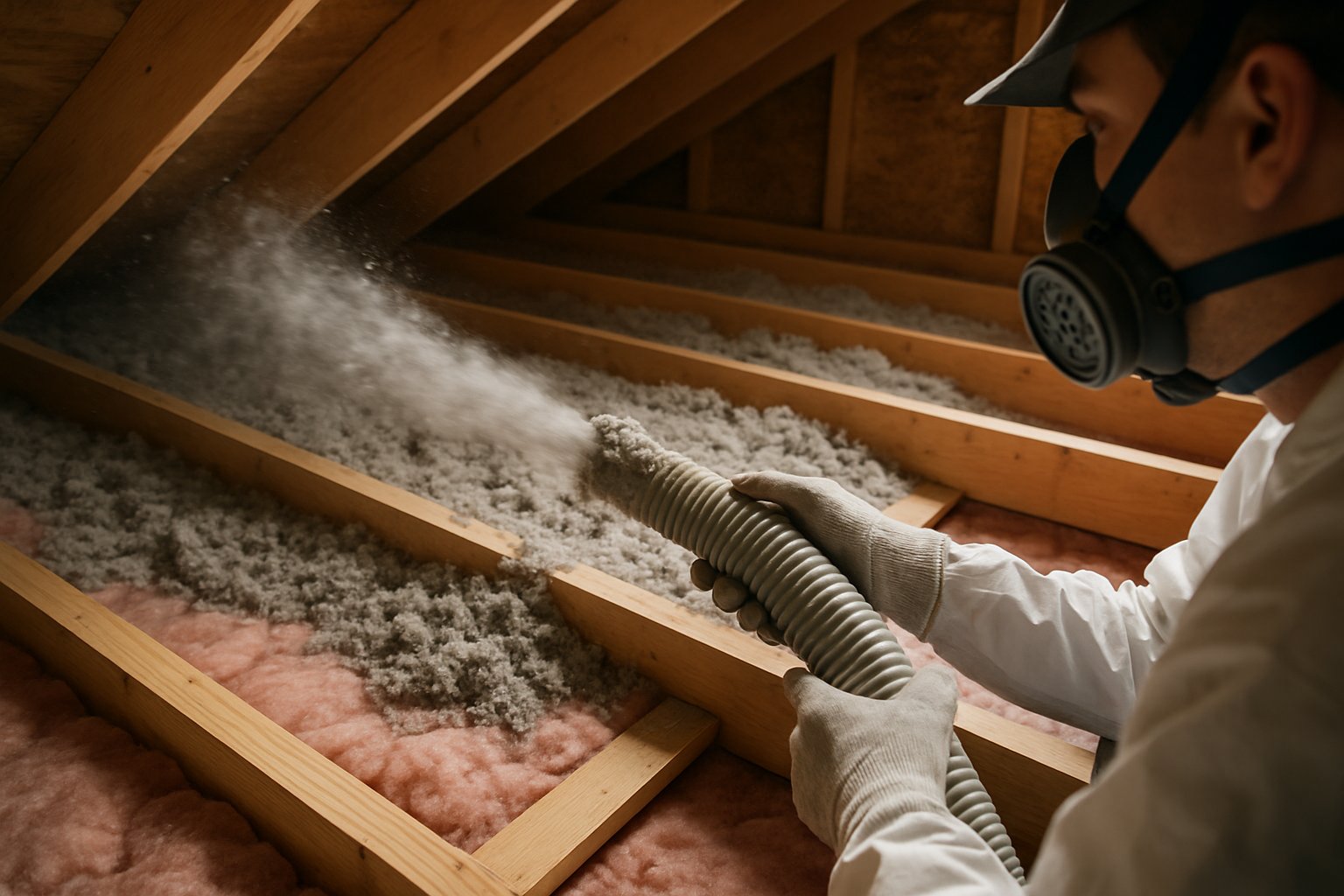
- Burying soffit vents with new insulation. This is the most common error in DIY insulation projects. Always install baffles BEFORE adding insulation depth.
- Using a finer mesh than necessary. Some homeowners screen vents tightly to keep out wasps. Too-fine mesh (smaller than #16 hardware cloth) blocks airflow. Stick to standard insect screening.
When to Hire It Out
- Cutting new soffit openings on a 2-story house. Heights make this risky. $300–$500 for a contractor to cut and vent both sides.
- Adding a ridge vent to an existing roof. Requires opening the shingles along the peak. Roofer territory.
- Diagnosing persistent moisture problems. If you’ve fixed venting and still have condensation/mold issues, the cause is air leaking up from the heated/humidified house below — needs a building-science pro to identify.
Frequently Asked Questions
Do I really need ventilation if my attic is fully encapsulated with spray foam? No — spray-foam encapsulated attics are designed as “conditioned” attics and don’t need traditional ventilation. They’re a different system. If your attic has open insulation (batts, blown), it must be ventilated.
Will improving ventilation lower my heating bill in winter? A small amount, by reducing condensation that wets and degrades insulation. Bigger savings show up in summer cooling.
How do I know if my attic is too humid? Buy a $15 hygrometer at any hardware store. Place it in the attic. Healthy attic humidity tracks within 10–15% of outdoor humidity. If you’re consistently 20%+ above outdoor, your house is leaking moisture into the attic — that’s an air sealing problem at the ceiling, not an attic problem.
Should I add a solar-powered attic fan? Generally not worth it on a properly vented attic. They’re sometimes useful if you have unfixable passive ventilation issues, but the better fix is almost always more passive vents.
The Bottom Line
A balanced soffit-and-ridge ventilation system is one of the cheapest things that affects how long your roof lasts and how comfortable your house feels in summer. Audit what you have, identify which pattern matches, and fix the bottleneck — usually that’s intake, and usually that’s a DIY fix.
For a custom evaluation of your roof, attic, and venting setup — including an HVAC sequencing plan if you’re considering a major upgrade — send your photos for a $19.99 diagnostic report.