Replacing a P-trap takes 20 minutes, costs $8 for a standard PVC trap kit, and solves the three most common under-sink problems: drips from the trap joints, chronic slow drains, and corroded metal traps that no longer seal.
Here’s how to measure, buy, and install the right P-trap for any bathroom or kitchen sink.
What a P-Trap Does
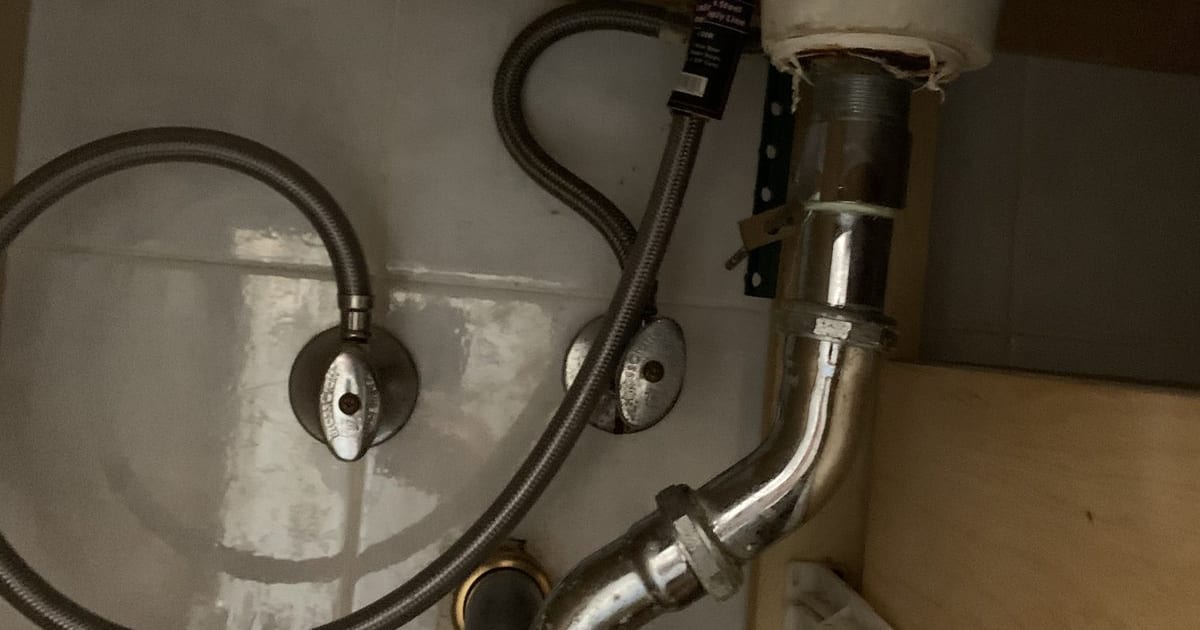
The P-trap is the U-shaped pipe under every sink. It holds a small amount of standing water in the U-bend. That water blocks sewer gases from coming back up the drain into your house. Without the trap (or with a leaky one), you’d smell sewage every time you walked past the sink.
When to Replace the P-Trap
- Visible leak at a slip-nut joint that doesn’t stop with hand-tightening
- Corroded metal trap (old chrome or galvanized) that’s flaking or pitted
- Mismatched trap that was jury-rigged together with multiple couplers
- Chronic clogs that return within weeks of clearing
- Part of a sink replacement — always easier to start with a fresh trap
- Sewer smell under the sink (could also be a failed washer, but a new trap solves both)
Measure Before You Buy
Two dimensions matter:
- Pipe diameter. Bathroom sinks are 1-1/4”. Kitchen sinks are 1-1/2”. Tubs are 1-1/2”. Measure the outside diameter of the tailpiece (the vertical pipe coming down from the sink).
- Trap arm length to wall. The horizontal piece that enters the wall. Standard kits have an adjustable length, but measure to be sure.
Material choice:
- PVC (white plastic): Cheapest, easiest, and what most plumbers use now. $8 for a full kit.
- ABS (black plastic): Same install; some local codes require it.
- Chrome-plated brass: Looks nicer on exposed installs (pedestal sinks). $25–$40. Harder to seal if you overtighten.
Unless the trap is visible in a pedestal or wall-hung sink, use PVC.
Tools & Materials
- New P-trap kit (matching pipe diameter)
- Channel-lock pliers (for stubborn nuts)
- Bucket
- Rag and paper towels
- Rubber gloves
- Hacksaw (if trimming PVC to fit)
- Tape measure
Step-by-Step: Replace a P-Trap
1. Clear Under the Sink
Remove everything from the cabinet. Put down a towel. Place the bucket directly under the P-trap.
2. Loosen the Slip Nuts
There are typically three slip nuts on a P-trap:
- At the top, where the trap arm meets the tailpiece from the sink
- At the back, where the trap enters the wall fitting
- Where the U-bend connects to the trap arm (some kits)
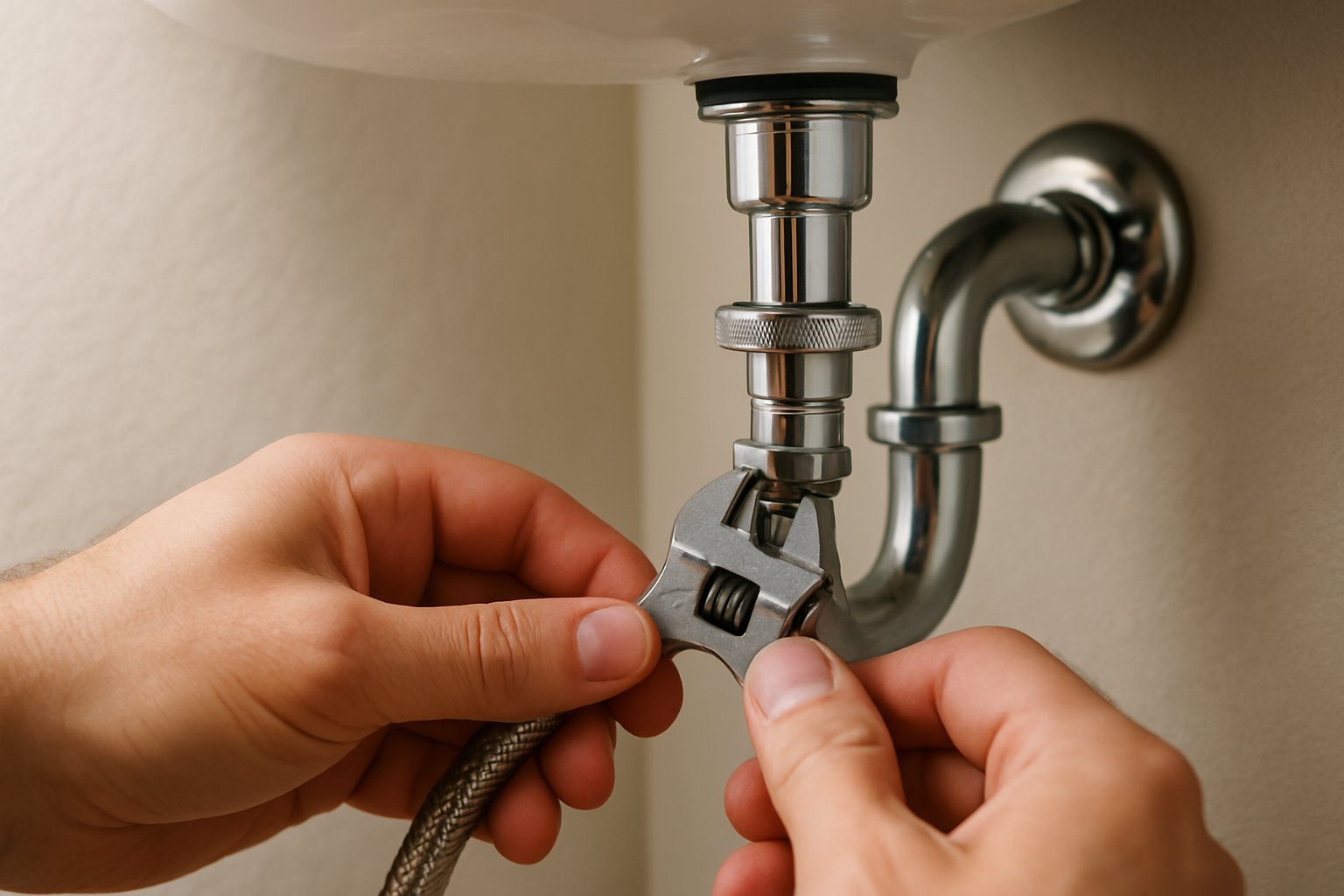
Loosen each by hand — they’re usually just hand-tight. If they won’t budge, use channel locks. For plastic nuts, wrap a rag around them first to avoid crushing.
3. Remove the Old Trap
Pull the trap down. Water will pour into the bucket — the U-bend always holds standing water. Set the old trap in the bucket or a trash bag.
4. Clean the Tailpiece and Wall Fitting
Wipe both the vertical tailpiece (from the sink) and the horizontal stub coming out of the wall. Remove any old putty, pipe dope, or gunk.
5. Dry-Fit the New Trap
Before tightening anything, assemble the new trap loosely to check fit.
- Slide a slip nut and washer onto the tailpiece (nut first, then washer — the washer sits on the outside of the nut, which compresses it into the joint). Make sure the tapered side of the washer faces the joint.
- Slide the same onto the wall arm.
- Fit the U-bend and trap arm together. The trap arm length is adjustable by sliding in/out of the U-bend.
- Check that the trap arm slopes down slightly toward the wall (about 1/4” per foot of run) — backward slope holds standing water in the arm, which causes clogs.
If the trap arm is too long, use the hacksaw to cut it shorter. Deburr the cut end with a razor blade or sandpaper.
6. Tighten the Slip Nuts
Hand-tight only. Plastic slip nuts should not be tightened with pliers unless absolutely necessary, and even then just a quarter turn — they crack easily.
Go around each joint in turn, tightening slightly, and make sure the trap stays aligned (not torqued to one side).
7. Check for Leaks
Fill the sink with 2–3 inches of water. Pull the stopper. Watch every joint as the water drains.
- Slow drip from a joint = tighten that nut slightly (an eighth turn).
- Steady drip = disassemble the joint, check that the washer is oriented correctly, reassemble.
- No drips = done.
Run the faucet for 2 minutes and check again with the drain open. Some joints only leak under sustained flow.
Common Mistakes
- Washer orientation reversed. The tapered (beveled) side faces the joint. Flat side faces the nut.
- Overtightening plastic nuts. Cracks the nut or the pipe. Hand-tight, with a quarter turn max.
- Wrong trap arm slope. Should slope down toward the wall at about 1/4” per foot. Reverse slope creates chronic clogs.
- Mixing metal and plastic. Possible but finicky — the washers compress differently. Go all plastic or all metal within a single trap assembly.
- Forgetting the bucket. Standing water in the old trap always spills.
Bonus: Adding a Trap Arm Cleanout
If you have chronic clogs past the trap, consider installing a trap arm with a cleanout plug — a threaded cap on the bottom of the U-bend. When a clog happens, you unscrew the cap (bucket underneath), snake through the cleanout, and put the cap back. No disassembly needed.
Cleanout-style traps cost $3 more than standard. Worth it for older homes.
Tub/Shower Traps Are Different
This guide covers sink traps. Tub and shower P-traps are typically buried in the floor or below it. They use the same principle but replacement requires floor or ceiling access — often a plumber job. For slow-draining tubs, start with the drain stopper and overflow (usually DIY), not the trap itself.
Frequently Asked Questions
Does a P-trap need to be sloped? The trap arm (the horizontal piece to the wall) slopes down at 1/4” per foot. The U-bend is the U-bend — it stays as-is. Proper slope prevents standing water in the arm, which prevents clogs.
How much water stays in the P-trap? About 1–2 cups. That water is the trap seal — it’s what blocks sewer gas.
Why does my trap keep clogging in the same spot? Either the trap arm isn’t sloped correctly, there’s grease/hair building up in the U-bend, or the drain line in the wall has a larger obstruction downstream. Snake past the trap to confirm.
Can I use a bottle trap instead of a P-trap? Bottle traps (decorative, round) are allowed by code in some jurisdictions but not all — and they clog faster. If your inspector approves, they work. Most NJ municipalities allow them under bathroom sinks.
My new P-trap leaks at the top where it meets the tailpiece. Why? Almost always washer orientation. Tapered side faces the joint. If that’s right, the tailpiece may not be centered in the nut — realign and try again.
The Bottom Line
A P-trap swap is one of the most approachable plumbing jobs in a house. 20 minutes, $8, one wrench (and usually just your hands). If yours is corroded, dripping, or patched together with couplers, replace it — and you’ll have eliminated one of the most common sources of under-sink water damage.
If you’re planning a kitchen or bathroom remodel and want a plumbing plan and fixture spec tailored to your project, send your photos for a $19.99 diagnostic report.