The fastest way to unclog a bathroom sink is to pull the stopper and run a Zip-It drain tool down the drain. If that doesn’t clear it, the clog is further down — and the next step is removing the P-trap under the sink (15 minutes, one wrench, no shutoff needed).
Skip chemical drain cleaners. They rarely work on hair clogs and they damage older plumbing. Here’s the mechanical fix that actually works.
Why Your Bathroom Sink Is Slow
Bathroom sinks clog for exactly one reason 90% of the time: hair, soap scum, and toothpaste gunk accumulate on the pop-up stopper and in the P-trap. The stopper has a crossbar just below the sink surface that catches everything going down.
If you remove the stopper and look at the crossbar, you’ll almost always find a black-gray wad of hair wrapped around it. That’s your clog.
Method 1: The Zip-It Tool (Fastest, $3)
A Zip-It is a flexible plastic strip with barbs along the sides. It’s designed exactly for this clog.
You need: One Zip-It tool (sold at any hardware store for $3).
- Push the Zip-It straight down the drain until it stops (about 8–12 inches).
- Wiggle it side to side as you pull it back up.
- What comes out is disgusting. Have paper towels ready.
- Repeat 2–3 times until the strip comes up clean.
- Run hot water for 30 seconds to flush anything loose.
This clears 70% of bathroom sink clogs. Takes 2 minutes.
Method 2: Remove the Pop-Up Stopper
If the Zip-It won’t go down, your stopper mechanism is blocking it. Remove the stopper.
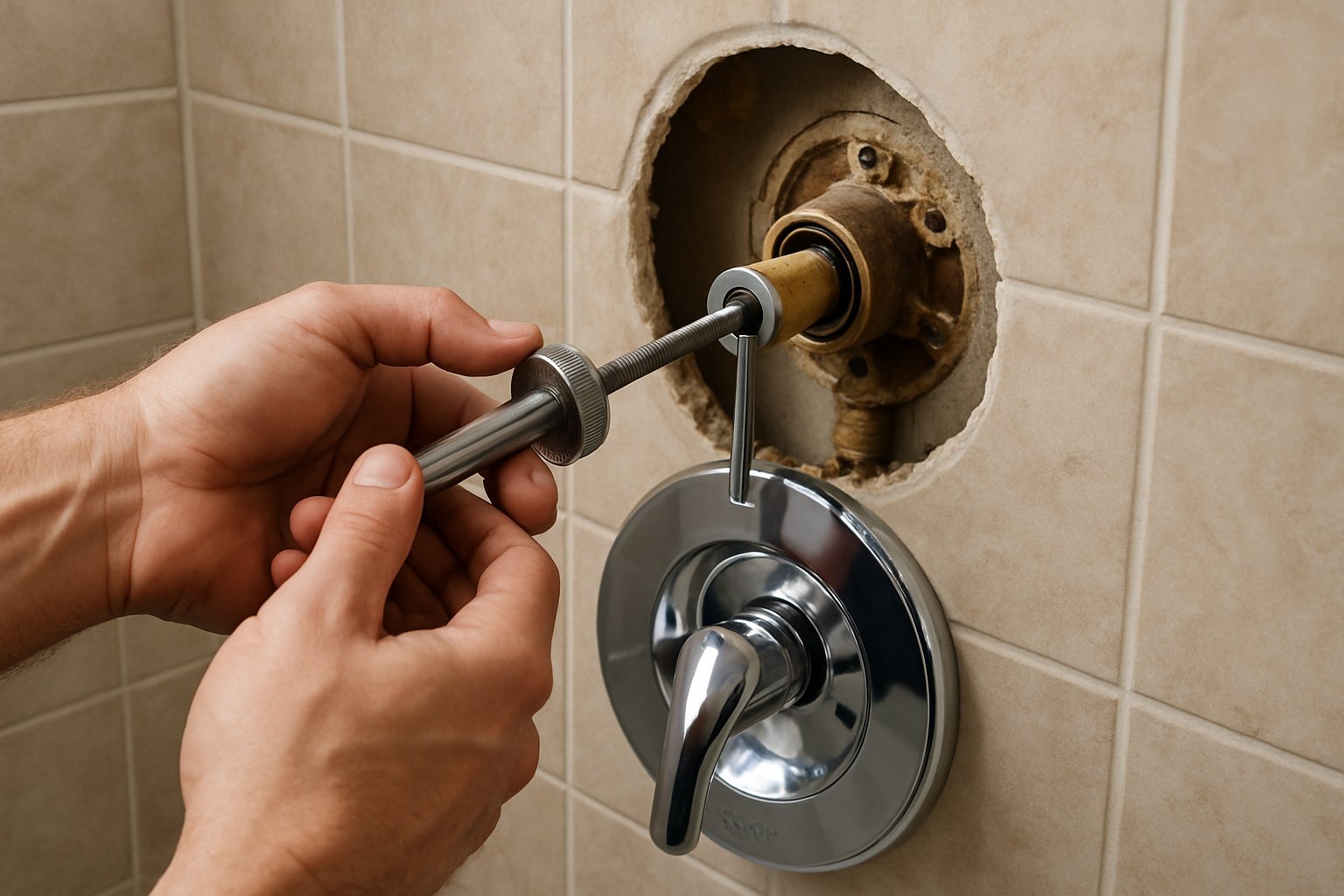
- Look under the sink. Find the pivot rod — the thin metal rod with a ball joint that runs from the back of the drain pipe down to a horizontal strap behind the faucet.
- Unscrew the pivot nut (where the rod enters the drain tailpiece). Pull the rod out a few inches.
- Lift the stopper out of the top of the sink.
- Clean the hair off the crossbar of the stopper. Use a paper towel and a rag — it’s nasty.
- Rinse the stopper in another sink.
- Reinstall — push the pivot rod back through the hole in the tailpiece, seat it in the stopper base, and tighten the nut by hand plus a quarter turn with a wrench.
Method 3: Remove the P-Trap (The One That Always Works)
If the clog is past the stopper, it’s in the P-trap — the U-shaped pipe under the sink. This is a 15-minute job and requires no water shutoff because there’s no pressurized water in a drain line.
You need: A bucket, channel-lock pliers (or a pipe wrench), rubber gloves, paper towels.
- Put the bucket directly under the P-trap. There’s standing water in the U-bend that will spill out.
- Loosen both slip nuts — one at the tailpiece (where the vertical pipe from the sink connects) and one at the wall (where the trap connects to the drain going into the wall). Most of these can be hand-loosened. If not, use pliers.
- Slide both slip nuts away from the trap joints.
- Lift the P-trap down. Water will pour into the bucket. Expect hair, toothpaste, and black sludge.
- Take the trap to another sink and flush it clean with hot water. Use an old toothbrush to scrub the interior walls.
- Inspect the slip-nut washers. If they’re cracked, brittle, or flattened, replace them (pack of 4 for $2 at any hardware store). This is the most common cause of a post-repair leak.
- Reinstall the trap. Hand-tighten the slip nuts — do not use pliers on plastic traps. Metal traps get a quarter turn with a wrench.
- Run water. Check for leaks at both slip nuts. Tighten slightly if you see a drip.
Method 4: Drain Snake (For Clogs Past the Trap)
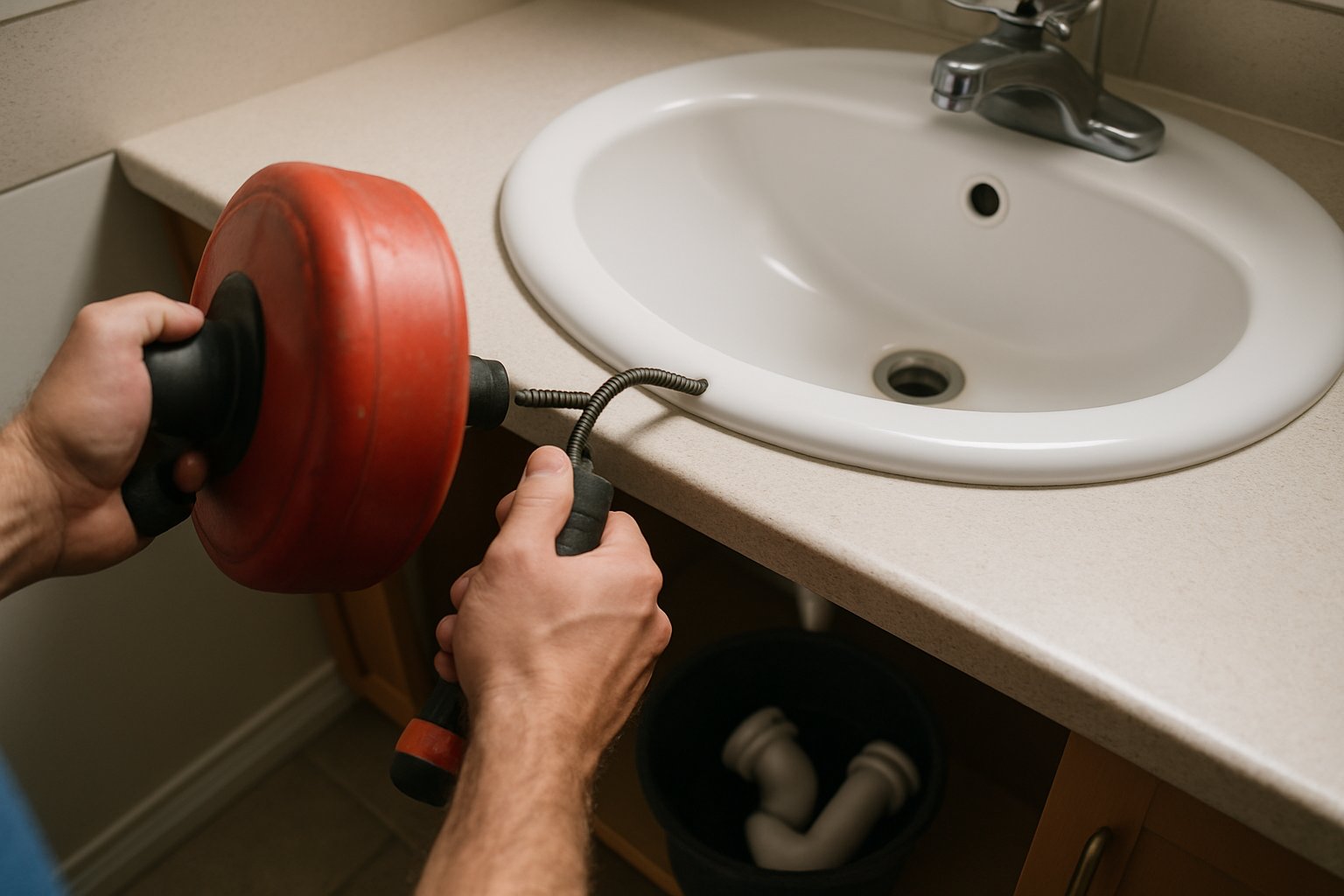
If the clog is in the drain line in the wall (beyond the P-trap), you need a small drain snake (also called a drum auger). A 25-foot hand-crank version is $25 at Home Depot.
- With the P-trap removed, feed the snake cable into the drain opening in the wall.
- Crank slowly, feeding cable in as it advances.
- When you hit resistance, crank harder — you’ve found the clog. Continue cranking.
- When the resistance breaks, pull the cable back out slowly, cranking in reverse.
- Reinstall the P-trap.
- Run water for 2 minutes to flush.
What NOT to Do
- Don’t use Drano or Liquid-Plumr on a bathroom sink. They’re caustic, they don’t dissolve hair effectively, and if they don’t clear the clog, you now have a sink full of sodium hydroxide that a plumber has to deal with. They also damage older chrome and brass parts.
- Don’t overtighten the slip nuts. Plastic slip nuts crack. Cracked nuts leak. Hand-tight plus maybe a quarter turn.
- Don’t forget the bucket. Every P-trap contains standing water. It will spill on your cabinet floor if you don’t.
- Don’t skip the stopper check. 70% of the time it’s the stopper. Start there.
Preventing Future Clogs
- Install a hair-catcher screen in the sink drain — TubShroom makes a vertical one sized for bathroom sinks. Stops 95% of future clogs.
- Flush the drain monthly with a full kettle of hot water (not boiling). Dissolves soap scum before it accumulates.
- Don’t flush dental floss or cotton swabs down the sink.
- If you have long hair in the household, pull the stopper and clean the crossbar quarterly.
Frequently Asked Questions
Do I need to shut off the water before removing the P-trap? No. The P-trap is on the drain side, not the supply side. There’s only standing water in the trap itself.
My P-trap has a cleanout plug on the bottom. Can I use that? Yes — unscrew the plug (bucket underneath), let the trap drain, then probe with a Zip-It or snake through the opening. Faster than removing the whole trap.
Why do I smell sewer gas after cleaning the trap? Either you didn’t refill the trap with water (run the sink for 30 seconds to refill the U-bend), or a slip nut isn’t sealing. The water in the trap is what blocks sewer gas from coming up.
Can I pour boiling water down the drain? If you have PVC or ABS plastic drain pipes, no — near-boiling water can soften the plastic and loosen joints over time. Hot tap water (~120°F) is fine.
How much does a plumber charge for a bathroom drain unclog? $125–$250 in NJ for a service call. The tools to do it yourself cost under $30 total and work indefinitely.
The Bottom Line
Start with the stopper. Most bathroom sink clogs clear in 5 minutes once the hair on the crossbar is removed. If that’s not it, pull the P-trap. If that’s not it, snake the wall line. No chemicals needed, and every tool in the process costs less than a single plumber visit.
If you’re planning a bathroom remodel and want a layout plan, fixture spec, and permit checklist tailored to your project, send your photos for a $19.99 diagnostic report.