Kitchen sinks clog differently than bathroom sinks — it’s grease, coffee grounds, rice, and food scraps, not hair. The fix starts with a plunger (not a chemical), progresses to the P-trap, and if that fails, to a drain snake down the wall line.
Here’s the exact order to diagnose and clear a kitchen sink clog, including the specific twists for double-basin sinks and sinks with a garbage disposal.
Why Kitchen Sinks Clog
Three causes, in order:
- Grease buildup. Hot grease goes down liquid and cools into a solid tube inside the drain line. Over months, the pipe’s interior diameter shrinks until water backs up.
- Food scraps. Coffee grounds, rice, and pasta expand when wet. They pack into the P-trap and wall line.
- Garbage disposal debris. Eggshells, celery fiber, and potato skins survive the disposal and collect in the trap downstream.
Knowing the cause tells you how to clear it. Grease needs hot water and mechanical action. Food needs a snake.
Method 1: The Plunger (Start Here)
Kitchen sinks respond well to a plunger — better than bathroom sinks, because the drain is bigger and there’s no overflow hole to bypass.
You need: A flat-bottom plunger (NOT the bell-shaped toilet plunger). Any hardware store sells one for $8.
- Fill the sink with 2–3 inches of water. The plunger needs a water seal to work.
- If you have a double-bowl sink, plug the other drain with a wet rag. Otherwise you just push water between the bowls.
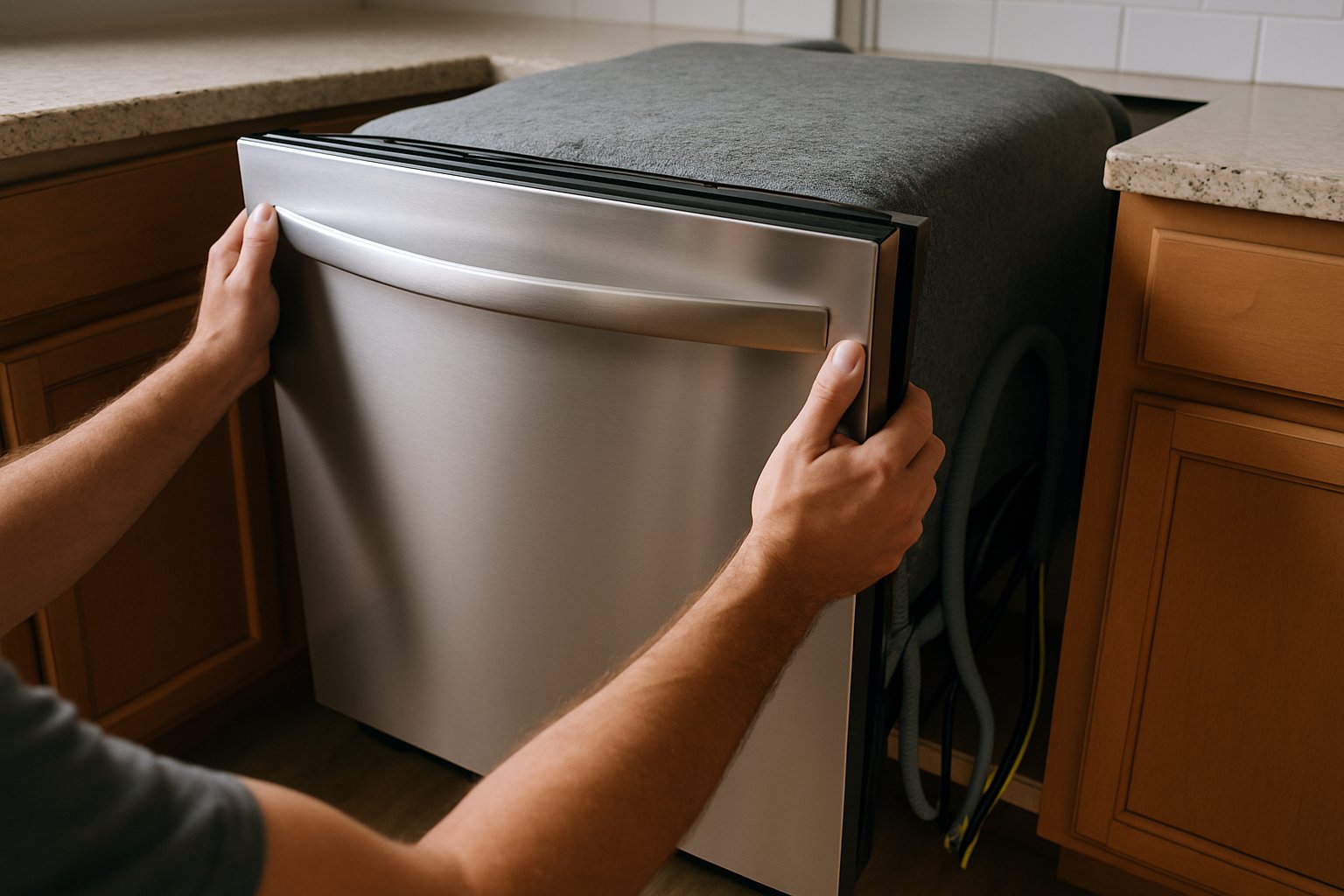
- If you have a dishwasher air gap or drain connection, clamp the dishwasher hose with vise grips to prevent backflow.
- Place the plunger over the clogged drain with a tight seal.
- Plunge sharply 10–15 times. Break the seal, check for flow, repeat.
If the water drains, flush with hot water and dish soap for 2 minutes to clear residual grease.
Method 2: Disposal Side — First Check the Disposal
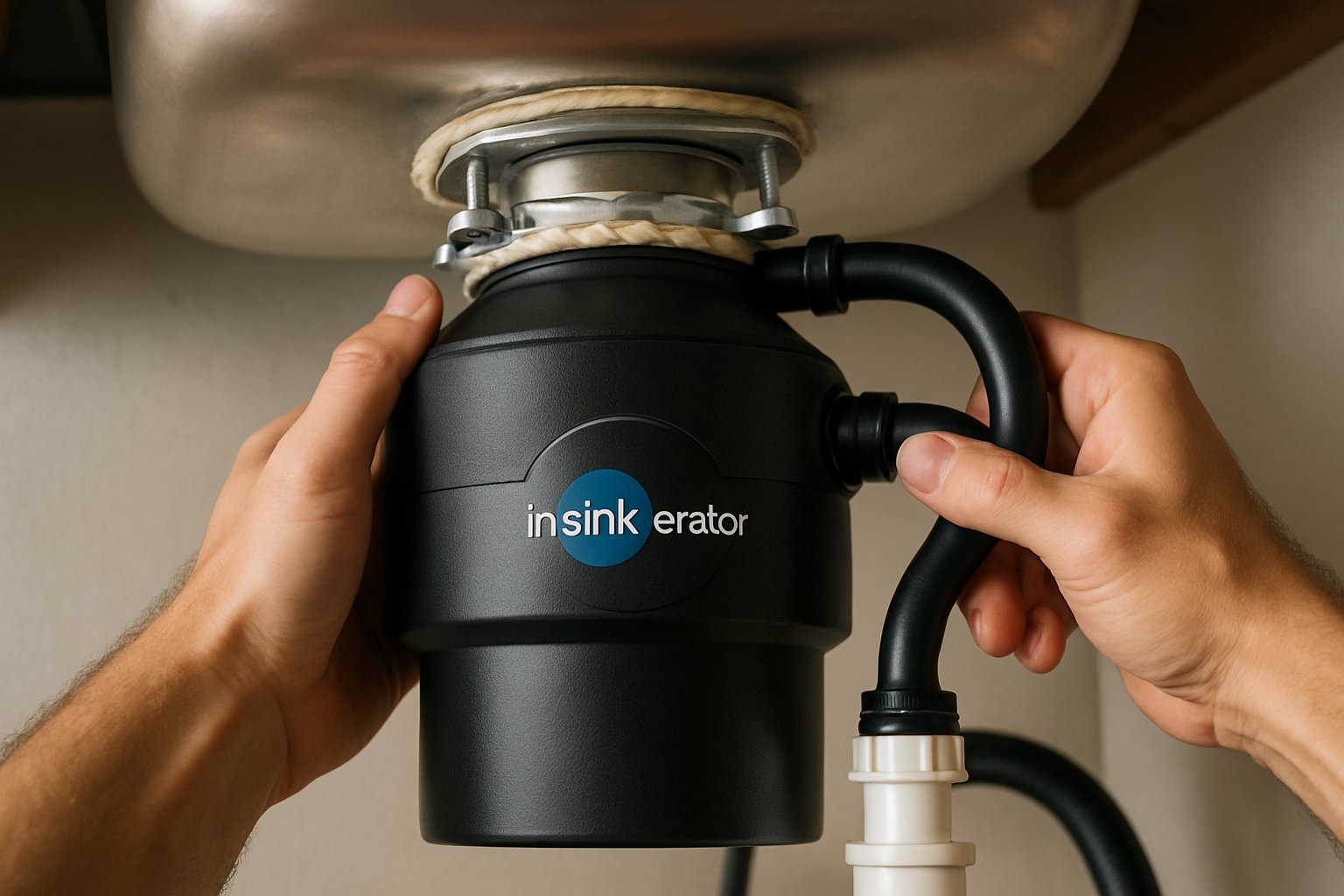
If the clog is on the side with the garbage disposal:
- Look under the sink. Find the red reset button on the bottom of the disposal. Press it.
- Turn the disposal on with water running. If it hums without spinning, it’s jammed — turn it off immediately.
- Insert the disposal wrench (the Allen wrench that came with the unit, usually 1/4”) into the hex socket on the bottom of the disposal. Rock it back and forth to break up whatever’s jammed.
- Look down the drain with a flashlight. If you see debris, remove it with tongs — never your hand. Even when the disposal is off, the blades are sharp.
- Run water and test.
Method 3: Remove the P-Trap
If plunging failed, the P-trap is the next stop. Same process as a bathroom sink, but kitchen P-traps are often blocked with thick grease sludge and coffee grounds.
You need: A bucket, channel-lock pliers, rubber gloves, paper towels, an old toothbrush.
- Clear the cabinet under the sink. Put the bucket directly under the P-trap.
- Loosen both slip nuts — one at the tailpiece from the sink, one at the wall where it connects to the drain line.
- Slide the nuts back, lower the P-trap, and dump the contents into the bucket. It will be gross.
- Take the trap to another sink and flush with hot water. Use the toothbrush to scrub the interior.
- Inspect the slip-nut washers — replace if cracked or deformed.
- Reinstall — hand-tight plus a quarter turn max on plastic traps.
- Run water and check for leaks.
Method 4: Snake the Wall Line
If the P-trap was clean or the clog returns within a day, the blockage is further down — in the horizontal drain line in the wall.
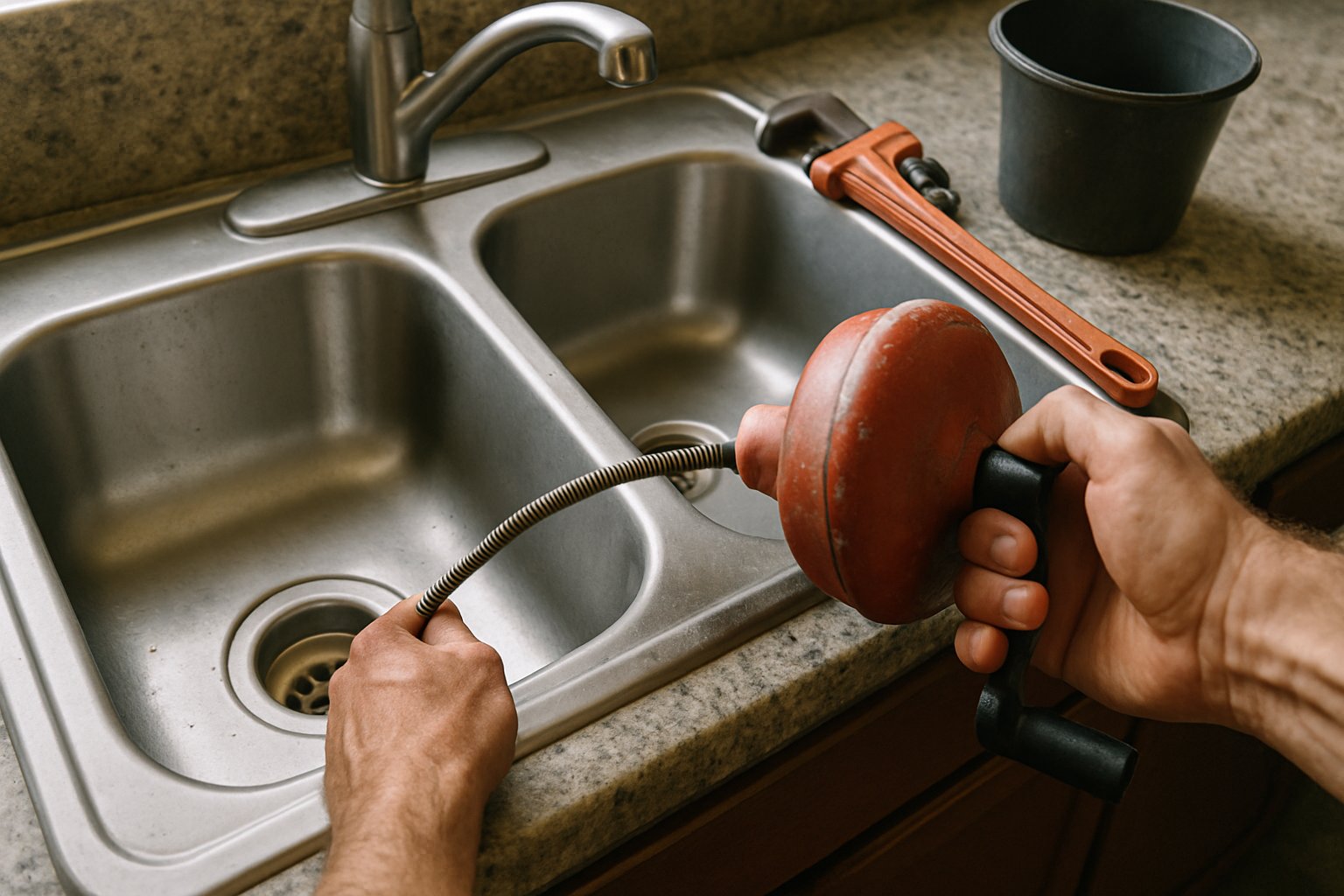
You need: A 25-foot hand-crank drum auger ($25).
- With the P-trap removed, feed the snake cable into the drain opening in the wall.
- Crank clockwise as you advance. When you hit resistance, crank harder.
- You’ll feel the cable break through the clog. Keep going 2–3 more feet to chop up the obstruction.
- Pull the cable back out, cranking in reverse.
- Reinstall the P-trap.
- Flush with hot water for 2 minutes.
Double-Bowl Sinks: A Special Case
On a double-bowl kitchen sink, both drains feed into a single trap via a “Y” or “T” fitting called a center tee. If both bowls drain slow, the clog is in or past the tee. If only one bowl drains slow, the clog is on that bowl’s branch before the tee.
If plunging one side pushes water up into the other, the two bowls are connected upstream of the clog — that’s expected. Plug the other bowl when you plunge. If plunging doesn’t resolve, remove the P-trap below the tee and snake from there.
What NOT to Do
- Don’t pour chemical drain cleaner on a grease clog. It doesn’t dissolve grease effectively, it heats up and can warp PVC, and if it doesn’t clear the clog, you now have caustic chemicals sitting in the sink.
- Don’t pour boiling water down the drain if you have PVC pipes. Hot tap water is fine; boiling can loosen glued PVC joints.
- Don’t run a disposal without water. Water carries debris through. Dry running burns out the motor and wedges debris.
- Don’t put your hand in the disposal — ever. Even with it off. Use tongs.
- Don’t ignore a slow-draining sink. It’s easier to clear a partial clog than a full blockage, and sitting water leaks at slip-nut joints over time.
Preventing Future Kitchen Clogs
- Never pour grease down the drain. Pour it into an empty can, let it solidify, throw it away. Every restaurant does this — there’s a reason.
- Scrape plates into the trash, then rinse. Disposals aren’t garbage disposals — they’re for small residue only.
- Skip these in the disposal: coffee grounds, eggshells, pasta, rice, celery, potato peels, banana peels, fruit pits, bones.
- Run the disposal with cold water for 20 seconds after each use. Cold water solidifies any grease so the blades chop it up rather than smearing it down the line.
- Monthly maintenance: Boil a kettle of water, pour it down with 1 cup of baking soda and 1 cup of vinegar (let sit 15 min first). Keeps grease from accumulating.
Frequently Asked Questions
Can I use Drano in a kitchen sink? Not recommended. Kitchen clogs are usually grease — chemical drain cleaners don’t dissolve grease effectively. Mechanical clearing (plunger, snake) works better.
My disposal side is clogged but the other side drains fine. Why? There’s a branch just below the disposal that connects to the main drain. The clog is in that branch, between the disposal and the tee. Remove the P-trap and snake the disposal branch.
Water backs up when the dishwasher runs. Is that the same clog? Yes, almost always. The dishwasher drain joins the kitchen sink drain line. If the sink line is clogged, dishwasher water has nowhere to go. Clear the sink clog and the dishwasher issue resolves too.
How much does a plumber charge to unclog a kitchen sink? $150–$300 in NJ. The tools to do it yourself cost under $40 and last forever.
My sink gurgles when I run water. What does that mean? Gurgling means air is being pulled through the trap — usually a partial clog or a vent stack issue. Try clearing the line first. If the gurgle persists, the vent stack on the roof may be blocked.
The Bottom Line
Plunger first, P-trap second, drain snake third. That’s the order for any kitchen sink clog, with a disposal check added if you have one. Chemicals aren’t necessary and often make things worse. A $40 investment in a plunger and a drain snake pays for itself the first time you use them.
If you’re planning a kitchen remodel and want a layout, fixture spec, appliance plan, and permit checklist tailored to your project, send your photos for a $19.99 diagnostic report.