The fastest way to unclog a toilet without a plunger: pour a cup of dish soap into the bowl, wait 10 minutes, then slowly pour in a bucket of hot (not boiling) water from waist height. The soap lubricates, the water pressure breaks up the clog, and the bowl drains.
This works on roughly 80% of standard clogs. Below are five methods ranked by what to try first, plus the one mistake that turns a clog into a flooded bathroom.
First — Stop the Flood
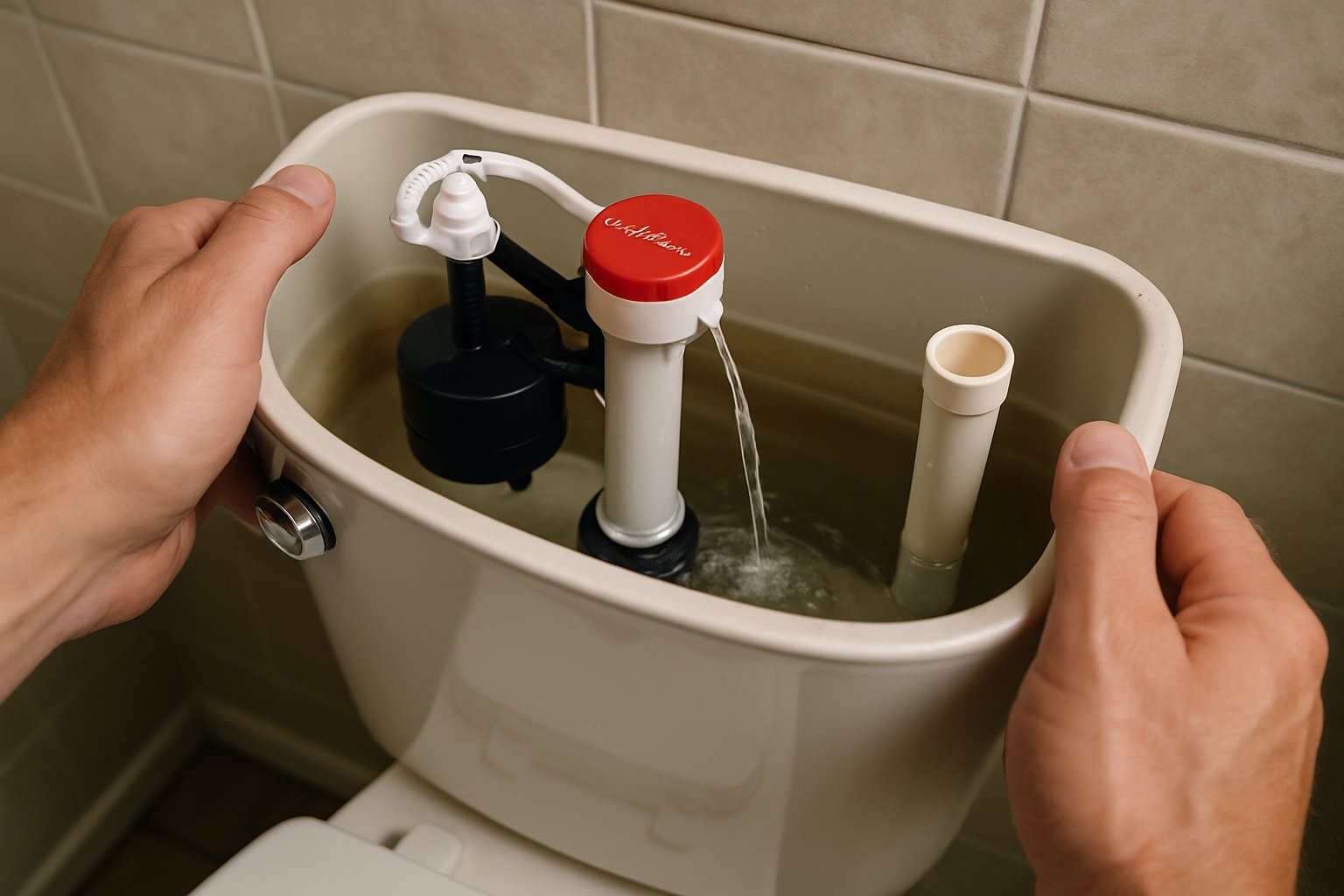
Before you do anything, lift the tank lid and close the flapper (the rubber disc at the bottom of the tank). This stops more water from entering the bowl. If the bowl is already at the rim, remove about half the water with a cup and a bucket before attempting any method below. If you add water to an already-full bowl, it overflows.
Method 1: Dish Soap + Hot Water (Works 80% of the Time)
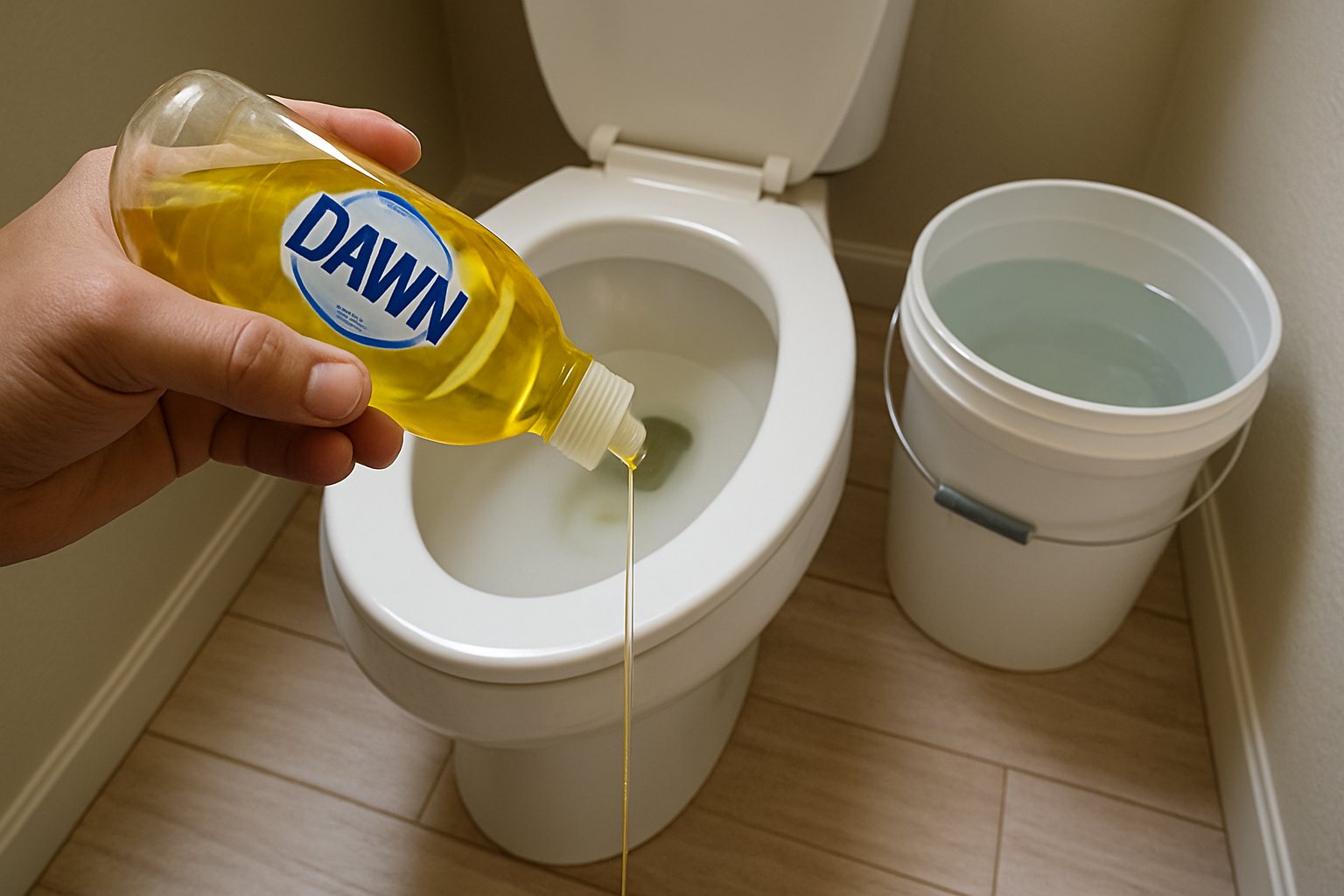
You need: Any dish soap (Dawn works best), a bucket, hot tap water.
- Squirt about a cup of dish soap directly into the bowl.
- Let it sit for 10 minutes. The soap coats the clog and pipe walls.
- Fill a bucket with hot tap water — not boiling. Boiling water can crack porcelain.
- Pour the water in from waist height in a steady stream. The height gives it force.
- Wait a minute. If the water drains, flush once to clear.
- If not, repeat once more.
Method 2: Baking Soda + Vinegar
You need: 1 cup baking soda, 2 cups vinegar, hot water.
- Pour the baking soda into the bowl.
- Slowly add the vinegar — it will foam.
- Let it sit for 30 minutes.
- Pour in a bucket of hot water from waist height.
- If drained, flush to clear.
This is gentler than a drain chemical and safer for older plumbing or septic systems.
Method 3: The Wire Hanger Snake
You need: A wire coat hanger, rag, rubber gloves.
- Unwind the hanger so you have one long wire with a hook on the end.
- Wrap the hook end with a rag and secure with tape — this protects the porcelain from scratches.
- Push the wrapped end into the drain opening at the bottom of the bowl.
- Gently probe and twist to break up the clog. Do not jab hard.
- Once you feel movement, flush.
Good for clogs caused by wads of toilet paper. Useless for solid objects (toys, toothbrushes) — those need a proper auger.
Method 4: Shop Vac (The Pro Move)
You need: A wet/dry shop vac.
- Empty the bowl as much as possible (use a cup).
- Set the shop vac to wet mode. Remove the filter.
- Wrap an old towel around the hose end for a seal.
- Press the hose into the drain opening and hold firmly.
- Turn it on for 10–15 seconds.
- Most clogs pull right up into the vac.
Messy but extremely effective. The vacuum pulls the clog backward — the direction it came from, which is often the path of least resistance.
Method 5: Plastic Wrap + Pressure (The MacGyver)
You need: Plastic wrap, tape.
- Dry the rim of the bowl thoroughly.
- Cover the entire bowl opening with several layers of plastic wrap. Tape the edges down.
- Flush.
- As the tank refills, the bowl pressurizes and the plastic wrap domes upward.
- Press down firmly on the dome. The pressure breaks the clog.
Weird, yes. But it works on stubborn clogs when you don’t have any other options.
What NOT to Do
- Don’t use boiling water. Porcelain cracks under thermal shock. Hot tap water only.
- Don’t use chemical drain cleaners (Drano, Liquid-Plumr) in a toilet. They’re formulated for sink and shower drains, not toilets. They damage the wax ring, can etch porcelain, and if they don’t clear the clog, you now have caustic chemicals in the bowl that a plumber has to deal with.
- Don’t flush repeatedly if the water isn’t going down. Each flush raises the bowl level closer to overflow. One flush; if no movement, stop and try a method above.
- Don’t force a wire hanger. If you push hard enough to scratch the porcelain glaze, you’ve ruined the finish permanently.
When Your Clog Isn’t Really a Clog
If nothing works and the bowl fills slowly from normal use (not just after a clog), the problem may not be the toilet — it may be a clogged vent stack on the roof or a partial blockage in the main line. Signs of this:
- Multiple fixtures draining slowly (toilet + shower + sink all sluggish)
- Gurgling noises from the tub when you flush
- Sewage smell in the bathroom
Those are main-line symptoms. Call a plumber with a camera scope — a DIY fix won’t reach.
Frequently Asked Questions
Can I flush again to “help” a slow clog clear? No. If the first flush didn’t clear it, a second will likely overflow. Wait and use one of the methods above.
Why did dish soap work when the plunger didn’t? Dish soap lubricates the clog so it can slide through the trap. A plunger uses pressure; soap reduces friction. They work on different physics.
What if I flushed something solid — a toy, a toothbrush? None of the above methods will work. You need a toilet auger (closet auger) to hook and pull the object back. If the object is past the trap, the toilet has to come off the floor.
Is it safe to use baking soda and vinegar on a septic system? Yes — both are septic-safe. Chemical drain cleaners are not.
How do I prevent future clogs? Flush less paper per use, never flush “flushable” wipes (they aren’t), and never flush cotton products. Older low-flow toilets clog more easily — if yours clogs weekly, the toilet is probably the issue, not your habits.
The Bottom Line
Dish soap plus hot water clears most toilet clogs without any tools. Before you run out to buy a plunger, try the soap method — it works more often than people expect, and it costs nothing.
If your toilet clogs repeatedly, the fixture itself may be the issue (older 3.5 GPF toilets and some early 1.6 GPF models were notoriously bad at solids). For a bathroom remodel or fixture upgrade plan, send your photos for a $19.99 diagnostic report.