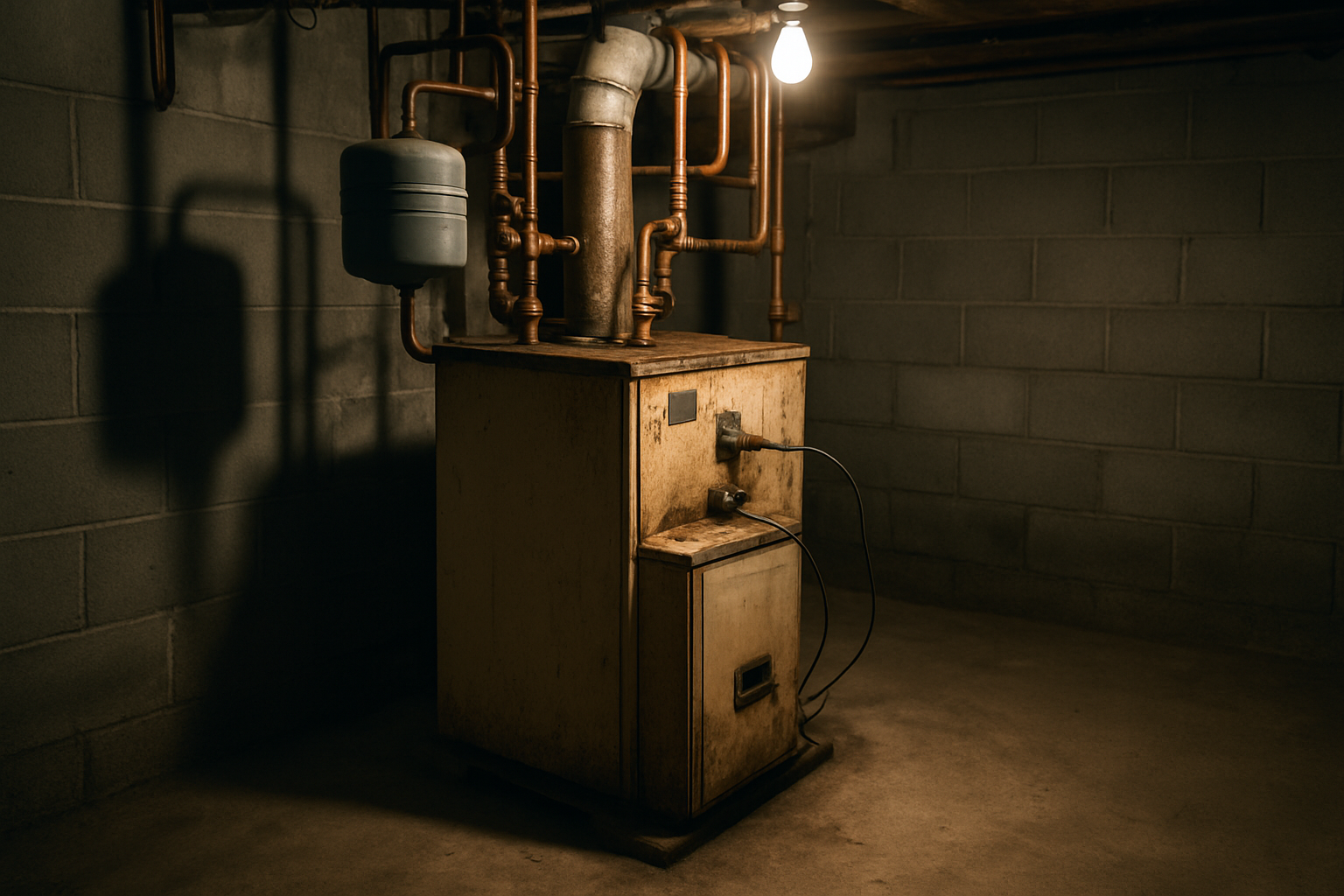
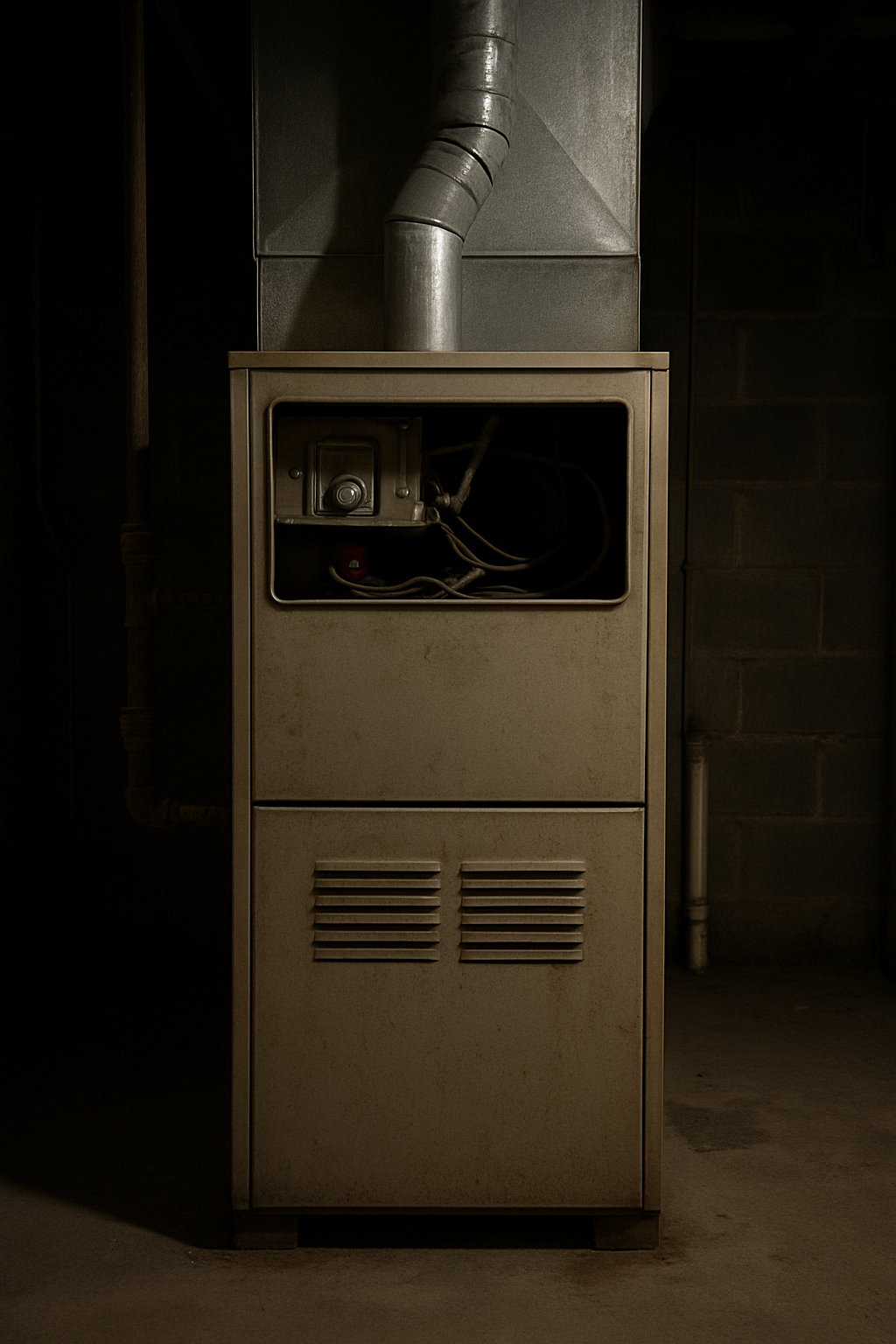
The furnace won’t kick on, the house is getting cold, and the first thought is always the biggest one: is this thing dead? Do I need a whole new system? Furnaces are expensive enough that the question feels scary. Here’s the reassuring part first: most furnace failures that feel catastrophic are a single part costing a few hundred dollars. The scary part is that one specific failure is not a DIY diagnosis at all — it’s a stop-and-call-someone situation.
Here’s how to sort out which one you’re facing.
Most “dead furnace” calls are one part
The parts that fail most often on a gas furnace are cheap and well understood: the igniter (the part that lights the burners — a common failure point, especially the hot-surface type), the flame sensor (a small rod that confirms the flame is lit; if it’s dirty or corroded, the furnace shuts itself down as a safety measure and won’t restart), a failed capacitor on the blower motor, or a dirty filter choking airflow so badly the unit overheats and trips a safety switch. A technician can diagnose and often fix any of these in one visit, usually for a few hundred dollars total.
The rule pros actually use
There’s a simple industry rule of thumb: if the repair cost is more than 50% of the cost of a new furnace, and the unit is already 10+ years old, replacement is the better financial call — you’re not just fixing this failure, you’re buying time before the next one. Under that threshold, repair almost always wins, especially on a furnace under 10–12 years old that’s otherwise been reliable.
The sign that means stop, don’t diagnose — call someone
A cracked heat exchanger is the one failure mode that isn’t a repair-vs-replace decision — it’s a safety issue, full stop. The heat exchanger separates the combustion gases (including carbon monoxide) from the air that actually circulates through your house. A crack lets those gases leak into your air supply. Signs that point here: a working carbon monoxide detector actually going into alarm, a burner flame that looks yellow or orange instead of blue, soot around the unit, or a strange smell when the furnace runs. If you see any of these, turn the furnace off, don’t try to diagnose it yourself, and get a technician out immediately. This is never a “watch it for a while” situation.
Sign: repairs are piling up on an old unit
If your furnace is 15+ years old and you’ve had more than one repair call in the last year or two, you’re in the territory where replacing makes more sense than continuing to patch it. Furnaces don’t fail all at once — they fail one component at a time with increasing frequency as they age, and each service call adds up against the cost of a new, more efficient unit that also comes with a fresh warranty.
The decision, simply
Repair when it’s a single-part failure (igniter, flame sensor, capacitor, filter/airflow issue) on a furnace under about 10–12 years old, or when the repair cost is well under half of a new system’s price. Replace when repairs are piling up on a furnace past 15 years, or when a single repair would cost more than half of replacement. Stop and call a professional immediately — don’t attempt to diagnose — for a suspected cracked heat exchanger, a CO alarm, or an off-color flame.
DIY or not
Changing a filter and doing basic visual checks (flame color, listening for unusual noises, checking the thermostat and breaker) are fine for a homeowner. Diagnosing and replacing furnace components — igniters, flame sensors, capacitors — involves gas and electrical work and is a job for a licensed HVAC technician. This is not a system to troubleshoot by trial and error.
Not sure which one you’re looking at?
Tell me the age of your furnace, what it’s doing (or not doing), and send a photo of the flame through the sight glass if you can safely see it. I’ll tell you whether this sounds like a simple repair or if it’s time to start pricing a new system — a written diagnostic with the specific read and honest next step, $19.99, back to you in minutes.