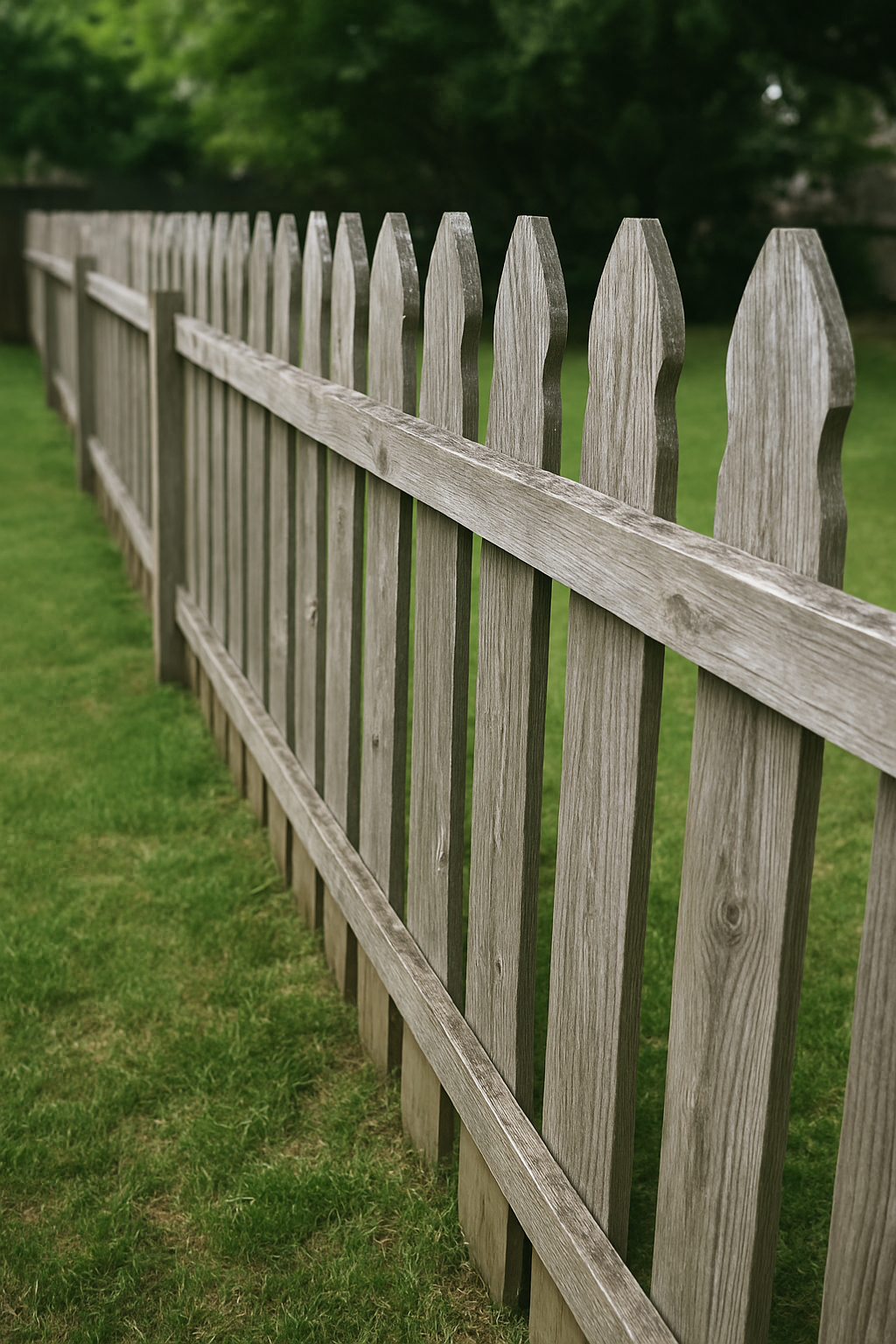
The fence has gone gray, some boards are splitting or cupping, and it looks like the whole thing needs to come down and be rebuilt. Before you price a new fence, know this: weathered, graying wood is almost always cosmetic — sun and moisture bleaching the surface, not the wood failing structurally. But there’s a real difference between that and posts that are rotting at the base, and knowing which one you’re looking at changes whether this is a weekend project or a full rebuild.
Here’s how to tell which situation you’re in.
Check the boards first — this is usually cosmetic
Untreated or lightly treated wood fencing naturally turns gray within a year or two of installation as UV exposure breaks down the surface fibers. Some cupping, minor splitting, and grain-raising along the boards is normal weathering, not failure. If the boards flex normally, aren’t crumbling, and the fence overall still stands straight and square, this is a refinishing job: pressure wash, let it dry fully, sand any rough spots, and apply a fresh coat of stain or sealer. It looks close to new and buys years of protection. Cost: a few hundred dollars in materials if you do it yourself. Time: a weekend.
The real test is at the posts
Fence boards can weather for a decade and still be structurally fine. The posts are a different story — they’re the part in direct, constant contact with the ground, where moisture, insects, and soil contact do the real damage. Push a flathead screwdriver into the base of a few posts, right at and just below the soil line, on the side that gets less sun or holds moisture longest. If it meets firm resistance, the post is sound. If it sinks in easily, or the wood feels soft and spongy, that post is rotted.
Signs of post rot: a screwdriver sinking in easily at the base, a post that wobbles when you push the fence line, visible splitting right at ground level, or panels that have started to lean or sag along one stretch.
Why the posts — not the boards — decide the outcome
Boards are simple to swap one at a time without touching anything else. Posts are structural — the whole fence line hangs off them. If even a handful of posts are rotted, replacing just those means digging out old concrete footings, resetting new posts, and reattaching everything around them, which quickly approaches the cost and labor of just rebuilding that section outright. And if posts installed at the same time, in the same soil, are failing in one spot, the rest are usually not far behind.
What refinishing costs vs. what replacement costs
Cleaning and refinishing an existing fence runs $300 to $800 in materials and rental equipment if you DIY it, or $3 to $7 per linear foot for a professional refinish. A full wood fence replacement runs $20 to $40+ per linear foot installed, depending on style and height — so a typical 150-foot backyard fence lands somewhere around $3,000 to $6,000+.
The decision, simply
Refinish if the posts test solid and the boards are just weathered, gray, or lightly split — clean and stain, done. Replace if multiple posts show rot at the base, the fence line is visibly leaning, or the fence is original to a house built more than 15-20 years ago. A fence with a handful of bad posts among mostly-good ones is a judgment call — but once rot shows up in more than one or two spots, it’s usually most cost-effective to rebuild the whole run at once.
DIY or not
Pressure washing, sanding, and staining a fence is very DIY-friendly — no special skills, just time and a weekend of dry weather. Replacing a single rotted post is a doable DIY project with a post hole digger and quick-set concrete. A full fence rebuild is DIY-able too if you’re comfortable with a level, string line, and post-setting, but it’s labor-intensive across a whole property line — many homeowners hire it out for the linear footage alone.
Not sure which one you’re looking at?
Tell me what the boards look like, how many posts test soft, and roughly how old the fence is. I’ll tell you whether this is a clean-and-stain weekend or time for a rebuild — a written diagnostic with the specific read and honest next step, $19.99, back to you in minutes.