Nobody thinks about the sump pump. It sits in a hole in the basement floor, it hums a few times after it rains, and out of sight is out of mind — right up until the night it dies. And it always seems to die at the worst possible moment: the middle of a heavy storm, when it’s been running non-stop for hours and the power’s flickering. By the time you notice, there’s water where your stuff used to be. The good news is a sump pump gives you warning signs before it quits, and the single biggest protection is cheap and something most basements are missing.
Here’s how to know whether yours is living on borrowed time — and the one gap that turns a dead pump into a flooded basement.
First: how long they actually last
Sump pumps aren’t forever appliances. Most last somewhere around seven to ten years, and hard-working ones in wet areas can go sooner. They fail from worn motors and impellers, from float switches that stick, and from pits that clog with silt. The failure mode that hurts is that they tend to give out under maximum load — the long, hard, continuous running of a big storm — which is exactly when you can least afford it.
Sign 1: age and noise
If your pump is past about seven years old, it’s on the back nine regardless of how it sounds. Add these and it’s time: grinding, rattling, or louder-than-it-used-to-be operation (worn bearings or impeller), rapid on-off cycling (often a float or switch problem), or a pump that runs longer than it used to to clear the same water. Excess vibration also slowly works fittings and the pump itself loose. None of these get better on their own.
Sign 2: it fails the bucket test
You can check it in five minutes. Pour a bucket or two of water into the pit and watch. A healthy pump kicks on promptly as the float rises, pumps the pit down, and shuts off cleanly. Warning signs: it doesn’t turn on, the float sticks or hangs up on the pit wall, it struggles or takes forever to clear the water, or it runs but moves very little. Do this test at least a couple of times a year — before storm season especially — and any failure is your cue to replace before you’re relying on it for real.
Sign 3: rust, corrosion, and “it came with the house”
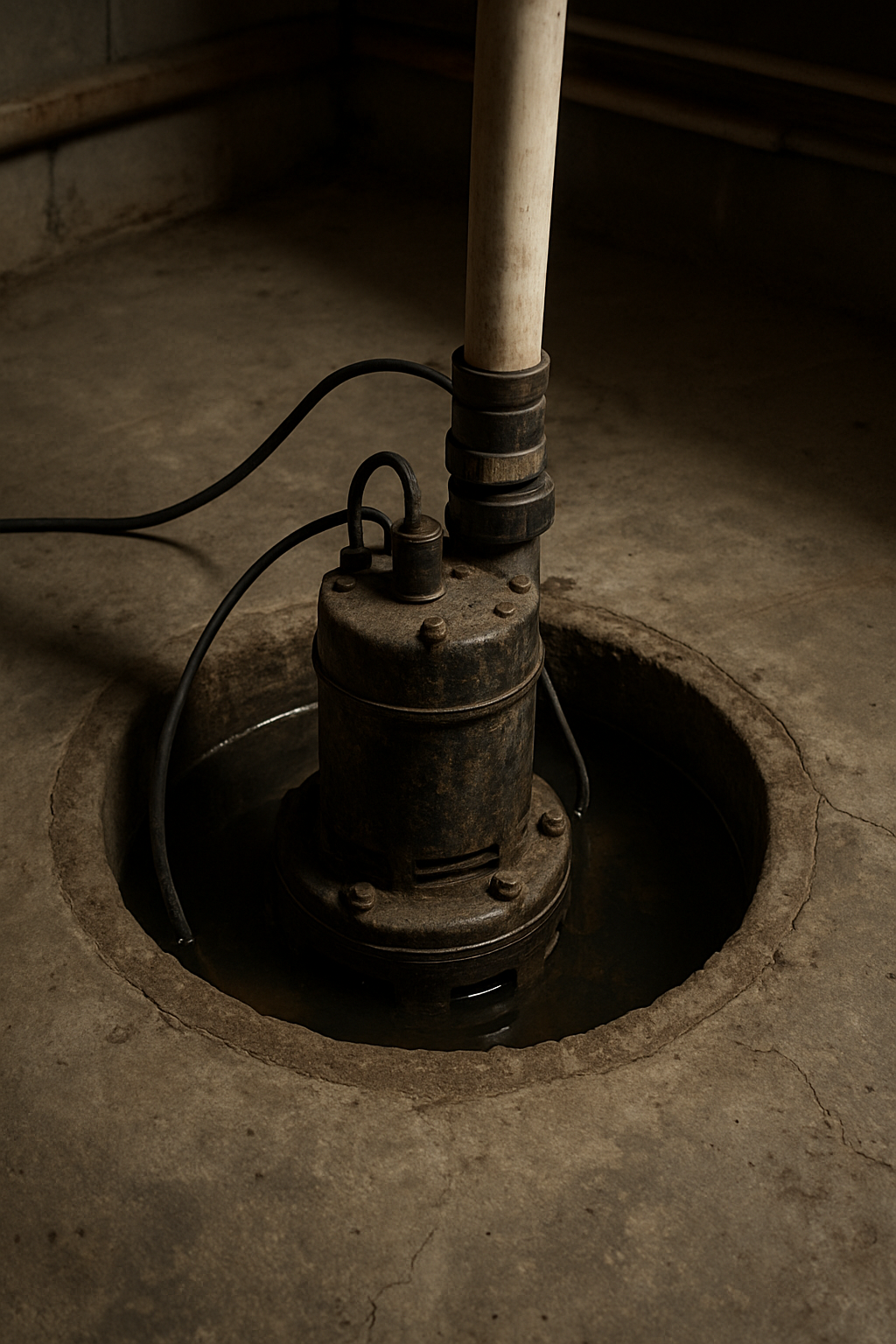
Look at the pump. Heavy rust and corrosion on the housing, or crusty mineral scale, means it’s aging out. And if it’s the original builder-grade unit that’s never been replaced, assume it’s near the end — those are the cheapest pump the builder could buy, and they don’t owe you anything after a decade.
The biggest gap: no backup
Here’s the one that floods finished basements. A single sump pump running on household power has two ways to fail at the worst time: the pump itself quits, or the power goes out — and big storms, the exact moment you need the pump most, are also when the power tends to go. If your only pump is plugged into the wall and that’s it, you have no protection against either.
The fix is a battery backup pump (or a water-powered backup on municipal water) that kicks in automatically when the main pump can’t keep up or the power’s out. Pair it with a water alarm so you actually know something’s wrong before the water’s at the boxes. For a finished basement, this isn’t a luxury — it’s the difference between a non-event and a five-figure cleanup. If you do one thing after reading this, add a backup.
The decision, simply
Replace the pump proactively if it’s seven-plus years old, noisy, cycling oddly, rusty, or failing the bucket test — don’t wait for it to prove it during a storm. And add a battery backup and a water alarm regardless of the pump’s age, because a perfectly healthy pump is still helpless when the power’s out. While you’re in there, clean the pit, check that the check valve is working (so pumped water doesn’t drain back), and make sure the discharge line isn’t clogged or, in winter, frozen.
DIY or not
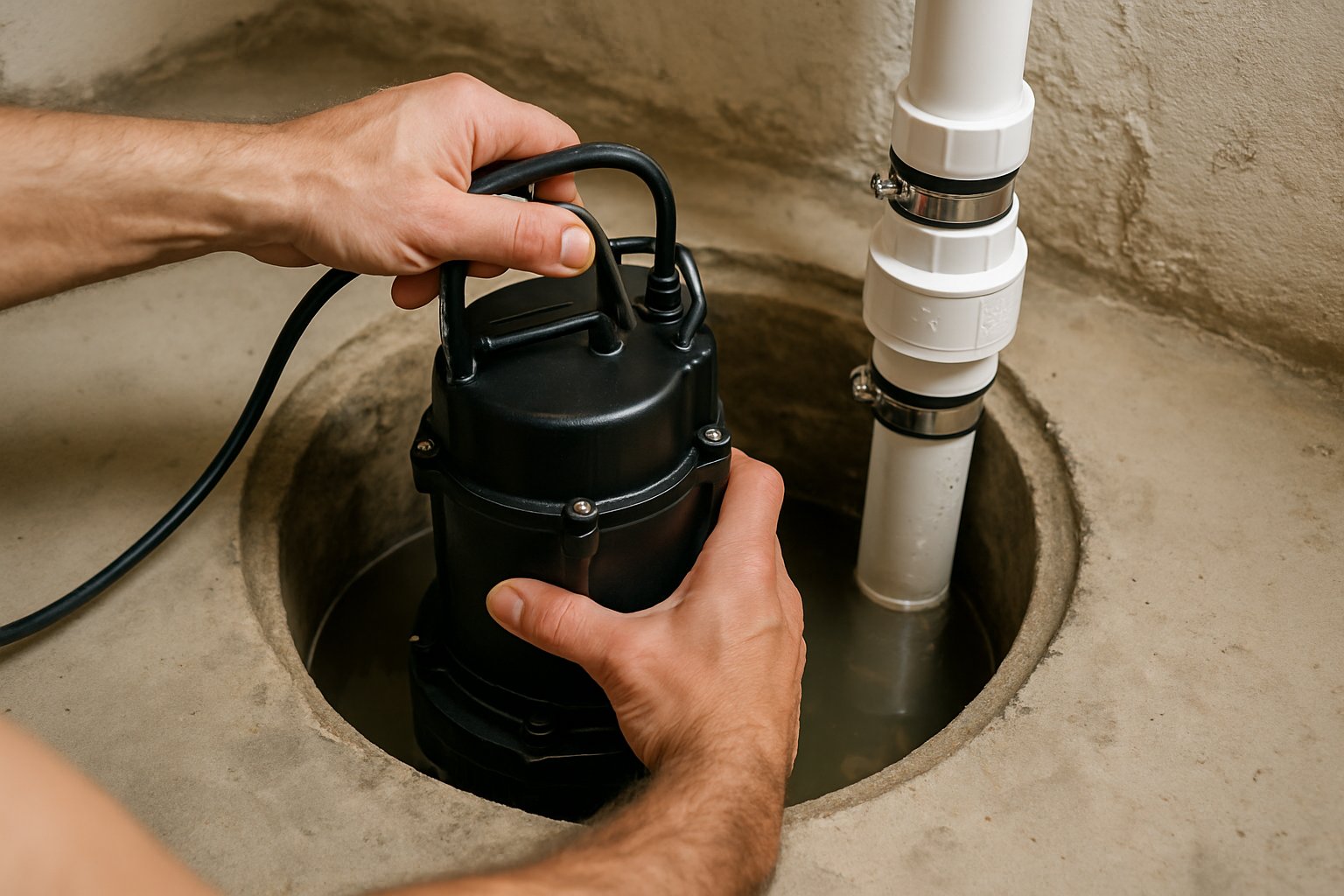
Swapping a sump pump is a reasonable DIY job for a handy homeowner — unplug it, lift it out, set the new one, reconnect the discharge and check valve, and test it with a bucket. Battery backup kits are designed for DIY installation too. If your pit is a mess, the discharge routing is complicated, or you’d rather it be done and tested by someone else before storm season, it’s an inexpensive job to hire out.
Not sure if yours is about to go?
Send me a photo of your pump and pit, tell me roughly how old it is and whether you’ve got any backup, and describe any noises or how it did on a bucket test. I’ll tell you whether it’s got life left, whether to replace it now, and exactly what backup I’d add for your basement: a written diagnostic with the specific plan and honest cost, $19.99, back to you in minutes.