There’s a particular sentence I hear at least once a month from a homeowner who’s just gotten back a sticker-shock remodel quote. It goes: “I’m just going to finish my attic instead — it’ll be way cheaper.”
Sometimes that’s true. Most of the time it isn’t. The price an unlicensed handyman quotes for “finishing the attic” is the price of an attic that’s already ready to be a room — and most attics are not.
I’ve finished four attics across three of my own houses. Two were worth the money. Two were teaching moments. The difference came down to five questions I now ask before anyone commits.
If you can answer all five, your attic might genuinely be the cheapest bedroom in the house. If you can’t — or if you’re uncertain on more than one — the math usually flips.
Question 1: Can your attic floor actually carry a room?
The first thing I do when I climb an attic ladder is measure the joists. Most older homes have ceiling joists sized for one job: holding up drywall and a layer of insulation. Two-by-sixes on a fourteen- or sixteen-foot span are very common, and they’re perfectly adequate for that job.
They are not adequate for a person, a queen bed, a dresser, and a chair full of laundry.
The code requirement for a floor that supports living space is 40 pounds per square foot live load. A 2x6 on a 14-foot span doesn’t get there. You’re looking at one of three fixes:
- Sister the joists — bolt or nail a second joist alongside each existing one. Affordable if there’s clearance, painful if your knee walls are in the way.
- Add a structural floor system — new joists running perpendicular to the existing ones, supported by the load-bearing walls below.
- Engineered floor truss retrofit — usually overkill for an attic conversion, but required if the span and load combination is severe.
This isn’t a “I’ll figure it out later” question. The joist work has to happen before insulation, before drywall, before any finish work. If you get to insulation and discover you need to sister every joist in the attic, you’re tearing out everything you just installed.
Cost reality: Sistering joists in an accessible attic with reasonable clearance — $2,000–$4,000 in materials and a long weekend of work, or $6,000–$10,000 if you hire it. Build a new structural floor system — $8,000–$15,000 depending on span.
Question 2: Where’s the heating and cooling coming from?
The attic is the hottest space in your house in summer and the coldest in winter. There is no scenario where the attic stays comfortable without dedicated HVAC. And there is almost no scenario where your existing central HVAC can deliver balanced air to the attic without major retrofitting.
I’ve seen homeowners try to extend a downstairs trunk line into the attic with a flex duct and a single ceiling register. It moves a little air. It doesn’t make the room comfortable. And the same blower trying to push air all the way up the house unbalances every other zone.
The cleanest answer I’ve found is a mini-split heat pump — one wall-mounted indoor unit with a small outdoor compressor. Mini-splits handle both heating and cooling, run quiet, and are sized exactly for the attic’s square footage instead of fighting the rest of the house’s ductwork.
The trap: mini-splits need to be planned into the layout before you drywall, because the line set has to run from the indoor unit through the wall, down the side of the house, to the compressor. Retrofit that after the fact and you’re cutting holes in finished walls.
Cost reality: A single-zone mini-split installed for a finished attic — $4,500–$7,500 including installation. Trying to extend ductwork from your existing system — usually $3,500–$6,000 and rarely works well.
Question 3: Can someone get out in a fire?
This is the question that kills more attic conversions than any other, and most homeowners don’t even know to ask it.
If you’re calling the finished space a bedroom, your local building code requires an emergency egress — typically a window of at least 5.7 square feet of openable area, with the lowest opening 44 inches or less from the floor, opening to a clear path out of the building. A pull-down attic ladder doesn’t count. A skylight usually doesn’t count.
If your attic has a gable wall facing the exterior, you might be able to install an egress window without too much drama. If your only exterior access is through the roof slope, you’re looking at cutting a dormer or installing an egress-rated skylight — and now you’re into roof structure modification, flashing, code review, and a permit that costs more than most of the rest of the project.
Settle this question before you commit to the conversion. If the answer is “we’d have to cut a dormer,” and you weren’t planning on a dormer — your project just doubled in scope.
Cost reality: Adding an egress window in an existing gable wall — $1,500–$3,500. Cutting a dormer for egress — $8,000–$20,000 depending on size and roof structure.
Question 4: Is your insulation in the wrong place?
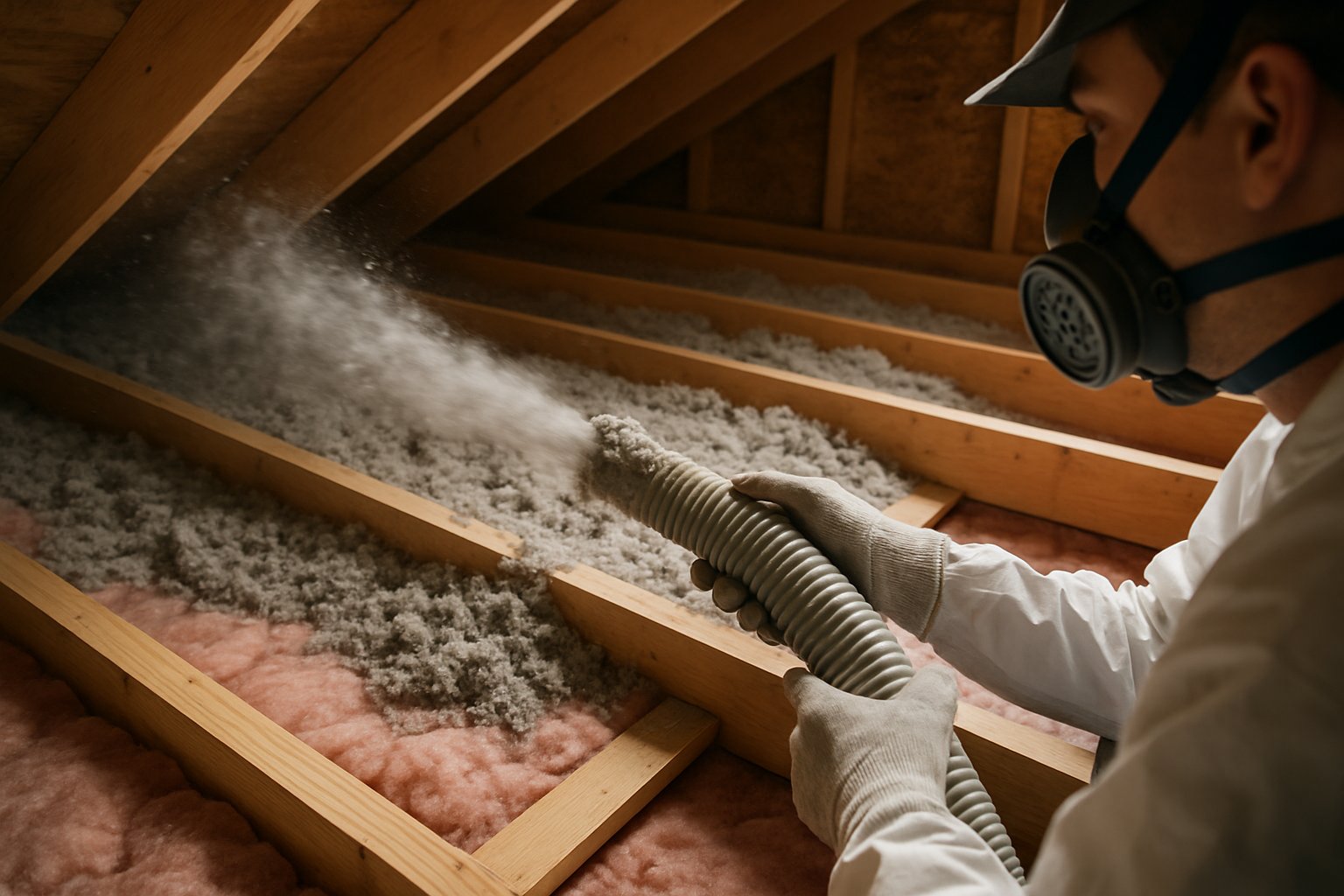
Walk into most attics and you’ll see insulation between the ceiling joists — fiberglass batts or blown-in cellulose laid on top of the drywall below. That’s correct insulation for an unfinished attic. The thermal envelope of the house stops at the attic floor.
The moment you decide to live in the attic, the thermal envelope has to move to the underside of the roof. Every existing piece of insulation in the floor is now in the wrong place. The new envelope needs:
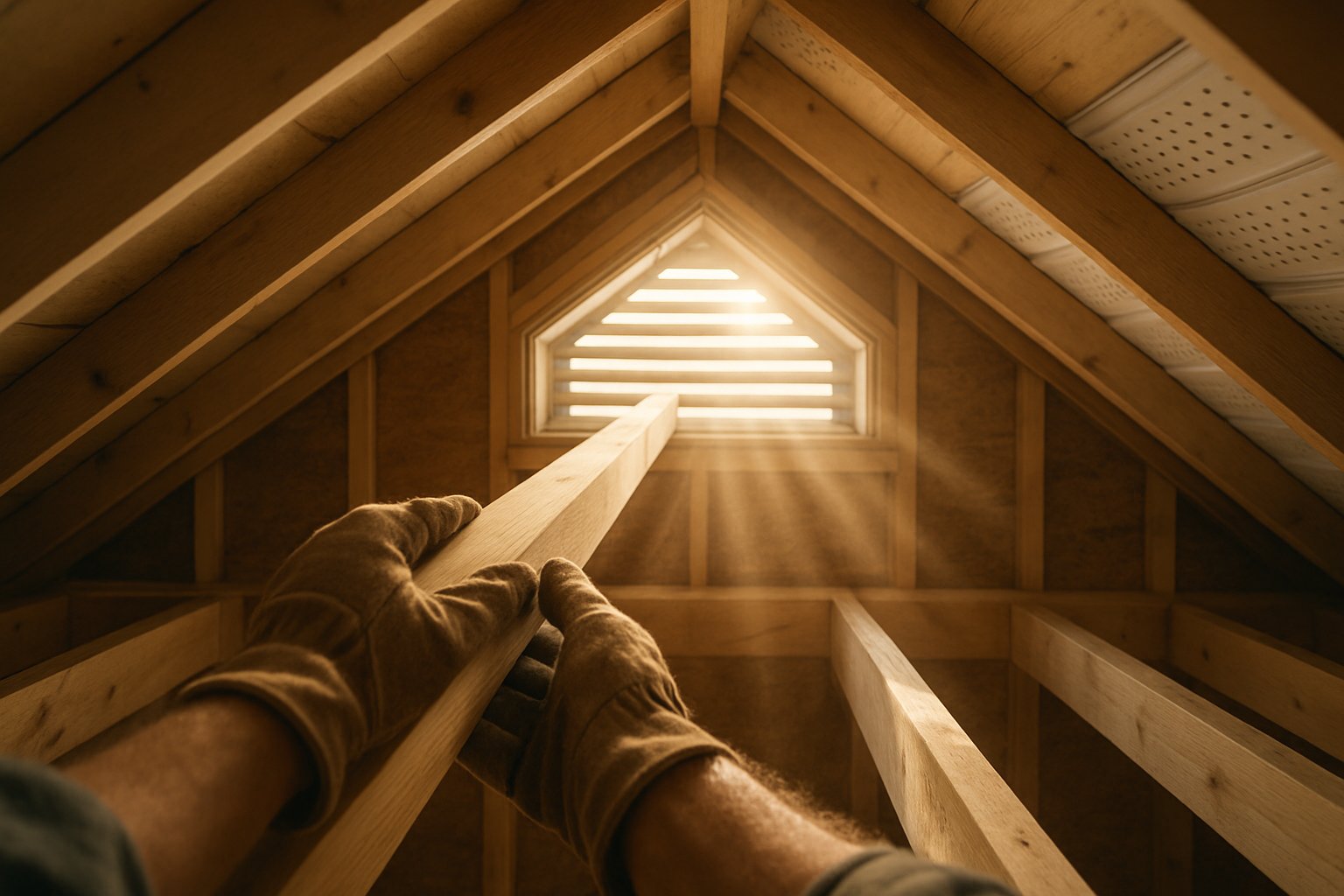
- Rafter baffles at the soffit vents so airflow can move from soffit to ridge
- Rigid foam or closed-cell spray foam between the rafters
- Batt insulation in the knee walls (the short vertical walls at the eaves)
- Continuous ridge venting for the air channel above the foam
This is a full reset of the insulation strategy, not an upgrade. And you have to do it before you drywall, because once the rafters are covered up, you can’t easily go back.
Homeowners frequently underestimate this. They look at the attic and think the insulation that’s already there counts toward the conversion. It doesn’t.
Cost reality: Full insulation reset for a typical 600-square-foot attic — $4,500–$8,000 in materials if you do the work yourself, $10,000–$15,000 hired out.
Question 5: What’s the real number?
This is where the math usually breaks.
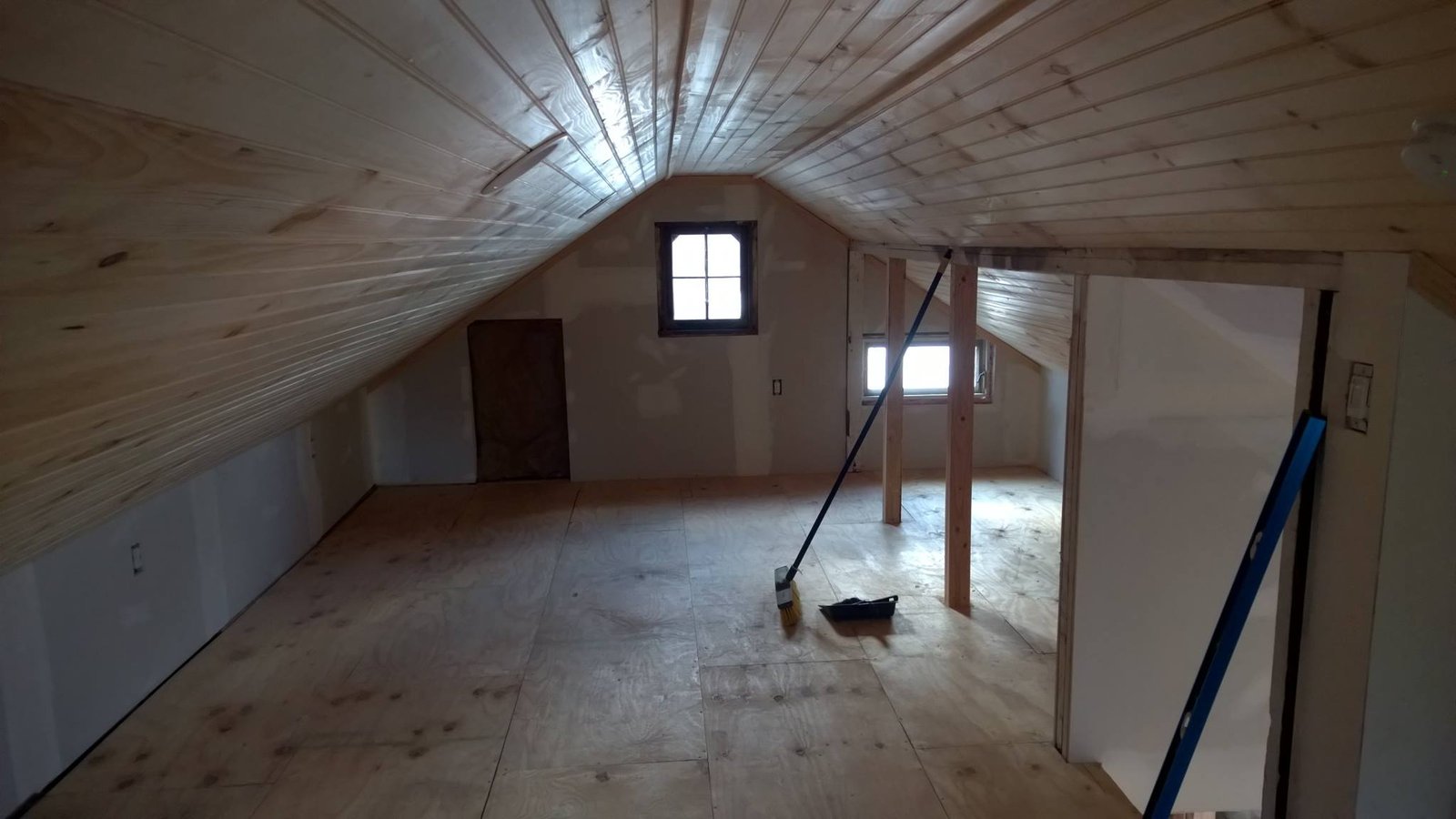
The price people quote when they say “finishing the attic is cheap” is usually $10,000–$15,000. That’s the price for hanging drywall on existing studs, painting it, and putting down some kind of floor finish. It assumes the floor structure is fine, the HVAC works, the egress already exists, and the insulation is in the right place.
For an attic that’s actually ready to convert — meaning none of the first four questions raised flags — that number isn’t unreasonable. The problem is, almost no attic is in that state.
A real attic conversion that hits code and ends in a livable bedroom typically runs $40–$80 per finished square foot when you add up the joist work, HVAC, egress, insulation reset, electrical, drywall, and finishes. A 600-square-foot attic comes out to $25,000–$50,000.
That’s not a cheap bedroom. It’s also not bad value when you compare it to an addition or a basement finish, which typically run $100–$200 per square foot. But it’s a very different conversation from “I’ll just finish my attic instead.”
The decision framework
Here’s how I think about it after going through this exercise four times:
- Answer Question 1 first. Get up there with a tape measure and a stud finder. If the joist work alone exceeds $10,000, your “cheap bedroom” assumption is already gone.
- Then answer Question 3. If egress requires a dormer, you’re effectively building an addition that happens to use existing attic space. Re-scope the project as an addition and compare costs honestly.
- Then Questions 2 and 4 together. These are the hidden costs that get missed in the initial estimate.
- Question 5 is the math check — add everything up before you sign anything.
If after all of that the attic still pencils out cheaper than other options for adding bedroom square footage, finish it. It’s some of the best per-square-foot value in a house. But go in with the real number in your head, not the optimistic one.
Want me to look at your attic?
The fastest way to find out which path your specific attic is on: send me three photos for a $9.99 diagnostic report — the floor with joists exposed, the rafters from underneath, and the access stairs. I’ll tell you which of the five questions are easy yeses and which ones are likely to flip the math on you.
You can also see attic projects I’ve worked on — from gut-and-cleanout through framing, insulation, and finish-out — for a sense of what the work actually looks like at each stage.
And one more reminder: the price you hear first is almost never the real price. Ask the five questions before you cut into the ceiling.