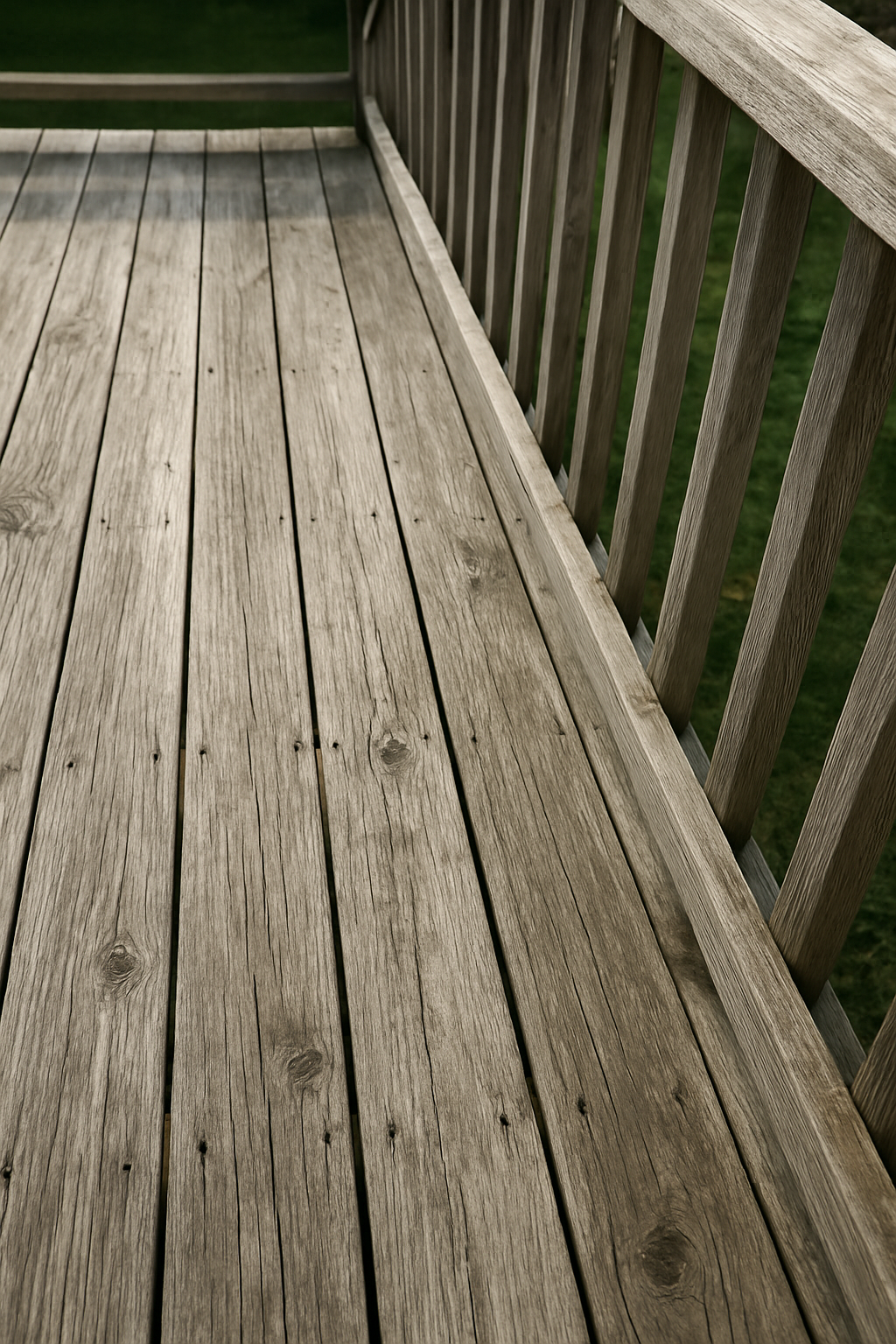
The deck has gone gray and tired-looking, the wood grain feels rough underfoot, and it seems like it’s time to tear it out and start over. Most of the time, that gray color is just UV weathering on the surface — the wood underneath is completely fine, and a good cleaning and stain brings it back looking almost new. The real question isn’t color. It’s whether the wood is still structurally sound, and there’s a simple test that tells you.
Here’s how to check before you assume the worst.
Gray doesn’t mean rotted
Untreated or lightly treated wood turns gray from UV exposure and weathering — it’s a surface change, not a structural one. Pressure-treated lumber, cedar, and most deck woods will do this over a few years regardless of how sound they are underneath. If that’s all you’re seeing, this is a cleaning and refinishing job, not a demolition.
The test: a screwdriver, not a guess
Take a flathead screwdriver or an awl and press it firmly into a few spots on the deck boards, the rim joists, and especially near the house. Sound wood resists — the tool dents the surface but doesn’t sink in easily. Rotted wood is soft and punky — the screwdriver sinks in with little resistance, sometimes disturbingly far. Do this in several spots, not just one, especially anywhere that stays damp longer (under planters, near downspouts, at board ends).
The spot that’s not optional: the ledger board
The ledger board is where the deck structurally attaches to the house — it’s the connection that carries a huge share of the deck’s load, and it’s also the spot most prone to hidden rot, because water tends to collect where the deck meets the house if it wasn’t flashed correctly when built. This isn’t cosmetic. A rotted ledger board is a structural safety issue, full stop, regardless of how good the rest of the deck looks. Check it specifically, even if everything else passes the screwdriver test.
What passes vs. what doesn’t
Refinish when the boards, joists, posts, and ledger all pass the screwdriver test — solid resistance everywhere, just weathered gray on the surface. A proper cleaning (deck cleaner or a gentle pressure wash, not blasted too aggressively) followed by a quality stain or sealer restores the look and adds UV protection going forward.
Replace (the whole deck, or at minimum the affected structural members) when the screwdriver sinks into boards, joists, or especially the ledger board. Isolated soft boards can sometimes just be swapped individually if the framing underneath is sound — it doesn’t always mean a full rebuild, but it does mean more than a cleaning and stain.
DIY or not
Cleaning and staining a deck is a solid DIY weekend project for most homeowners — the main skill is patience for proper drying time between steps. Replacing individual rotted boards is also manageable DIY if you’re comfortable with basic carpentry. Structural work — a rotted ledger board, compromised joists or posts — is worth hiring a contractor for the framing at minimum, since this is what keeps the deck from collapsing.
Not sure which one you’re looking at?
Send me a few photos of the deck, including a close-up near where it attaches to the house, and tell me what you found when you pressed a screwdriver into a few spots. I’ll tell you whether this is a refinish or you’re looking at real structural repair — a written diagnostic with the specific read and honest next step, $19.99, back to you in minutes.