Your asphalt driveway has faded to gray and there are cracks spidering across it, so a contractor takes one look and quotes you to tear the whole thing out and repave. Most of the time that’s more driveway surgery than you need. Asphalt is designed to be maintained — sealed and crack-filled — and doing that on schedule buys years. But a few kinds of damage genuinely do mean replacement, and one of them is a sign that the problem isn’t the surface at all: it’s the base underneath.
The trick is telling surface aging (cheap to maintain) from base failure (not fixable with a bucket of sealer). Here’s how.
First: what sealing actually does
Sealcoating is a thin protective layer that shields asphalt from UV, water, and oil, and keeps it flexible so it cracks less. It’s cosmetic and preventive — it makes an aging driveway look new and slows the next round of cracking. What it does not do is fix anything structural. Sealer over a failing driveway is lipstick; it looks great for a season and the real problems come right back. Plan on resealing roughly every two to four years, and fill cracks as they appear — anything up to about a half-inch gets a flexible crack filler before you seal. For most tired-looking driveways, that combination is the answer.
Sign 1: alligator cracking
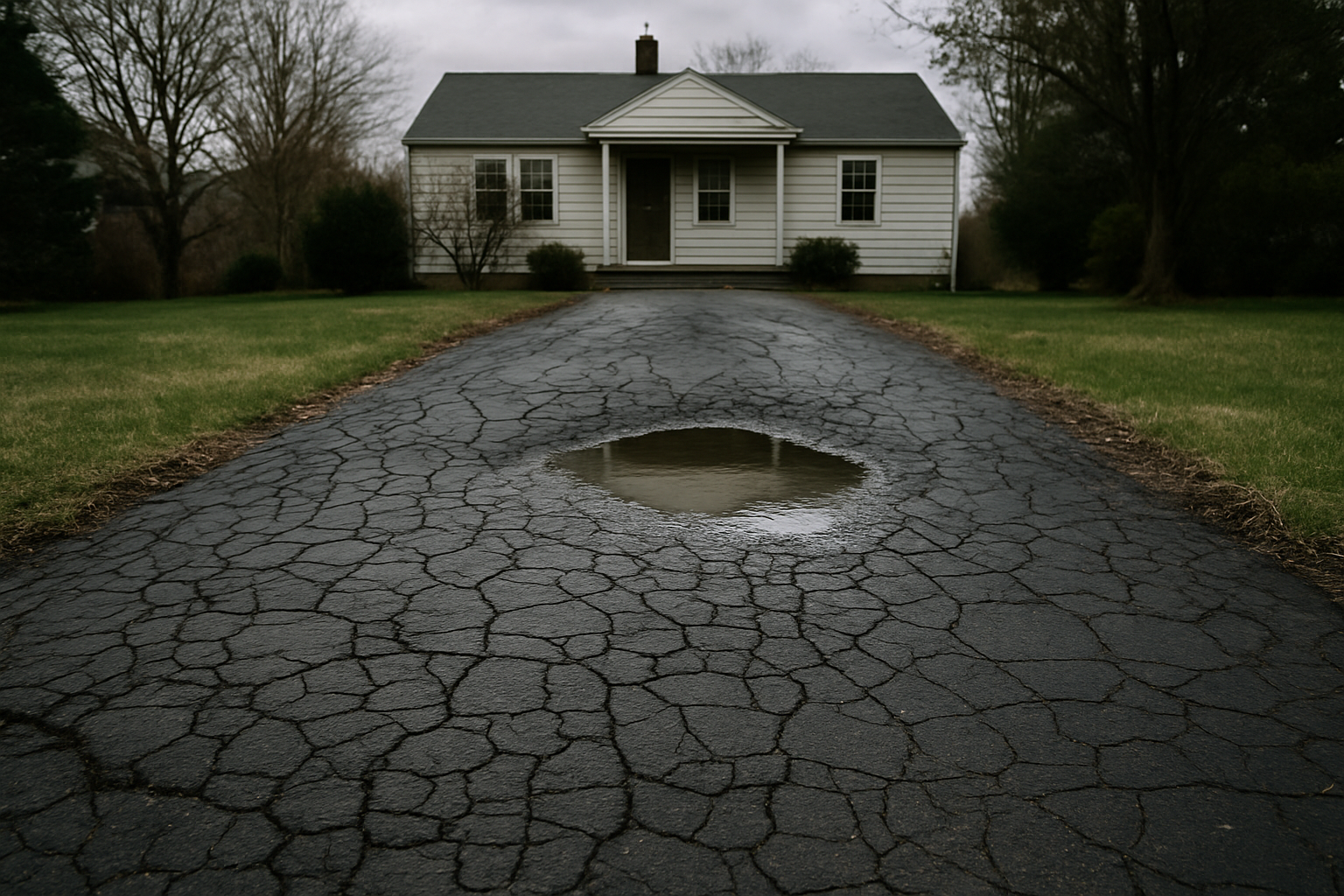
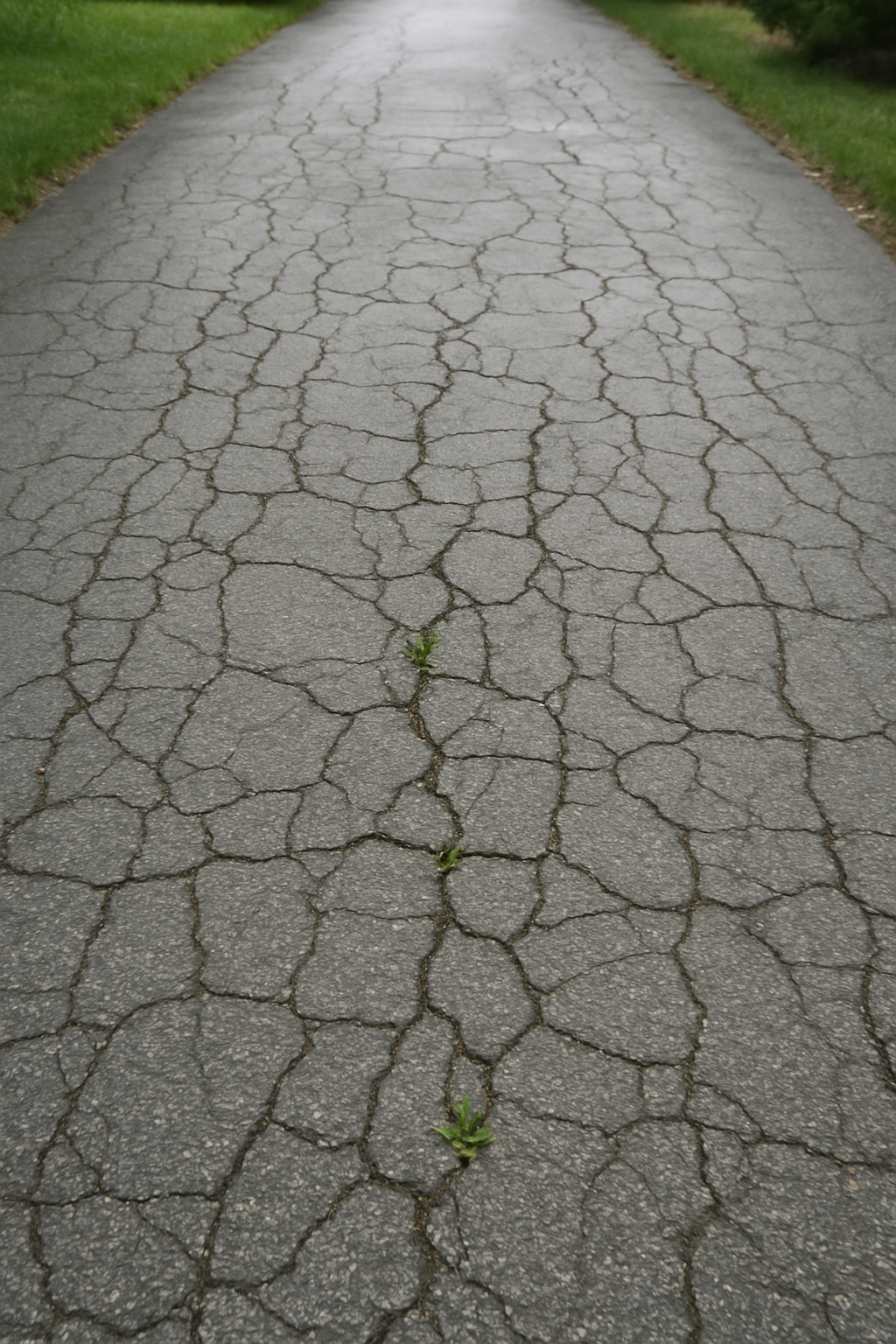
This is the big tell. When the surface breaks into an interconnected web of cracks that looks like alligator skin or dried mud, that pattern means the base or subgrade underneath has lost its support — the asphalt is flexing under load because there’s nothing solid holding it up. You cannot seal or fill your way out of alligatoring. A small patch of it can be cut out and repaired, but when it’s spread across the driveway, that area needs to come out and be rebuilt from the base up. Alligator cracks are the surface telling you the foundation failed.
Sign 2: potholes and full-depth crumbling
A pothole isn’t a surface crack — it’s asphalt that has failed all the way through and taken some of the base with it. One isolated pothole can be cut square and patched. But multiple potholes, or edges that crumble away into loose gravel when you poke them, mean the driveway has broken down through its full thickness in more than one place. Patching buys a little time; widespread full-depth failure means replacement.
Sign 3: heaving, sinking, and standing water
Look at the shape of the driveway, not just the surface. Sections that have heaved up, sunk into low spots, or that pond water after rain point to a base and drainage problem — frost, a washed-out subgrade, or grading that sends water the wrong way. Resurfacing over that just gives you a smooth new surface that heaves and sinks in the same places within a couple of seasons. The base and drainage have to be corrected first, which usually means rebuilding, not resurfacing.
The middle option: a resurface (overlay)
Between “seal it” and “tear it out” there’s resurfacing — laying a fresh inch and a half or two of new asphalt over the old. This is a good-value move when the base is still sound and the existing surface is just worn and lightly cracked. It is the wrong move when the base is failing: alligator cracks and structural cracks “reflect” up through the new layer within a year or two, and you’ve paid for a resurface that’s already cracking. So an overlay is a real option — but only after you’ve ruled out base failure.
The decision, simply
Seal and fill when the driveway is structurally sound and just aging — surface cracks, fading, minor gaps. Cheapest, and it’s most driveways.
Resurface (overlay) when the surface is worn or lightly cracked but the base is solid and the driveway drains and sits flat.
Replace when you see widespread alligator cracking, potholes and full-depth crumbling, or heaving/sinking/ponding — all signs the base has failed. And factor in age: asphalt lasts roughly 20–25 years with maintenance, so past that, replacement is often the honest call regardless.
DIY or not
Sealcoating and crack-filling are legitimately DIY — the materials come in buckets from any home center, and it’s a squeegee and a dry-weather day. Just don’t expect it to fix structural damage. Resurfacing and full replacement are paving-crew jobs (hot asphalt, compaction equipment, proper base prep), and base prep is exactly where a cheap repave goes wrong — so if you’re replacing, spend your scrutiny on how they’re handling the base, not the top coat.
Not sure which one you’re looking at?
Send me a few photos — the whole driveway, a close-up of the worst cracking, and any spot that holds water or has crumbled through. I’ll tell you whether you’re looking at a weekend of sealing, an overlay, or a real replacement, and whether the base has gone — a written diagnostic with the specific plan and honest cost, $19.99, back to you in minutes.