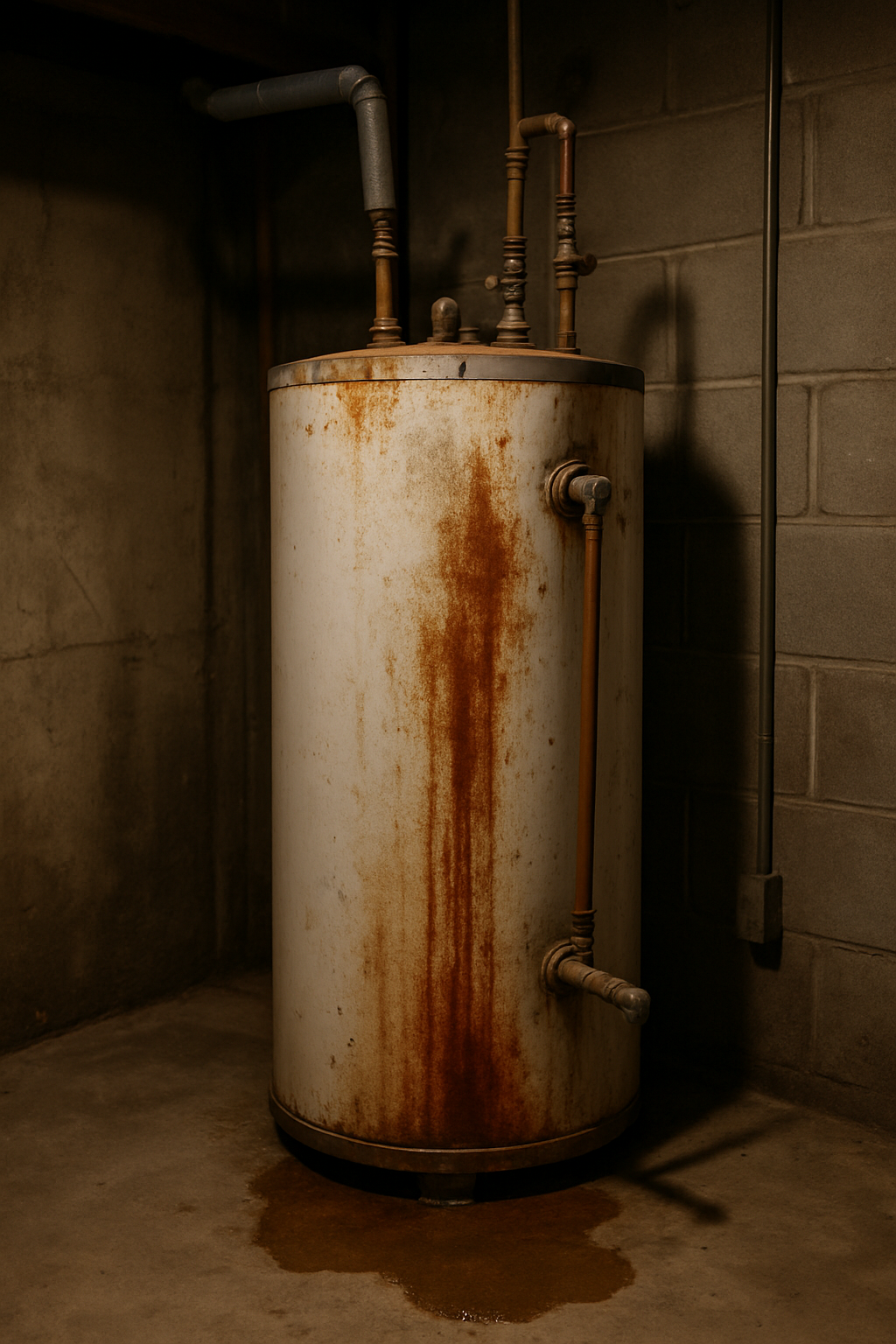
The water heater picks the worst possible morning to die — cold shower, puddle on the floor — and by the afternoon you’ve got a plumber telling you this is the perfect time to “upgrade to tankless.” Tankless is genuinely good technology. But whether it’s right for your house comes down to three things that have nothing to do with the sales pitch, and for a lot of homes the honest answer is still a plain tank. Here’s how to decide before the price tag decides for you.
Tankless heats water on demand instead of keeping a tank hot around the clock. The upsides are real: endless hot water, a wall-mounted unit that frees up floor space, lower standby energy loss, and a lifespan around 20 years versus roughly 10–12 for a tank. None of that is in question. The question is what it takes to put one in your house.
Deciding factor 1: the infrastructure it needs
This is the hidden cost that surprises people, and it’s usually the whole ballgame.
- Gas tankless burns a lot of fuel in short bursts, so it often needs a larger gas line run back toward the meter, plus new sealed stainless venting — the old water heater’s flue usually can’t be reused. Those two upgrades can add a serious chunk to the install, sometimes as much as the unit itself.
- Electric tankless avoids venting but is hungry for power — often multiple high-amperage circuits and, in many older homes, a panel that simply doesn’t have the capacity without an upgrade.
A like-for-like tank swap reuses the existing gas line, vent, and connections. That difference — reuse versus upgrade — is why two quotes can be thousands apart, and it’s the first thing to pin down.
Deciding factor 2: how you actually use hot water
Tankless is sized for peak simultaneous demand, not total volume. One or two people taking staggered showers? It shines — truly endless hot water. But run two showers, the dishwasher, and the washing machine at once and a single unit can’t keep every fixture hot; you either size up to a bigger (pricier) unit or install more than one. Be honest about your household’s real pattern. If your usage is modest and rarely simultaneous, you’re paying for endless capacity you won’t use. If you’re constantly running out with a tank, that’s exactly where tankless earns its keep.
Deciding factor 3: your water hardness
Hard water is tankless’s enemy. Minerals scale up the heat exchanger — the most expensive part — which drops efficiency and can void the warranty if you skip maintenance. A tankless unit in hard water really wants an annual descaling flush, and sometimes a softener upstream. It’s not a dealbreaker, but it’s a real ongoing chore and cost that a tank is far more forgiving about. If you’ve got hard water and won’t keep up with maintenance, that tilts the scale back toward a tank.
The math, honestly
Add it up and a tankless install — unit plus gas/vent or electrical upgrades — often runs two to three times a straight tank replacement. The energy savings are real but modest in dollars per year, so the simple payback is frequently ten-plus years. That math works if you’re staying in the house long-term and you value the endless hot water and reclaimed space. It works poorly if money’s tight, you might move in a few years, or your usage is light.
When a tank still wins
A modern high-efficiency tank is the smarter buy when: the budget’s tight, you don’t want to pay for gas-line or electrical upgrades, your hot-water use is modest, you may not stay long, or you just want a fast like-for-like swap to get hot water back today. Today’s tanks are more efficient than the one you’re replacing, and there’s nothing wrong with choosing the boring, reliable option. There’s also a middle path worth knowing about — a heat-pump (hybrid) electric tank — which is very efficient and fits many homes without the venting drama, if you’ve got the space and a warm-ish utility area.
DIY or not
Neither of these is really a DIY job — both involve gas or high-amperage electrical, venting, permits, and inspection. Where you can save yourself money and grief is by getting itemized quotes both ways, and making sure the tankless quote spells out the gas-line, venting, and electrical upgrades rather than burying them. That single apples-to-apples comparison is what makes the decision obvious.
Not sure which way to go?
Send me a photo of your current setup — the water heater, its gas line and vent, and your panel if you’re considering electric — plus a sentence on how many people are in the house and whether you run out of hot water now. I’ll tell you what a tankless would actually require in your house, whether the upgrades are worth it, and what I’d install if it were mine: a written diagnostic with the specific recommendation and honest cost, $19.99, back to you in minutes.