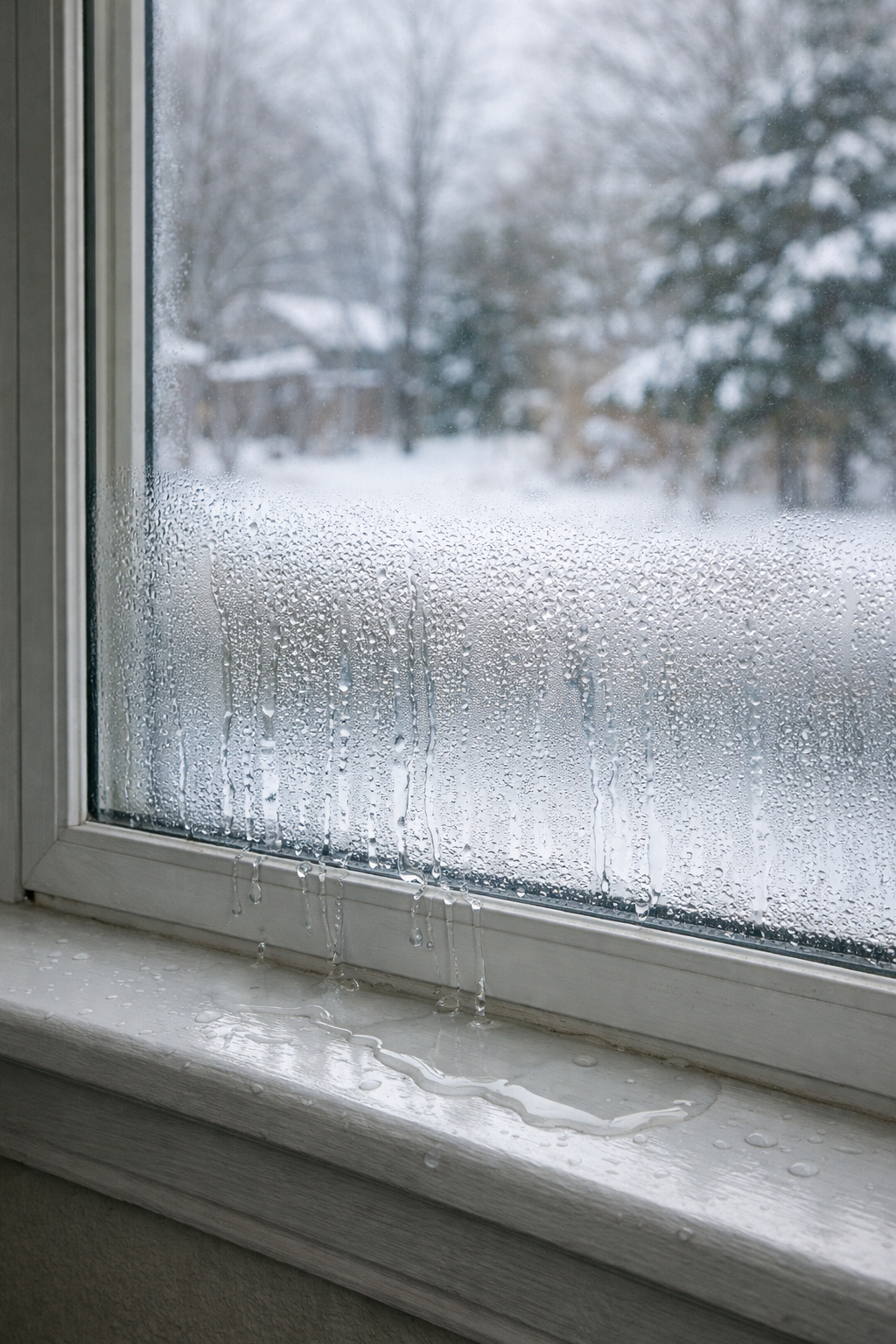
If you wake up on cold mornings to water running down the inside of your windows, the first instinct is that the windows are failing. Most of the time they aren’t. What you’re looking at is the air inside your house, not the glass.
Inside the glass vs. between the panes
These are two different problems, and it’s worth sorting out which one you have before you do anything.
- Fog between the panes of a double-pane window means the edge seal has failed. You can’t wipe it, it doesn’t clear by afternoon, and it’s a window problem. I covered that one in are foggy windows a sign you need new windows.
- Water on the inside surface, the side you can touch, is a humidity problem. You can wipe it with your finger. That’s what this post is about.
Why it shows up in winter
Warm air holds more moisture than cold air. When warm, humid indoor air touches a surface that’s colder than its dew point, the moisture comes back out as water. In winter, your window glass is usually the coldest surface in the room, so that’s where it lands first.
Everything you do inside the house adds to it: showers, cooking, drying laundry, a humidifier running on high, even breathing in a closed bedroom overnight. That’s why it’s usually worst first thing in the morning, in bedrooms and bathrooms, and on the lower part of the glass where the cold air settles.
When it’s harmless and when it isn’t
Harmless: a light fog on the lower edge of the glass on the coldest mornings that’s gone by mid-morning, with a dry sill.
Not harmless: water that runs down the glass and pools on the sill most mornings. That’s the version that does damage, slowly and out of sight:
- The paint on the sill starts peeling and the wood darkens and goes soft.
- Black mold spots show up in the corners of the sill and along the glass edge.
- Water works its way under the sill into the wall below, and you find stained or bubbling drywall under the window.
If you’re seeing any of those, the moisture has been doing this for a while, and it’s time to deal with the humidity, not just wipe the glass.
The cheap fixes that actually work
Start with the air, because that’s the cause:
- Buy a hygrometer. They’re inexpensive and tell you what your indoor humidity actually is. In winter, somewhere around 30–40% is a reasonable target in most cold climates. If you’re reading 55% or higher, that’s your answer.
- Run the exhaust fans. Bathroom fan during and for about 20 minutes after every shower. Range hood on when you cook. If the bathroom fan doesn’t vent outside, or barely pulls air, fix that first.
- Turn down the humidifier. If you run one on the furnace or in a bedroom, it may simply be set too high for how cold it is outside.
- Let air reach the glass. Heavy curtains and blinds pulled tight overnight trap a pocket of cold, still air against the window. Crack them open so room air can circulate.
- Dry the sill when it’s wet. It’s a stopgap, not a fix, but it keeps standing water off the wood while you get the humidity down.
When the window really is part of the problem
Old single-pane glass, or aluminum frames with no thermal break, run much colder than modern windows, so they’ll sweat at humidity levels a newer window would shrug off. If you’ve brought the humidity down into a normal range and one or two windows are still dripping every morning while the rest of the house is dry, those windows are a reasonable candidate for an upgrade. Storm windows are a cheaper middle step on older houses. Just don’t start by replacing windows before you’ve checked the humidity, because new windows won’t fix a house that’s holding too much moisture.
Not sure which one you’re looking at?
Send me a photo of the window and the sill, and I’ll tell you whether it’s a humidity problem, a failed seal, or damage that’s already gotten into the wall. A written diagnostic with the specific read, $19.99, back to you in minutes.